
Last updated October 30, 2026
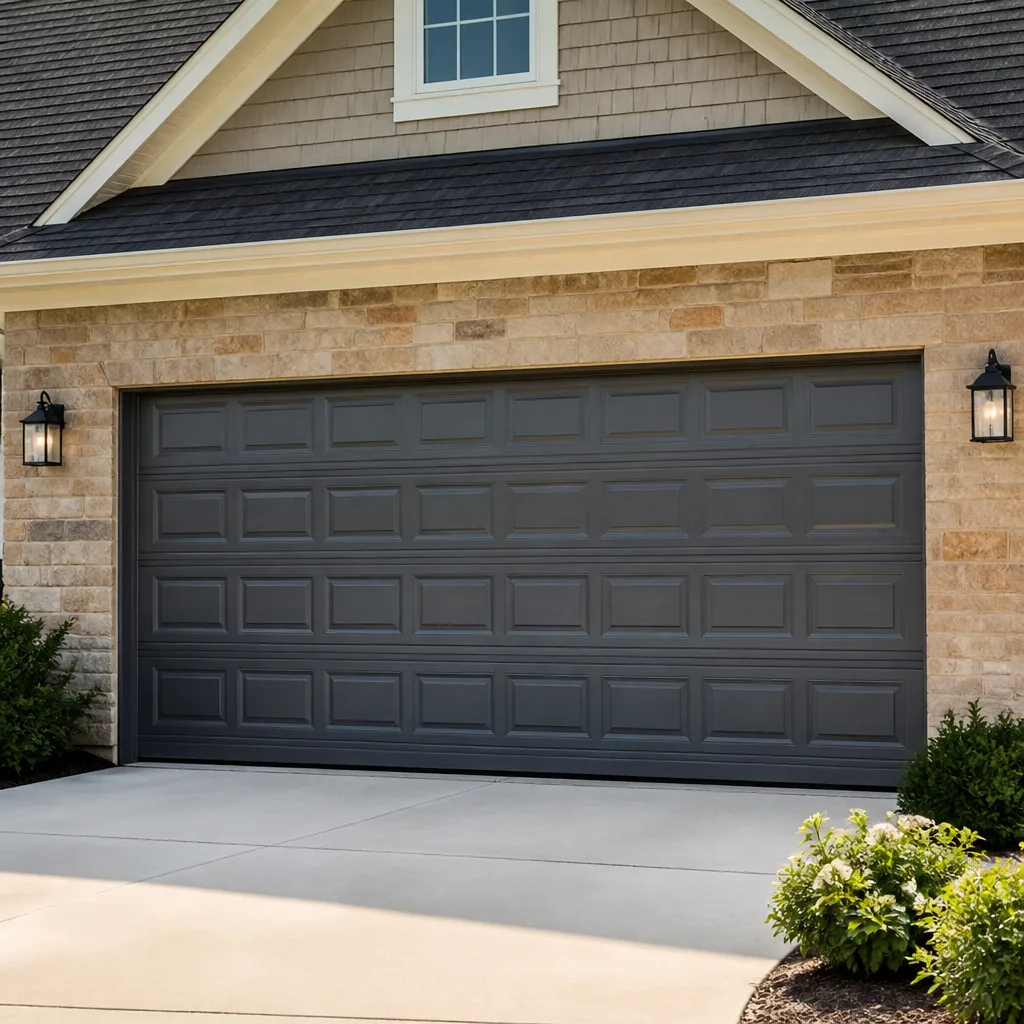 Raised-panel steel
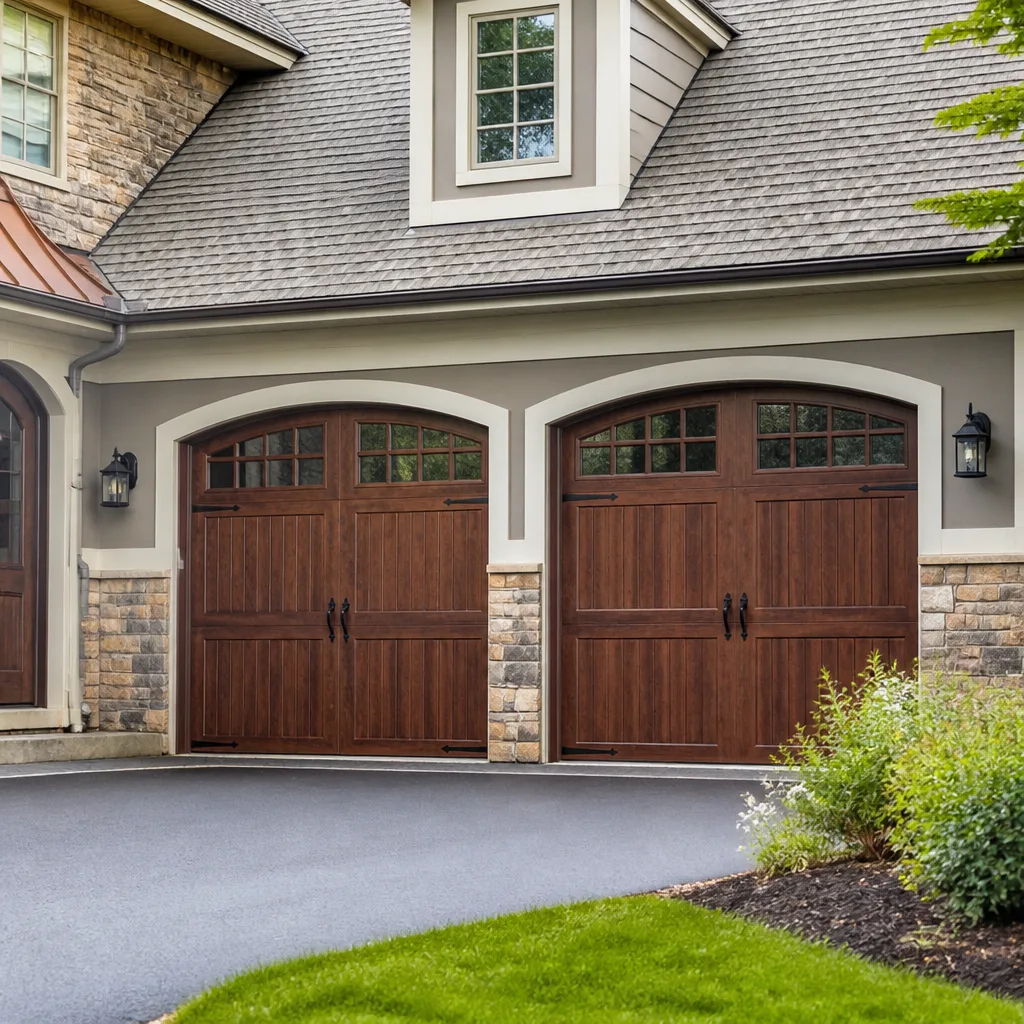 Carriage house
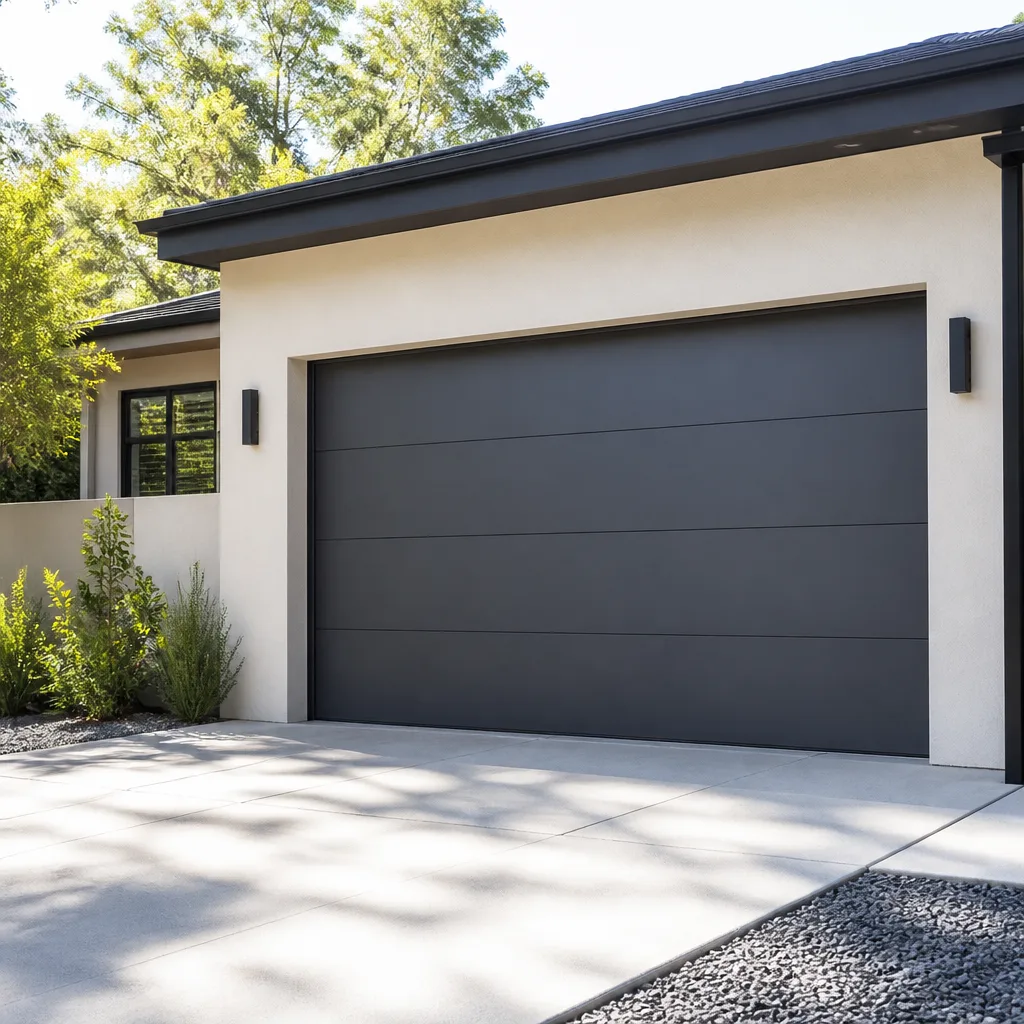 Modern flush
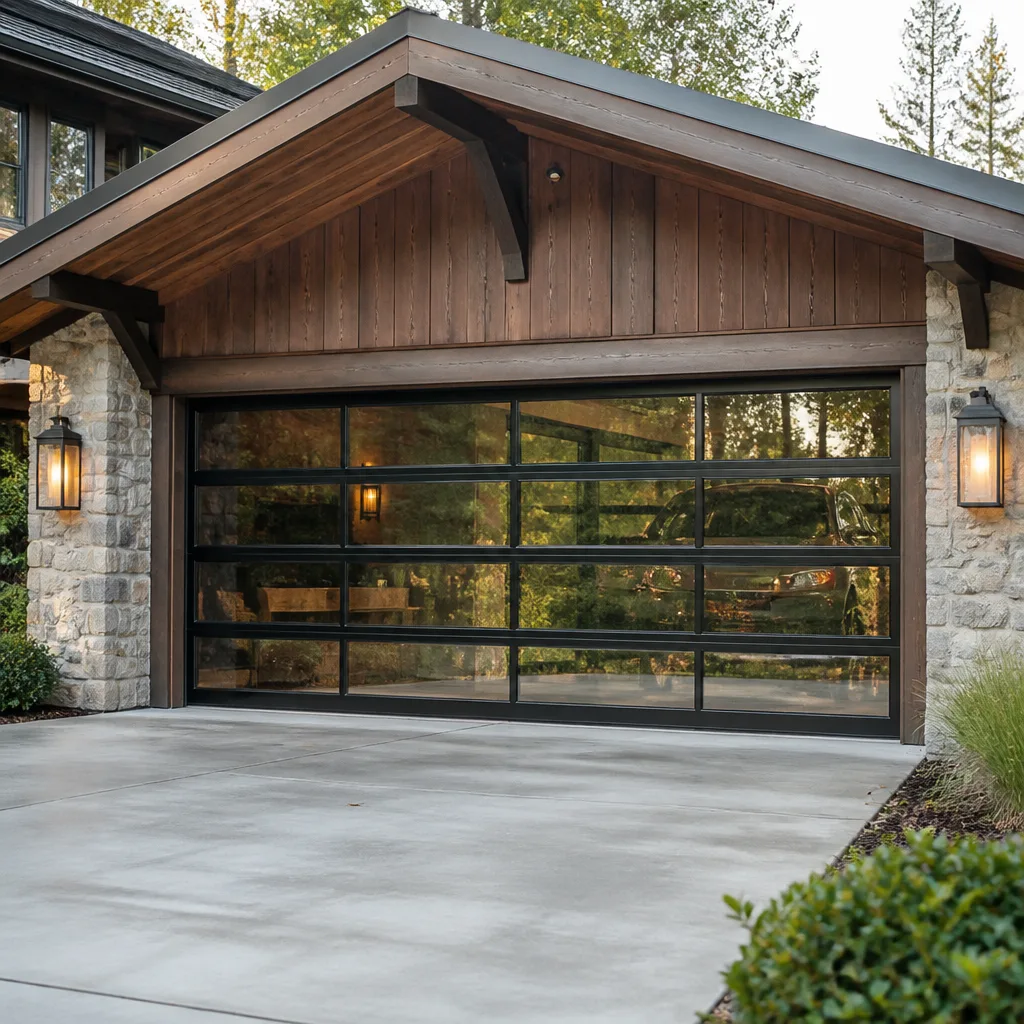 Full-view glass
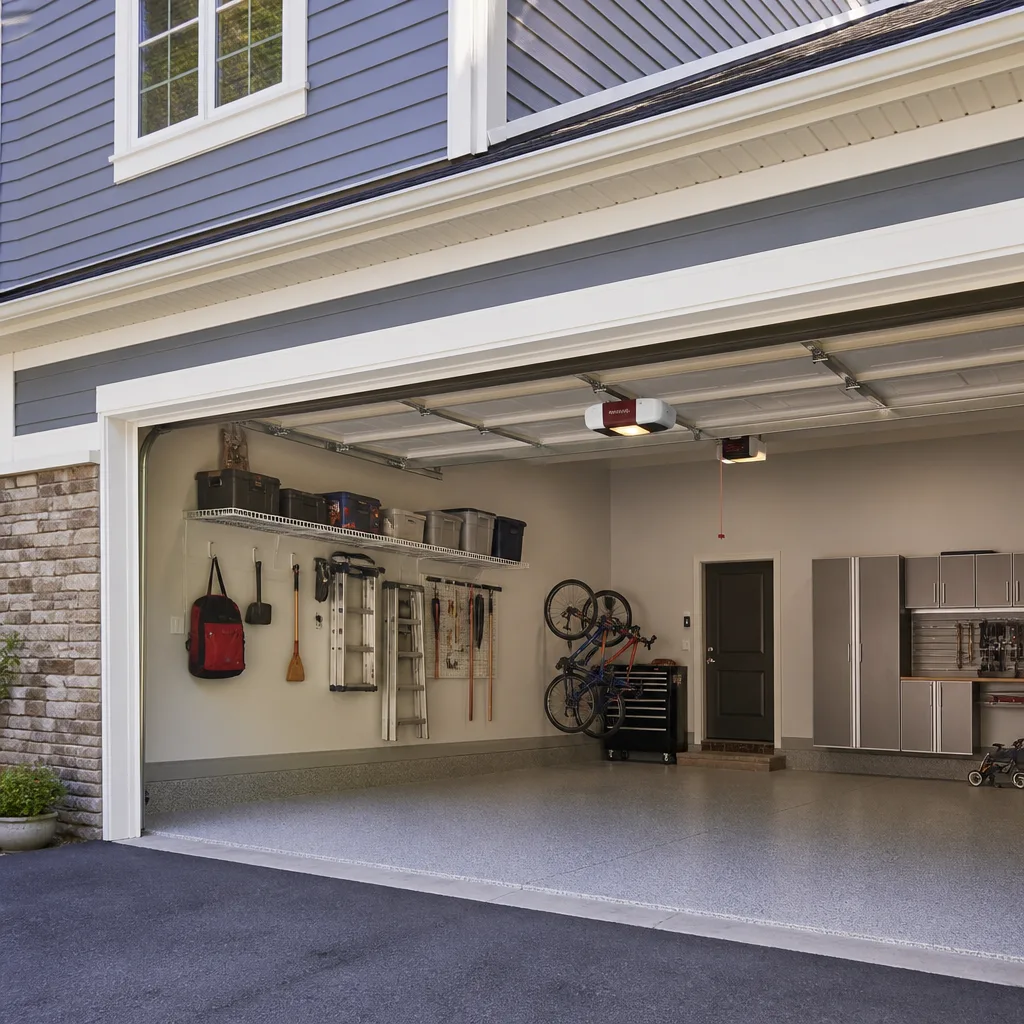 LiftMaster openers
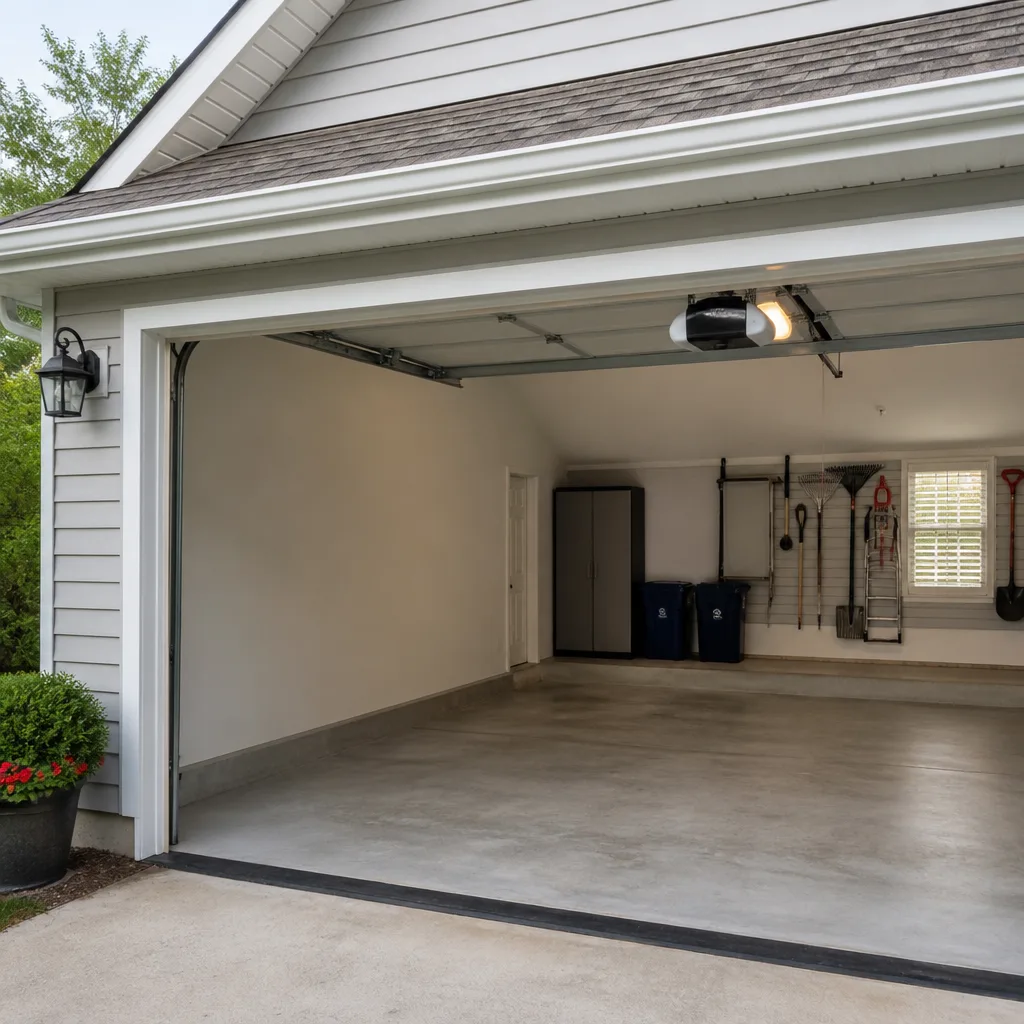 Chamberlain openers
Full 25-point door and opener safety check with every visit - springs, cables, rollers, tracks, and your LiftMaster or Chamberlain opener included
You get a price before we start. It does not change when the truck arrives.
Get your free estimateGarage Door Warning Signs: A Temecula Homeowner’s Reference Guide
A garage door that takes two seconds longer to open than it used to isn’t slow – it’s telling you that spring tension has dropped enough to overwork the opener motor, which typically fails within 90 days of that symptom appearing. Most Temecula homeowners replace openers and panels reactively, after the breakdown, when the truth is that nearly every failure broadcasts itself for weeks beforehand. This guide gives those early signals names, urgency ratings, and a clear path to action before a noisy nuisance becomes a $900 emergency, with step-by-step guidance on hiring a garage door contractor in Temecula when you need professional help. You’ll learn which five minutes of observation in your driveway can catch 80% of developing problems, what your door is trying to tell you through its sounds and hesitations, and when a symptom means tighten a bolt versus replace a spring.
Styles & brands we work with
Quick Answer
The most common garage door warning signs in Temecula are a slow or labored open, grinding or popping sounds, visible spring wear, gaps under the door, and lag between remote press and motor response. A door that moves slower than it did six months ago usually points to a weakening torsion spring that’s about to fail, not a dying opener. Most of these symptoms can be diagnosed in a five-minute visual check from your driveway, and catching them early typically means a $180 to $340 repair instead of a full system replacement. In Temecula’s dry heat, torsion springs in homes built between 2000 and 2010 are now failing on a predictable schedule – and the warning signs are consistent.
Table of Contents
- The Symptom-to-Cause Reference Table: 12 Signs, Urgency Levels, and What They Mean
- The Five-Minute Visual Inspection That Catches 80% of Problems
- Sluggish Door: Distinguishing a Dying Opener from a Failing Spring
- The Noise Dictionary: What Each Sound Under Your Door Is Saying
- Temecula Tract Home Warning Signs (2000 – 2010 Builds)
- Intermittent Sensor Errors: The $10 Fix vs. the Wiring Problem
- Remote Lag and Range Loss: What It Tells You About System Health
- Common Mistakes to Avoid
- When to Call a Professional
- Frequently Asked Questions
- The Bottom Line
The Symptom-to-Cause Reference Table: 12 Signs, Urgency Levels, and What They Mean
Before we get into deeper explanations, here’s the full reference table we promised. We built this from what we see across Temecula neighborhoods – from Harveston to Redhawk to Paseo del Sol – and it covers the twelve symptoms that account for the overwhelming majority of service calls. Use the urgency rating to decide whether you’re watching a developing issue or looking at a same-week safety concern.
| Symptom | Most Likely Cause | Urgency |
|---|---|---|
| Door opens slower than it did 6 months ago | Weakening torsion spring transferring load to opener motor | High – resolve within 2 weeks |
| Grinding or metallic scraping when moving | Worn rollers, dry bearings, or a spring rubbing on the track | Medium – resolve within 30 days |
| Popping or snapping sound during operation | Spring binding or a single coil beginning to fail | High – same week |
| Visible gap under the door when closed | Settled concrete, bent bottom seal, or door out of alignment | Medium – affects energy costs and pest entry |
| Door drifts down after opening, or creeps up from closed | Spring tension imbalance, or failing opener brake | High – same week |
| Remote requires multiple presses or closer range | Opener logic board aging, antenna interference, or dying capacitor | Low unless sudden |
| Door reverses mid-cycle with no visible obstruction | Misaligned photo eye sensors or force setting drift | Medium – test within a week |
| Shaking or wobbling when moving | Loose hardware, worn hinges, or unbalanced panels | Medium – tighten what you can, then call |
| Loud bang followed by door that won’t open | Spring failure – the most common sudden failure | Emergency – do not operate the door |
| Fraying cables or cable that looks loose | Cable wear near end of life, often paired with spring issues | High – same week, do not touch cables yourself |
| Opener runs but door doesn’t move | Disconnected carriage, stripped gear, or broken spring | High – same week |
| Door hesitates for a second after remote press | Capacitor degradation on the opener’s start circuit | Low – but watch for progression |
Two patterns stand out in this table. First, the symptoms marked “High” are dominated by spring-related issues, not opener problems – and springs are precisely the component homeowners overlook until they fail. Second, every symptom on this list is observable without opening a single panel. Watch, listen, and note changes. That’s the whole diagnostic skill set.
The Five-Minute Visual Inspection That Catches 80% of Problems
From inside the garage, you can see more of your door’s health than any diagnostic tool. We walk every Temecula customer through a version of this sequence when they call asking whether something is wrong. It takes five minutes, requires no tools, and accurately flags most developing problems. Here’s the sequence, in order:
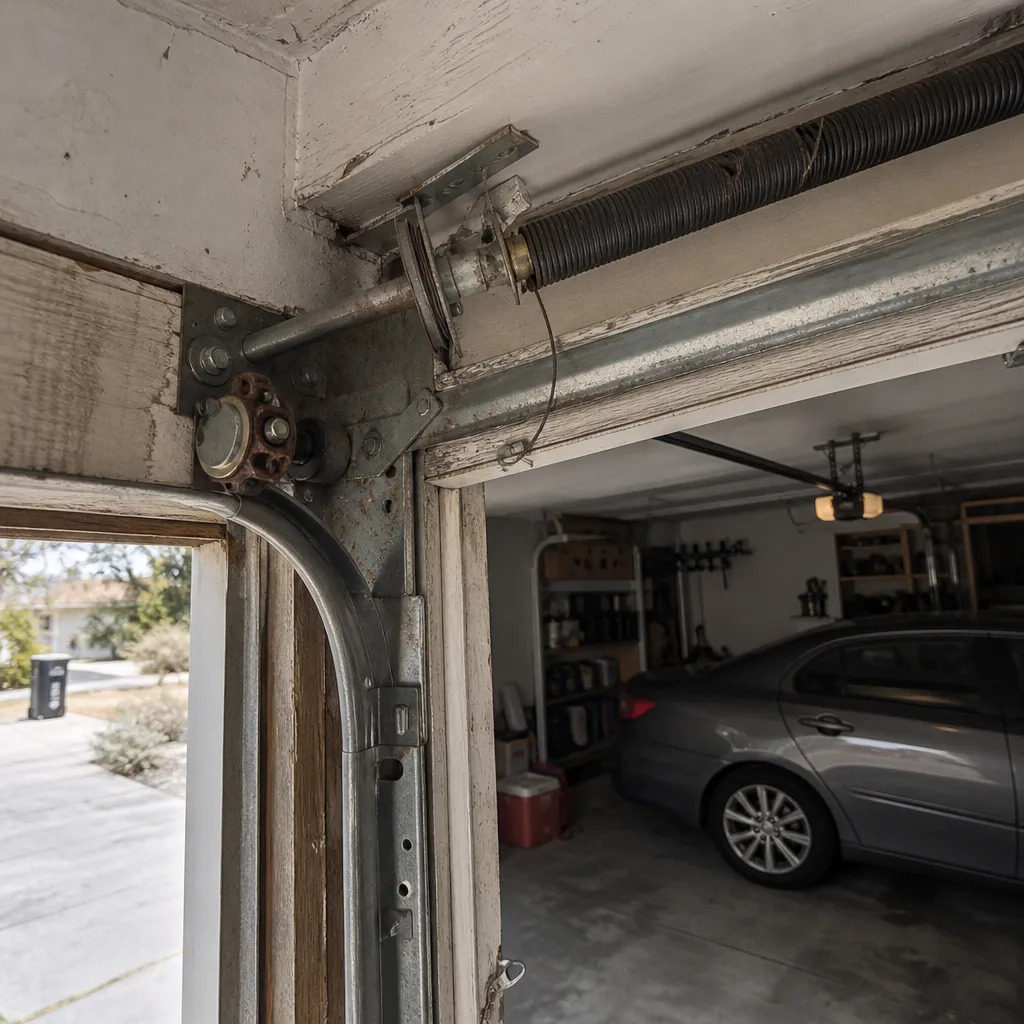
- Stand inside with the door closed and look at the spring. If you have a torsion spring mounted on the wall above the door, look for a gap in the coil. A gap wider than a pencil means the spring has already begun to separate – it’s not a matter of if it fails, but when. In Temecula’s low-humidity climate, this separation is the single most reliable precursor to sudden failure.
- Check the cables on both sides. Look at where the cables attach to the bottom brackets. Fraying here – even a few loose wire strands – is a high-urgency signal. Cables under a load of hundreds of pounds don’t fail gradually at the end; they fail suddenly after weeks of visible fraying.
- Run the door and watch the side tracks. A door should move smoothly with no visible stutter or shimmy. If you see the door bump or shift sideways at any point in the travel, note which section it happens at – that’s likely a worn roller bearing or a misaligned bracket.
- Watch the bottom seal when the door closes. If daylight sneaks under either corner, the concrete has settled or the door’s travel limits need adjusting. Temecula’s clay-heavy soil shifts more than most homeowners realize, particularly after wet winters.
- Run the door and count the seconds. From full closed to full open, most residential doors take 12 to 15 seconds. If yours consistently takes 18 or more, the spring is no longer doing its share of the lifting, and the opener motor is absorbing the difference – a load it was never designed to carry.
Run this inspection once a season. Ten minutes of attention four times a year catches nearly every failure before it becomes an emergency. The people who skip this are the ones calling us at 7 a.m. with a car trapped in the garage.
Sluggish Door: Distinguishing a Dying Opener from a Failing Spring
A slow garage door is the most misread symptom in the industry. Homeowners assume the opener is getting old, so they budget for a new motor. Meanwhile, the real fault is quietly growing in the torsion spring. Here’s how we separate the two – and why the distinction matters for your wallet. A failing spring needs a $180 to $340 repair before it breaks. A dying opener, by contrast, typically shows its age through electronics behavior, not speed. If you see any combination of these signs, the opener is the suspect: the remote range has shortened over months, the motor hums before moving, the wall console behaves inconsistently, or the door reverses without obstruction. If the door is simply slow but otherwise responsive, the spring is the likely culprit. Temecula’s temperature swings compound spring fatigue. The metal expands and contracts through 40-degree summer night-to-day spreads, and after 10,000 cycles – roughly 7 to 10 years of daily use here – the spring’s lifting force drops measurably. The door doesn’t get heavier. The spring just stops pretending it can lift it.
The Noise Dictionary: What Each Sound Under Your Door Is Saying
A garage door makes noise. That’s normal. But the type of noise, and when it appears in the travel, tells you exactly what’s happening. Here’s our working dictionary of garage door sounds and their translations – this is what we listen for on service calls across Temecula before touching a single bolt.
- A metallic scraping that’s loudest near the end of travel: The roller bearings are dry, worn, or the track has shifted slightly. Heavy Temecula dust finds its way into bearing surfaces and accelerates wear.
- A rhythmic thumping as the door moves: One or more panels are hanging slightly loose, or a roller is flattening out and skipping.
- A sharp pop when the door starts moving or reaches fully open: The spring is binding in its mounts or a coil has already started to separate. This is a pre-failure sound. In our experience across Murrieta and Temecula, a spring that pops today typically fails within the next 50 cycles.
- A deep rumble the instant the motor starts: The opener’s capacitor is struggling to provide the startup voltage. The door may still open, but the motor is working overtime and the capacitor will fail completely – usually without warning.
- A high-pitched squeal from the opener unit itself: The drive gear inside the opener is wearing. This is an opener-specific repair, and it’s one we handle as its own service, stripping the unit and replacing the gear assembly rather than quoting an entire system replacement.
Record the sound on your phone before calling. A 10-second video from inside the garage beats any verbal description, and in our experience it lets a technician diagnose the issue before arriving, which often means the parts are on the truck the first visit.
Temecula Tract Home Warning Signs (2000 – 2010 Builds)
If your home went up between 2000 and 2010 – which covers a significant share of Temecula’s neighborhoods, including the master-planned communities that expanded during that decade – your original torsion springs are now statistically at end-of-life. Springs from that era were rated for roughly 10,000 cycles, which translates to 7 to 10 years of typical daily use. Homes built in that window and still running original hardware are now on borrowed time, even if the door feels fine. The warning signs on these builds follow a consistent pattern. We see them weekly. Here’s what to watch:
- Age of the spring itself: If your home is a 2003 or 2005 build and the spring is still factory-original, you’re running on a component that has already exceeded its design life. The failure won’t necessarily be dramatic, but it will be sudden. In these homes, we recommend a replacement spring before the old one breaks.
- Paint overspray on the spring: During the original construction, painters frequently sprayed without masking the garage hardware. If your spring has the same paint flecks as your garage walls, it’s original, and it’s old.
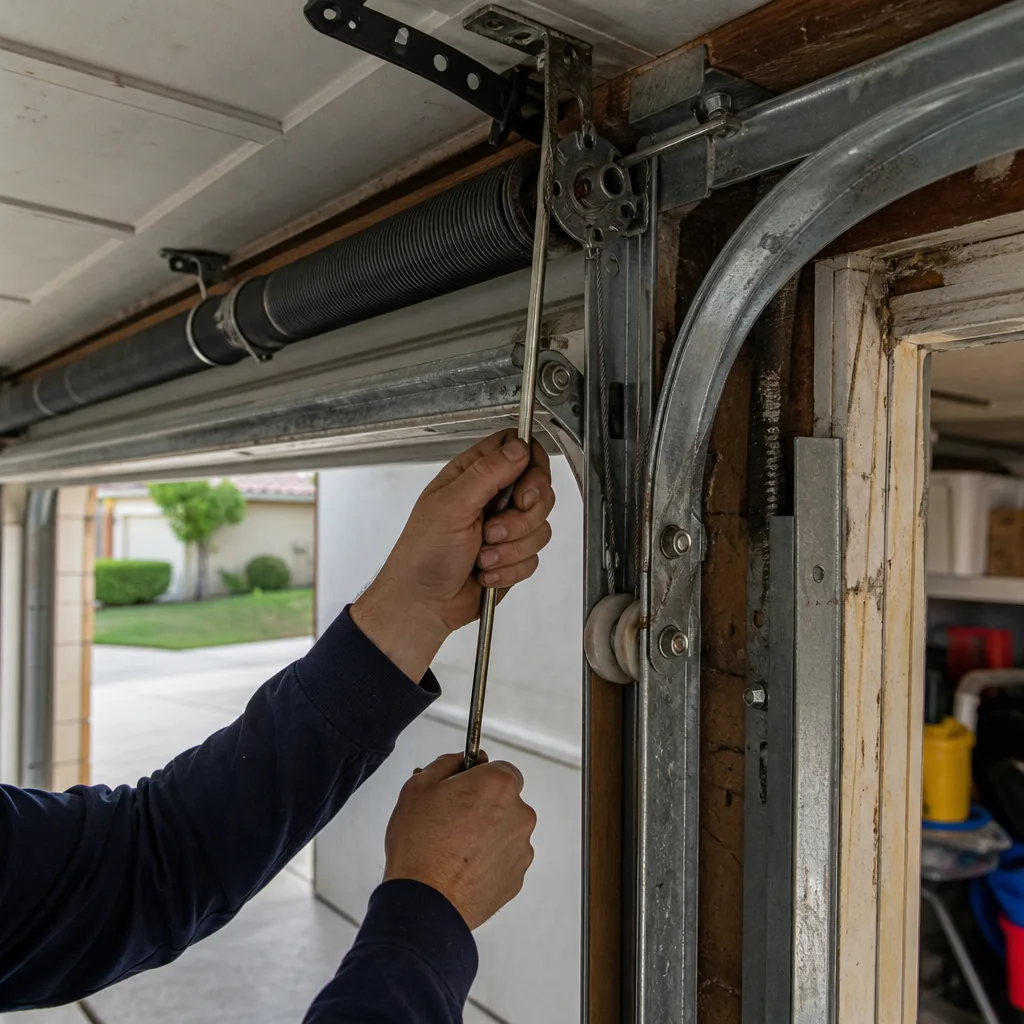
- The door feels heavy when you disconnect the opener: Pull the red release cord, then manually lift the door about halfway. A properly tensioned door stays put; a dead spring drops it to the floor. In tract homes of this vintage, a door that falls when released is the single clearest indicator of spring failure.
- Rust patterning at the spring ends: Temecula’s dry air keeps rust shallow, but the end coils of a torsion spring trap moisture differently. Rust at the winding cone end signals age – and it’s where 80% of coil separations start.
This is not a scare tactic. It’s actuarial. If you live in a 2000 – 2010 Temecula home and the spring is original, budget for a replacement now rather than an emergency call later. The difference can be hundreds of dollars and several inconvenient days.
Intermittent Sensor Errors: The $10 Fix vs. the Wiring Problem
The photo eye sensors – the two small units near the floor on either side of the door’s track – cause more confusion than any other component. They’re simple, and yet their failure modes split into two very different scenarios. Understanding which one you’re facing decides whether you spend ten minutes or need a service call. The sensors work by sending an invisible beam from one unit to the other. If the beam breaks while the door is closing, the door reverses. If the beam can’t be established at all, the opener won’t close the door. A misalignment issue – the $10 fix – appears as intermittent behavior: sometimes the door closes, sometimes it reverses. An errant broom handle bumped the sensor bracket, or the bracket has loosened over months of door vibration. You’ll often see the small indicator light on one sensor blinking. That’s an alignment signal. Adjusting the sensor body back into line usually restores normal operation in under five minutes.
A wiring issue looks different: the problem is consistent, or it correlates with temperature and humidity in specific ways. The door refuses to close at all, or the sensors work in the morning and fail in the afternoon heat when the garage wall expands. You might see damage at the wall console or along the wire run itself. If adjusting the sensors doesn’t fix it or the problem returns within days, the fault is in the wiring or the sensor units themselves – and that’s when we send a technician who carries replacement sensors and enough wire to re-pull the run on the first visit. Older Temecula tract homes often had the original sensor wiring stapled too tightly during construction, and we regularly find pinched insulation behind drywall twenty years later.
Remote Lag and Range Loss: What It Tells You About System Health
The remote is the part of the system that wears first – not because it breaks, but because its performance degrades so gradually that homeowners adapt without noticing. One year you’re opening the door from the end of the street. Three years later you’re pressing the button twice from the driveway. That decline is information. Consistent range loss across multiple remotes points to the opener’s receiver board, not the remotes themselves. If every remote behaves the same way, the fault is in the unit. A single failing remote is cheap to swap. A failing receiver may require opening the opener – and with eight major brands in play – LiftMaster, Chamberlain, Genie, Clopay, Amarr, Wayne Dalton, Craftsman, Raynor – choosing the right garage door brand and component-level diagnosis beats guessing. We work on all eight, which means we’re not steering you toward a new opener if the right fix is a receiver board or a capacitor. The key distinction: if the lag is consistent even when you’re standing directly under the opener, that’s the start capacitor or logic board aging. If the range simply shrank over time, the antenna or receiver is the suspect. Both are repairable, and neither requires a full opener replacement – but only if you catch them while the symptom is still “annoying” rather than “dead.”
Common Mistakes to Avoid
- Lubricating a failing spring to “fix” a popping sound. Lubricant masks the symptom while the coil continues to separate. The pop is the spring binding, not squeaking. You’re adding oil to a component under 200+ pounds of tension that has already decided to fail.
- Disconnecting the opener and forcing the door manually. If the door won’t move because a spring has failed, manually forcing it bends panels and derails tracks. We see this every month in Temecula – a $200 spring repair becomes an $800 track and panel job because someone needed the car out right now.
- Replacing the opener when the real problem is the spring. A slow door is usually a spring problem. Replacing the opener doesn’t fix it; it just straps a new motor to a weakening spring. The new opener will run the door slowly too, and then the spring breaks anyway.
- Ignoring a door that drifts down after opening. This is a balance problem, which means the spring tension is wrong or the opener brake is failing. Left alone, it becomes a door that drops without warning – and garage doors weigh 150 to 250 pounds.
- Waiting for spring failure to replace the spring. A spring that fails under load usually takes the cables with it and often bends the torsion tube. Planned replacement is cheaper and safer than emergency replacement, every time.
- Assuming all garage door companies know your brand. We work on LiftMaster, Chamberlain, Genie, Clopay, Amarr, Wayne Dalton, Craftsman, and Raynor. A technician who only services one manufacturer is going to recommend what they know – not what your door actually needs.
When to Call a Professional
Any visible spring gap, frayed cable, or loud pop during operation is a same-week call. Any sudden loss of balance – a door that drops when released or drifts down from open – is a same-day call. Sensor problems that resist alignment adjustments point to wiring or component failure, and remote lag that’s consistent across every remote usually means opener-level diagnosis is needed. If your Temecula home falls into the 2000 – 2010 build window and the spring is original, reach out before it fails – planned replacement is safer and cheaper than emergency service. Seabreeze Garage Door offers free estimates in Temecula – call (888) 913-4062.
Frequently Asked Questions
In Temecula, a single torsion spring replacement typically runs $180 to $340 including parts and labor, with dual spring systems on heavier doors ranging higher. The final number depends on door weight, spring wire size, and whether the job is a planned replacement or an emergency call. Call (888) 913-4062 for an exact quote – estimates are free.
Yes, we prioritize same-day service for spring failures, doors that won’t open, and safety-related issues in Temecula. Call (888) 913-4062 for current availability.
No. We quote the price before any work starts, and that price is what you pay. If we find something unexpected during the repair, we stop, show you what we found, and agree on any revised number before continuing. All Seabreeze service follows this approach – the price is agreed before the work begins.
Yes. Our techs carry common torsion spring sizes, cables, rollers, and sensor replacements, so most Temecula repairs are completed on the first visit. If your door needs a specialized panel or a less common component, we’ll get the right part and return as soon as it’s available.
Look for a visible gap in the coil, listen for a popping sound during operation, and check whether the door has become noticeably slower or heavier. In Temecula tract homes from the 2000 – 2010 era, original springs are now past their expected lifespan even if they look fine. A five-minute visual inspection once a season catches these signs before failure.
We service and install all major brands, including Amarr, Wayne Dalton, Craftsman, and Raynor. We are brand-agnostic, so our recommendations are driven by what your door needs and what your budget supports – not by manufacturer quotas. Call (888) 913-4062 for a free estimate in Temecula.
The Bottom Line
Your garage door is the largest moving part of your Temecula home, and it cycles twice a day or more. It talks to you through sounds, speed, gaps, and hesitations. Slow movement usually means spring fatigue, not a bad motor. Popping sounds mean spring binding. Drifting means balance is failing. Remote lag means board or capacitor aging. A five-minute inspection – spring gap, cable condition, track stability, seal fit, and travel time – catches most issues weeks before failure. If you’re in a 2000 – 2010 Temecula build still running the original spring, plan a replacement now. And remember: the price is quoted and agreed before the work starts, always. If something on this list matches what you’re seeing at home, call (888) 913-4062 for a free estimate. Seabreeze Garage Door serves Temecula with repair, opener repair, and full installation – all eight major brands, one team. Visit our home page to see the full range of services.
Written by the team at Seabreeze Garage Door, serving Temecula since 2014. Explore more guides & resources on our blog.
See the difference
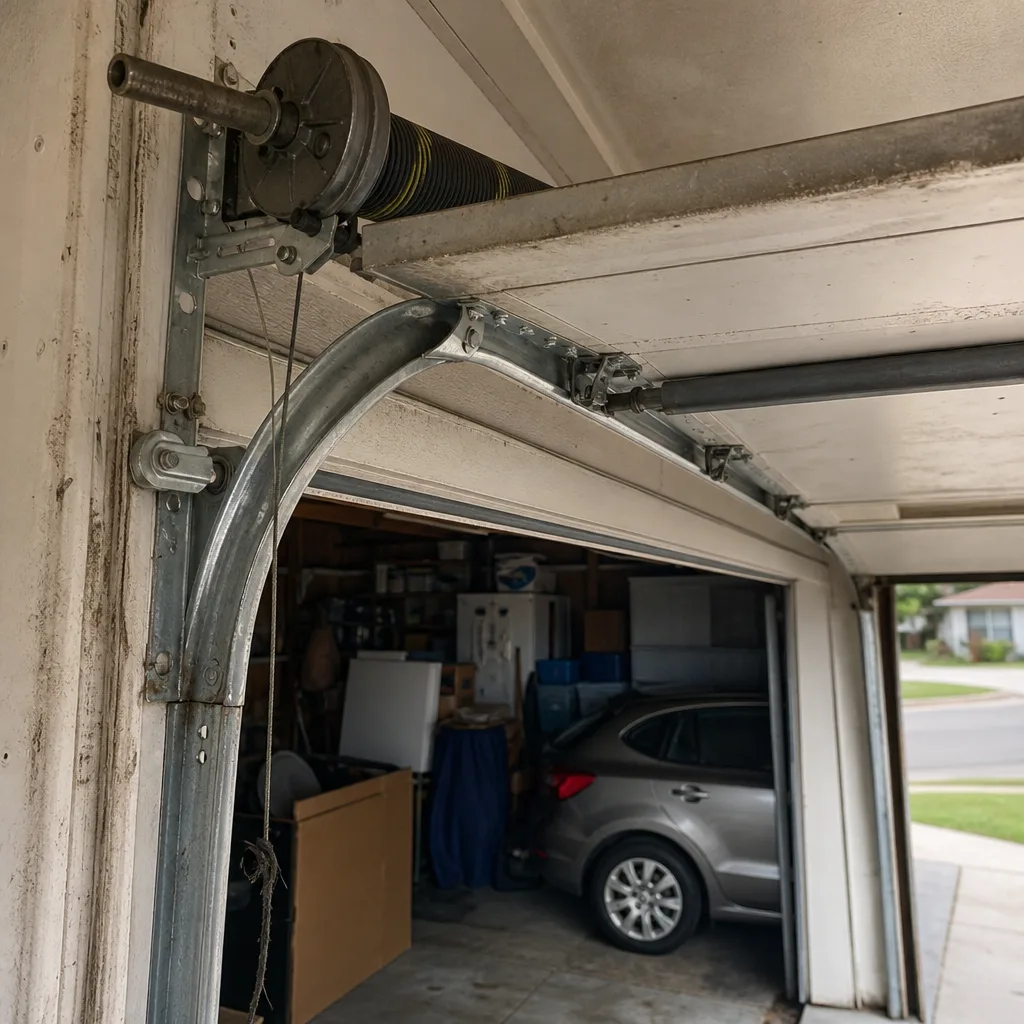 Before
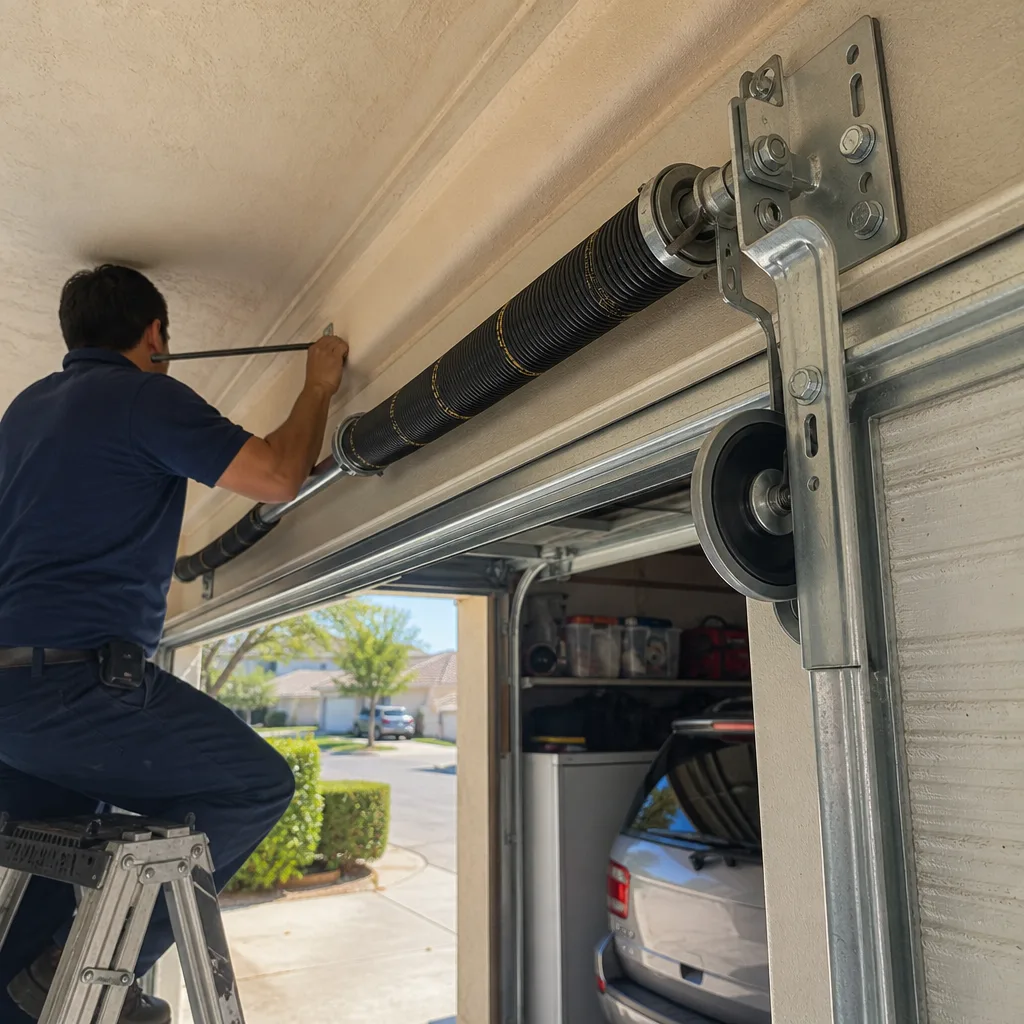 After
 Before
 After
 Before
 After