
Last updated October 30, 2026
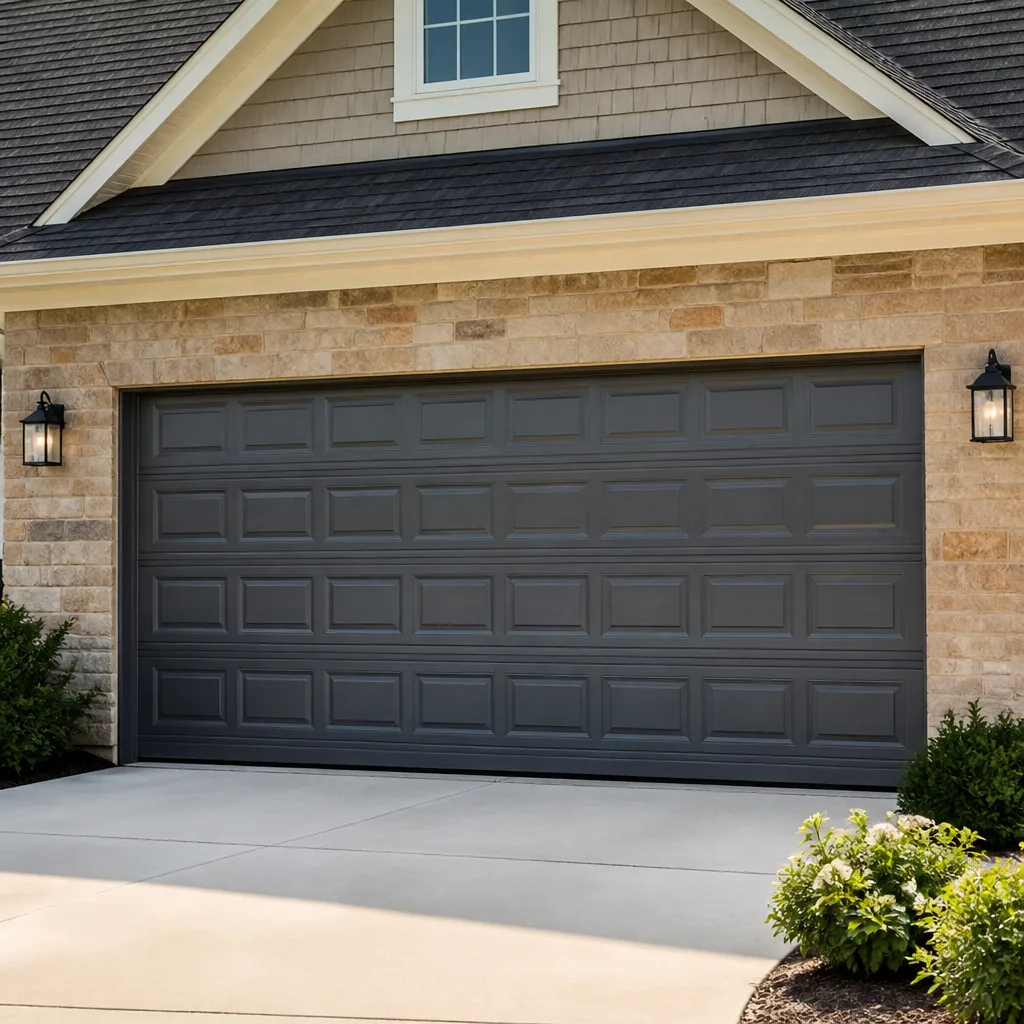 Raised-panel steel
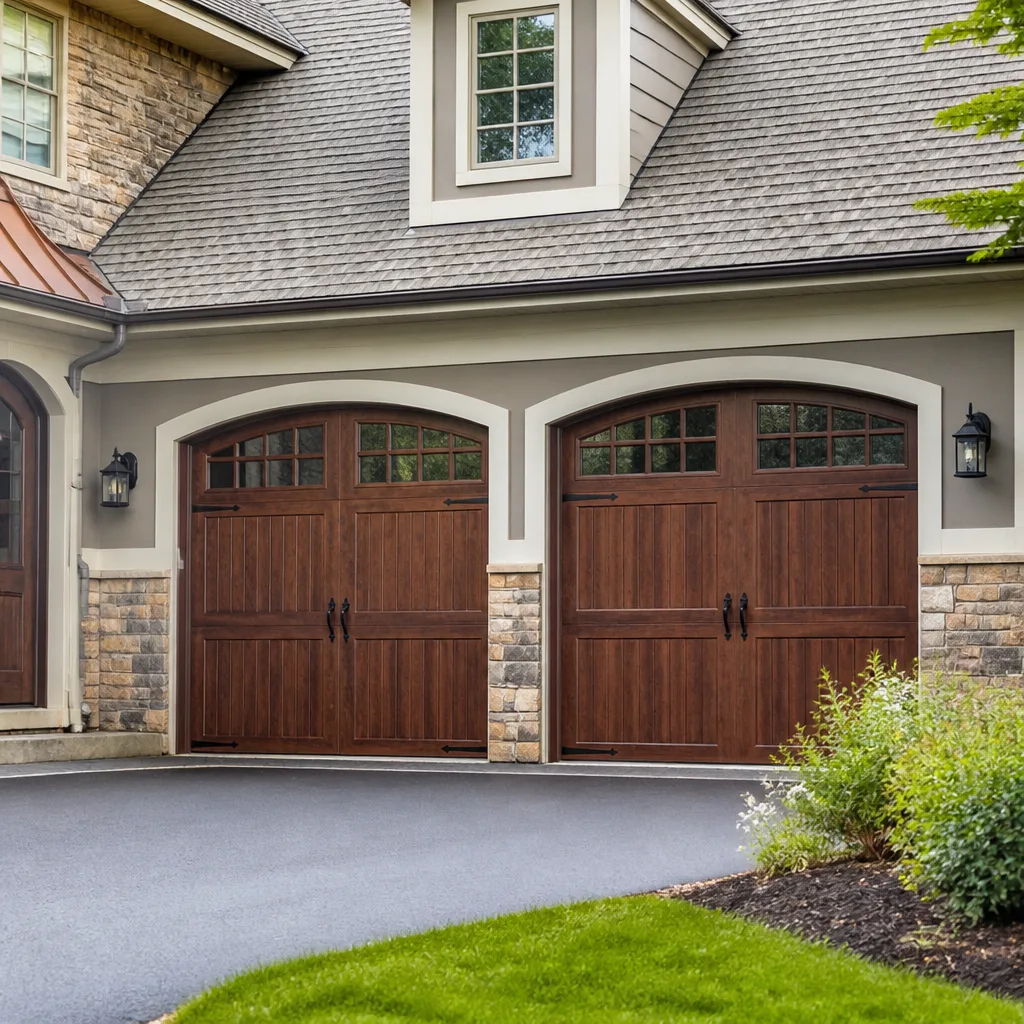 Carriage house
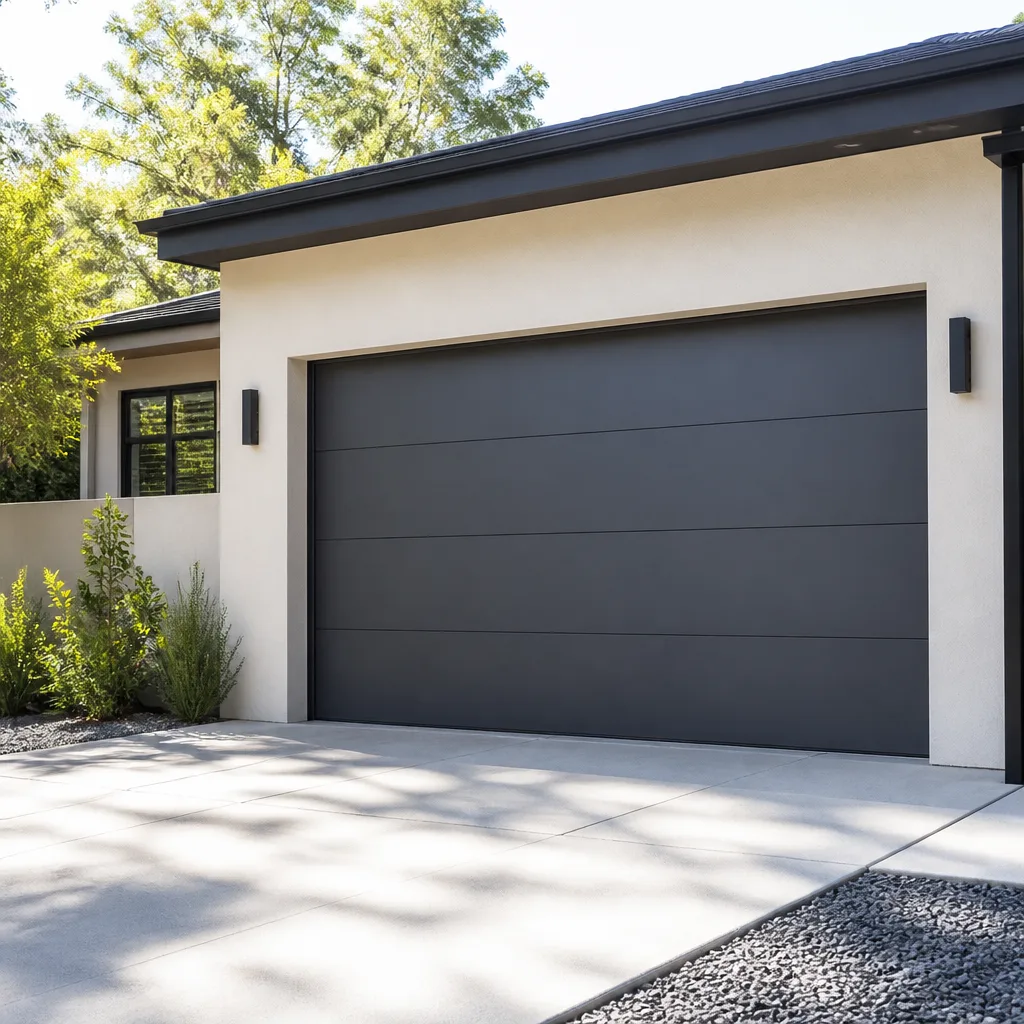 Modern flush
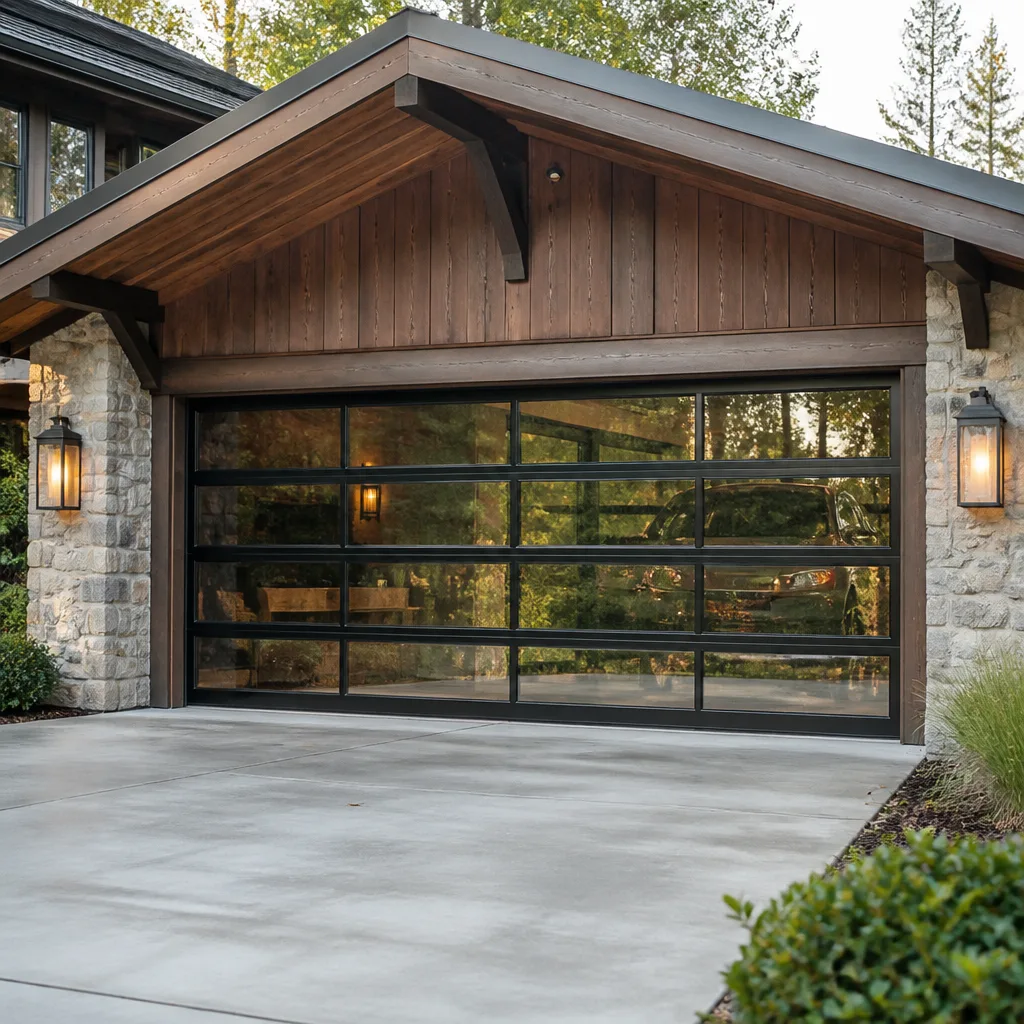 Full-view glass
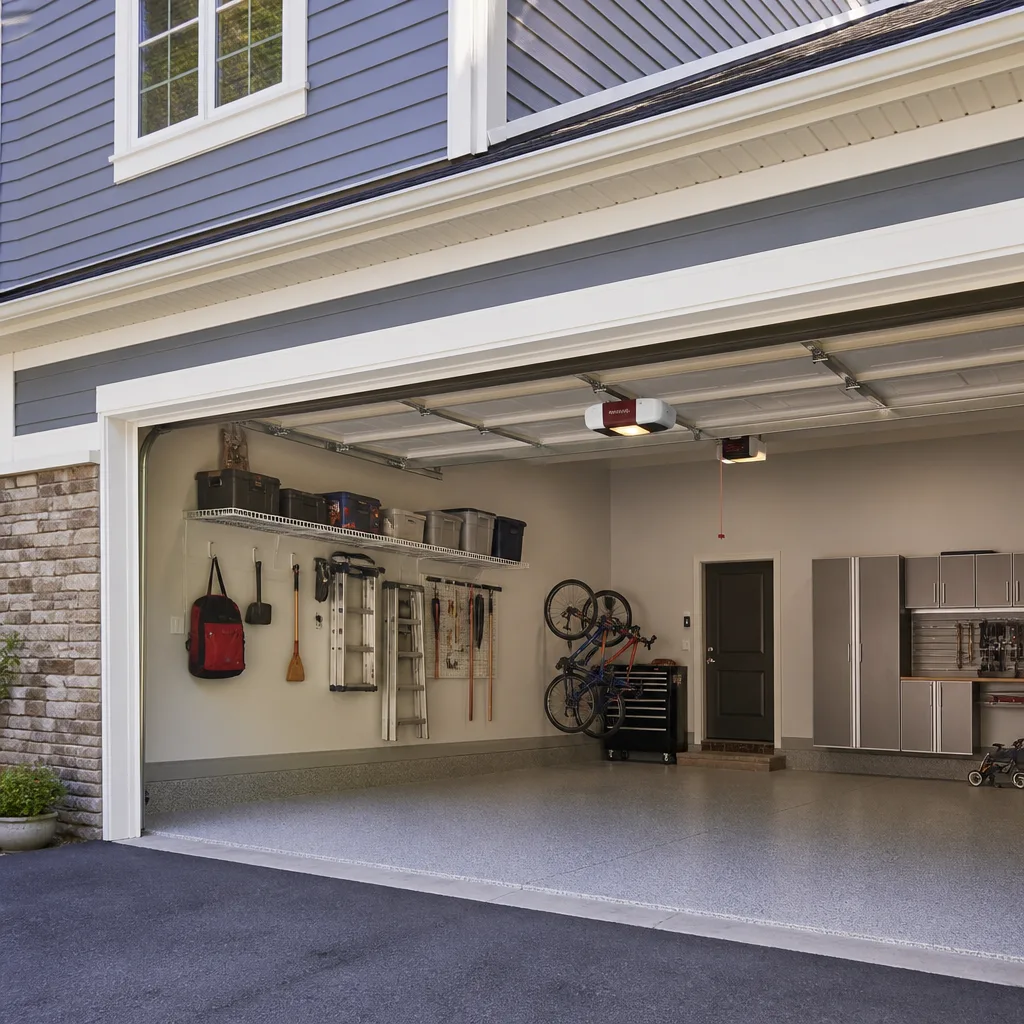 LiftMaster openers
 Chamberlain openers
Full 25-point door and opener safety check with every visit - springs, cables, rollers, tracks, and your LiftMaster or Chamberlain opener included
You get a price before we start. It does not change when the truck arrives.
Get your free estimateHow to Hire a Garage Door Contractor in Temecula: A Step-by-Step Guide
A surprising number of Temecula homeowners get quoted a full door replacement when the actual problem is a $40 limit switch or a worn drive gear. This happens more often than most people realize, and it usually traces back to one thing: the technician’s paycheck depends on selling installations, not repairing what’s already there. This guide walks you through how to find a garage door contractor in Temecula who diagnoses honestly, works on your specific brand, and gives you a straight answer even when the fix is small. For a deeper look at common fixes, see The Complete Garage Door Repair Guide for Temecula Homeowners. You’ll learn what licensing actually covers, which questions expose a brand-biased shop, and how to compare estimates when three companies quote three different approaches.
Quick Answer
To hire a garage door contractor in Temecula, verify their California CSLB license, confirm they service your specific door and opener brands, ask whether they perform repairs or only replacements, get an itemized written estimate before any work starts, and avoid any company that pressures you into a full replacement when a component repair would solve the problem. A brand-agnostic specialist who repairs LiftMaster, Chamberlain, Genie, Clopay, Amarr, Wayne Dalton, Craftsman, and Raynor systems will almost always save you money over a single-brand dealer pushing an upgrade.
Styles & brands we work with
Table of Contents
- Why Brand Compatibility Matters More Than Price in Temecula
- Step 1: Verify the California Contractor License
- Step 2: Ask the Five Questions That Expose Brand Bias
- Step 3: Know the Difference Between Dispatch Services and Local Shops
- Step 4: Read the Estimate Line by Line
- Step 5: Compare Three Quotes Without Losing Your Mind
- Step 6: Spot the Red Flags Before You Sign
Why Brand Compatibility Matters More Than Price in Temecula
Temecula driveways carry a wider mix of garage door brands than most people expect. In the newer master-planned communities around French Valley and Harveston, you’ll find mostly Clopay and Amarr doors paired with LiftMaster or Chamberlain openers. In the older neighborhoods near Old Town and Paseo del Sol, Wayne Dalton panels and Genie openers still appear regularly. A contractor who only knows one product line will either tell you that your existing system is obsolete, or they’ll improvise with parts that don’t quite fit. Either way, you lose.
Here’s what brand compatibility actually means in practice:
- Door panel systems: Clopay, Amarr, Wayne Dalton, and Raynor each use different track profiles, hinge spacing, and spring calibration charts. A tension setting that works for a Clopay door isn’t necessarily right for a Raynor panel of the same visual size.
- Opener systems: LiftMaster and Chamberlain share parent engineering but differ from Genie in travel module logic, safety sensor communication, and remote programming sequences. Craftsman openers, mostly older models, require a different diagnostic approach entirely.
- Interchange reality: Some parts cross brands, some absolutely do not. A technician who works across all eight major brands knows the difference on sight, without a manual and without guessing.
When a contractor asks “what brand is your door?” before they even arrive, that’s a good sign. It means they’re already thinking about which parts truck to bring, which spring charts to reference, and which diagnostic sequence to run on the opener. Our service model is built around exactly this: one technician trained on the full market, repairing your specific system rather than recommending the one we happen to stock. You can see how we apply that approach to complete garage door repairs in nearby Wildomar, where the same brand mix shows up throughout the Temecula Valley corridor.
Step 1: Verify the California Contractor License
California requires any contractor performing garage door work for more than $500 in labor and materials to hold a valid CSLB license. Here’s the part most guides skip: a “D-28” classification covers doors, gates, and activating devices, including garage door openers. A general building contractor, or “B” license, can legally do this work too, but that classification doesn’t prove they specialize in it.
Verification takes under two minutes:
- Go to the CSLB website (cslb.ca.gov) and click “Check a License.”
- Enter the business name or the license number the contractor gave you.
- Confirm the license status reads “Active” and the expiration date hasn’t passed.
- Check the classification. Look for D-28, B, or both.
- Check the workers’ compensation insurance status. If it says “Exempt,” that means the contractor has no employees. If they send a crew out, they need coverage.
- Scan the “Action” section for any disciplinary history or pending complaints.
In Temecula specifically, some of the garage door crews working the area are based in Murrieta, Menifee, or northern San Diego County. That’s fine, as long as the license is current and the classification fits the work. What you don’t want is an unlicensed handyman who lists “garage door repair” alongside pressure washing and fence staining. The licensing database will tell you immediately if someone is a specialist or a generalist with a truck.
You should also confirm the contractor carries general liability insurance. A garage door replacement involves lifting heavy panels overhead, setting springs under high tension, and wiring an opener into your home’s electrical system. If a panel drops onto a car in the driveway, someone’s insurance has to answer for it. Make sure it’s theirs.
Step 2: Ask the Five Questions That Expose Brand Bias
Every garage door contractor can tell you they do “all brands.” Half of them mean “I’ll look at it and tell you to replace it.” These five questions, asked in order, will tell you within three minutes whether you’re talking to a brand-agnostic specialist or a single-brand dealer in disguise.
Question 1: “What brands of openers do you stock circuit boards for?”
A repair-focused shop carries or has quick access to logic boards, travel modules, and gear kits across Genie, LiftMaster, Chamberlain, and Craftsman. A sales-focused shop stocks one opener model and nothing else. If the answer is vague (“we can order whatever you need”), that’s a tell. Ordering parts means multiple visits and higher labor costs for you.
Question 2: “Do you repair openers, or just replace them?”
This is the single most revealing question you can ask. A surprising number of companies in the Temecula-Murrieta corridor will not touch opener repairs at all. They call it “not worth the liability” or “replacement is always more cost-effective.” What they actually mean is their margin on a $450 opener installation is better than an hour of diagnostic labor, and they’ve built their pricing model around that. We run dedicated opener repair service in Wildomar precisely because most competitors treat it as a side task rather than a core capability. A shop that takes opener repair seriously has the diagnostic tools and the replacement parts to actually fix your Genie or LiftMaster, not just swap it.
Question 3: “What would you replace a broken spring with?”
The answer should specify the brand, the wire size, the inner diameter, and the spring length. If the technician says “a standard spring” and nothing else, they’re not working from your door’s weight calculation. Under-tensioned or over-tensioned springs are a safety hazard, and a generic spring on a Clopay or Amarr door will fail early or, worse, throw the door off balance while your family is under it.
Question 4: “Can you show me the part that failed while it’s still on the door?”
A straight answer is yes. An honest technician walks you through what broke, why it broke, and what the fix involves. Someone who says “it’s complicated” or “you wouldn’t understand the technical details” is preparing to sell you something larger than the problem. You’re entitled to see the evidence before you authorize the work.
Question 5: “If my door has another issue in 60 days, is there a callout fee?”
Every repair carries some risk of a follow-up adjustment. A confident shop backs its diagnosis with a reasonable service window and doesn’t bill you a fresh trip charge for something directly related to the original repair. If a company can’t answer this question cleanly, that’s a signal about how they handle the back end of the job, not just the front.
Step 3: Know the Difference Between Dispatch Services and Local Shops
Temecula sits in a corridor where national garage door dispatch networks run heavy online advertising. You know them by their ads: big, polished, urgent. What you may not know is how they actually operate behind the booking screen.
Here’s the model: you book online, a central call center assigns your job to a subcontracted technician who covers Temecula, Murrieta, and sometimes southwest Riverside County more broadly. That technician may be licensed, may not be. The company you booked with may have a CSLB number, but the person who arrives at your door might be working under a different license entirely, or none. When something goes wrong, the dispatch platform blames the tech, the tech blames the dispatcher, and you’re left holding a door that still doesn’t open.
The alternative is a shop that actually operates in the Temecula Valley. A local outfit lives or dies by its reputation in specific neighborhoods: Redhawk, Morgan Hill, Wolf Creek, Crowne Hill, Paloma del Sol. A dispatched contractor from outside the area doesn’t care if you tell your neighbors about a bad experience. A local company does, because that’s the entire source of future work.
Here’s how to spot the difference before you book:
- Look for an actual street address in Temecula, Murrieta, or the surrounding valley. A PO box or no address at all means no physical shop.
- Call the number and listen. Do you reach a person who knows the local service area, or a queue that answers “Service Department, may I have your city and zip?”
- Ask if the technician is an employee or a subcontractor. You’re entitled to know who’s walking onto your property.
- Check whether the company’s service radius is geographically coherent. A shop covering Temecula, Wildomar, and Murrieta makes sense. A shop covering all of California in one booking system is a middleman.
This matters in Temecula specifically because the market is dense enough to support both models, and the dispatch networks spend heavily on local search advertising. They look like the default option when you’re in a hurry. The local shop is usually the one you find on the second or third page of results, because they’re spending their money on parts inventory and technician training instead of ad spend.
Step 4: Read the Estimate Line by Line
A garage door estimate tells you almost everything about how a company operates, if you know how to read it. Most people glance at the bottom number and make a decision. Here’s what to look at instead.
The parts line should be itemized. If an estimate says “spring replacement: $389” without telling you the spring’s wire size, inner diameter, length, and brand, you’re not getting a real quote. You’re getting a price for whatever spring they decide to throw on when they arrive. Ask for the exact part specifications. A door that takes a 0.207-inch wire spring should not be getting a homeowner-grade 0.192-inch replacement because it’s cheaper for the tech to stock.
Labor should be separated from parts, at least roughly. Some companies bundle labor into a flat “job price.” That’s fine if the estimate is specific about what the job includes. If it’s a flat price with no breakdown, no part description, and no scope, you’re buying a surprise.
The service call fee structure signals the company’s business model. Here are the three common structures:
- Fee waived with repair: You pay a service call fee, usually $29 to $79, which is credited toward the repair if you approve the work. This is the most honest model for a repair-focused shop. It covers their diagnostic time and gives them no incentive to inflate the repair.
- Fee applies regardless: You pay the diagnostic charge even if you approve the work. This isn’t automatically a red flag, but it should be disclosed before anyone arrives.
- Free diagnostic with visit: No charge to come out, but the “diagnosis” often leads to a replacement recommendation whether or not the door needs replacing. Free diagnostics are rare in legitimate repair work because they attract tire-kickers. When they exist, ask yourself what the company’s margin is coming from.
Never accept a verbal estimate. A technician who quotes a spring replacement at “around $300 to $400” and then hands you an invoice for $520 after the work has walked into a position where the only proof you have of the original price is your memory. California law requires contractors to provide a written contract for home improvement projects over $500, but even under that threshold, a written scope protects you. The price on the estimate should be the price on the invoice, before any work starts. If it’s not, you should know exactly why before you agree to the change.
We also recommend checking what the estimate says about follow-up work. If a shop charges a fresh service fee for any callback within 60 to 90 days, that’s worth noting. If they stand behind the repair with no re-dispatch fee on related issues, that’s worth more than fifty dollars of savings on the front end.
Step 5: Compare Three Quotes Without Losing Your Mind
Getting three quotes for a garage door repair or installation in Temecula is good practice, but it doesn’t work like it does for a roof or a kitchen remodel. Here’s why: In most trades, three contractors are bidding on roughly the same materials and the same labor scope. In garage door work, three companies might be bidding on three different solutions entirely.
One company might quote a complete door and opener replacement for $2,400. A second might quote a new spring, new rollers, and a hinge replacement for $490. A third might diagnose the actual problem as a stripped drive gear in the opener and quote $185. All three are responding to the same phone call, but they’re not solving the same problem. Comparing those three numbers side by side is meaningless until you know what each one actually proposes to do.
Here’s how to compare accurately:
- Get the diagnosis in writing from each company. What is the primary failure? What caused it? What specifically needs to be replaced or repaired?
- Force apples-to-apples on parts. If company A quotes an Amarr spring set and company B quotes a generic aftermarket set, those are different products with different lifespans. Ask each to specify the brand and part number on the estimate.
- Separate necessary work from recommended work. A good estimate clearly distinguishes between “broken now, must fix to operate” and “showing wear, could consider replacing.” If an estimate blurs that line, call it out.
- Weight the follow-up policy. A $40 difference in price evaporates fast if one company charges a $79 re-dispatch fee for any issue within 90 days and the other doesn’t.
- Ask about the warranty on parts, not just labor. A spring should carry at least a multi-year cycle rating. Some premium Clopay and Amarr components carry longer warranties. Find out what the estimate actually includes.
Then make your decision based on the diagnosis you trust most. If one company took ten minutes to look and quoted a full replacement, and another spent half an hour testing the opener’s travel module and quoted a $90 circuit board, you don’t need the third quote to know which one was actually diagnosing your system.
Step 6: Spot the Red Flags Before You Sign
Some warning signs are obvious. Others are subtle, and Temecula’s market has developed its own patterns over the years. Here’s what we tell homeowners to watch for.
Red flag: The quote arrives before the diagnosis. A technician who walks in, glances at the door, and immediately starts building a replacement quote hasn’t diagnosed anything. There are at least a dozen common failure points on a garage door system, and the visible one is rarely the only one. Real diagnosis takes time: testing the balance, checking spring tension, running the opener through a cycle, inspecting the safety sensors. If the clipboard comes out before any of that happens, you’re being sold, not served.
Red flag: “You might as well replace the whole thing while we’re here.”
This is the single most common upsell line in the garage door industry, and it’s particularly effective on homeowners who’ve just had a door fail and want to never think about it again. Sometimes full replacement is genuinely the right call: a door with a rusted-through bottom section, a track that’s been bent, and an opener from 1998 may cost more to piecemeal than to replace. But that’s a conclusion reached through diagnosis, not a default suggestion. Ask what specifically makes replacement necessary. If the answer is vague, get a second opinion.
Red flag: Unmarked trucks and generic uniforms.
This isn’t about branding cosmetics. A technician who shows up in an unmarked truck may be a fine professional working under their own name. It may also be a subcontracted worker from a dispatch platform who has no ongoing relationship with your community and no accountability trail. At minimum, ask for the company name, the technician’s name, and the license number that covers the work being performed. A professional won’t hesitate.
Red flag: Cash-only pricing or a discount for skipping the invoice.
Any contractor offering a meaningful discount for cash with no invoice is avoiding a paper trail, which means avoiding accountability. A legitimate Temecula garage door company provides a written estimate, a written scope, and a written invoice with the work described. If someone wants to keep the job off the books, that’s a problem for you if the work fails or causes damage.
Red flag: High-pressure “today only” discounting.
“If you sign today, I can do it for 20% off.” For installation work, this is a classic closing technique. Reputable garage door contractors have healthy pipelines. They don’t need to force a decision at the kitchen table. The urgency on a repair is real: a door that won’t open or close is a security and safety concern. But even urgent repairs don’t require a discount ultimatum. Get the scope in writing and the price locked, then decide.
Common Mistakes to Avoid
- Choosing based on the lowest price without reading the scope. The cheapest quote often omits something the others include: disposal of the old door, a spring upgrade, a follow-up visit. Know what you’re comparing before you pick the low number.
- Booking through an online form without ever calling. A form tells you nothing about the company’s location, licensing, or whether a real human will answer when something goes wrong after the job.
- Assuming all springs are the same. Springs are calibrated by door weight, height, and cycle rating. A cheap spring on a heavy door will break early, and a broken spring is the most common cause of emergency calls in Temecula.
- Ignoring the opener when the door is fine. Many homeowners wait until the door itself fails to call anyone, but opener warning signs like slow response, grinding, or sensor faults warrant attention before a full failure leaves the car trapped inside.
- Skipping the CSLB check because the company “looks professional.” A clean website and a polished truck wrap mean nothing if the license isn’t active. The two-minute check is the highest-value step on this entire list.
- Signing a work order without a scope of work. “Repair garage door” is not a scope. The name of the part, the brand, the work performed, and the follow-up terms should all be in writing before you sign anything.
See the difference
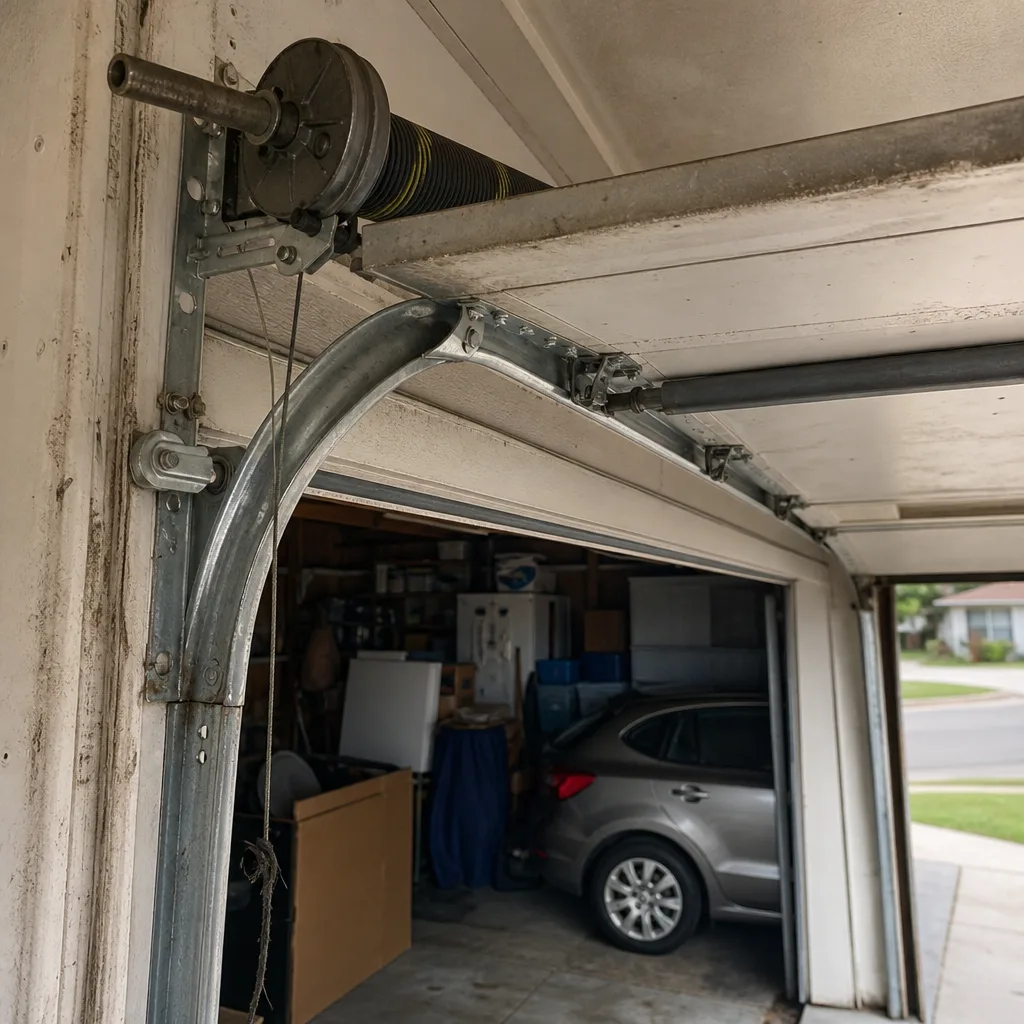 Before
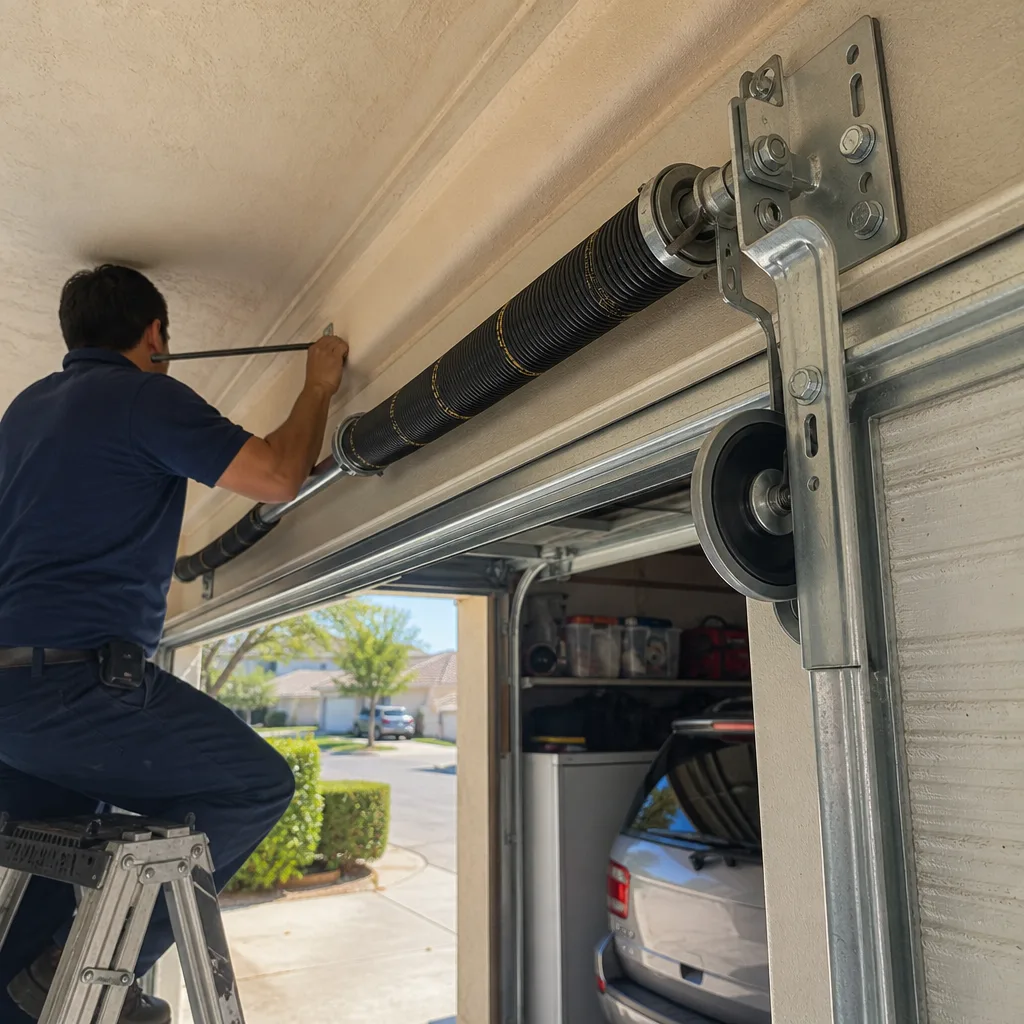 After
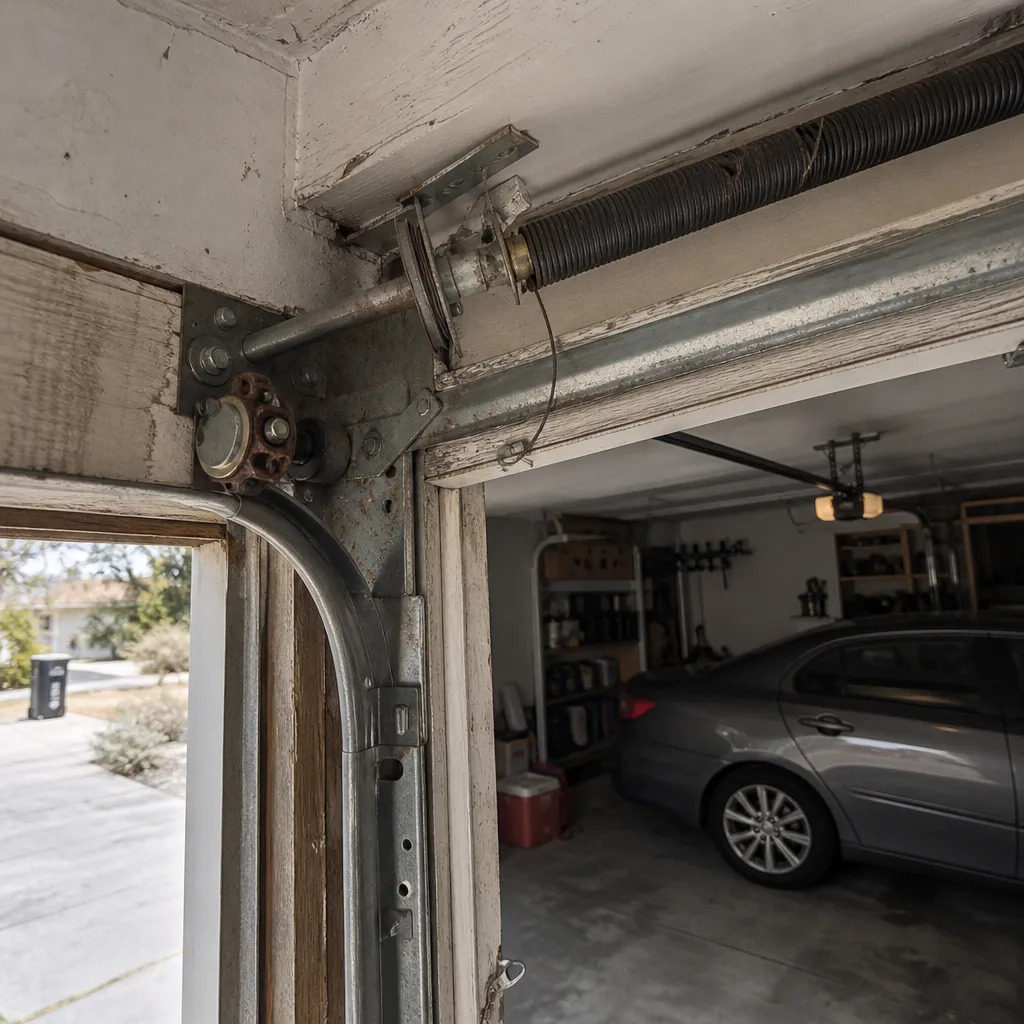 Before
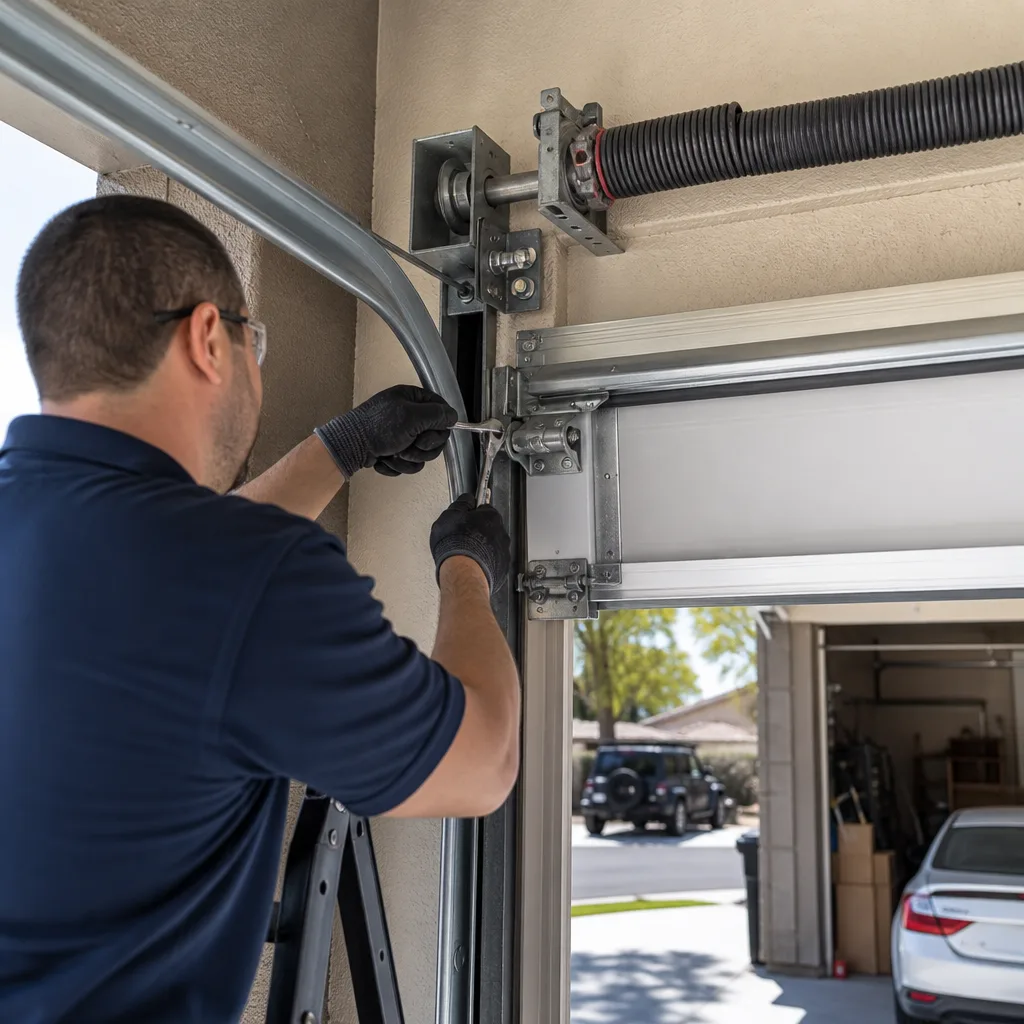 After
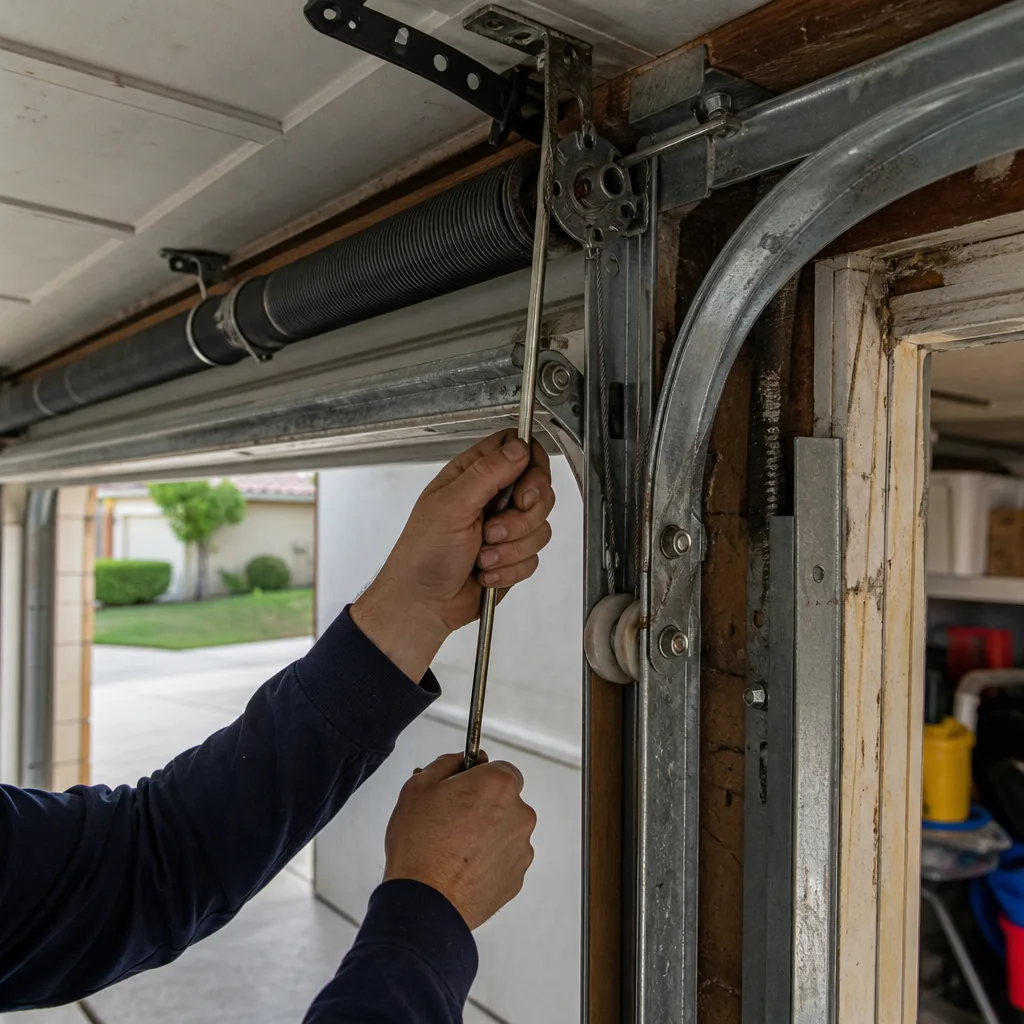 Before
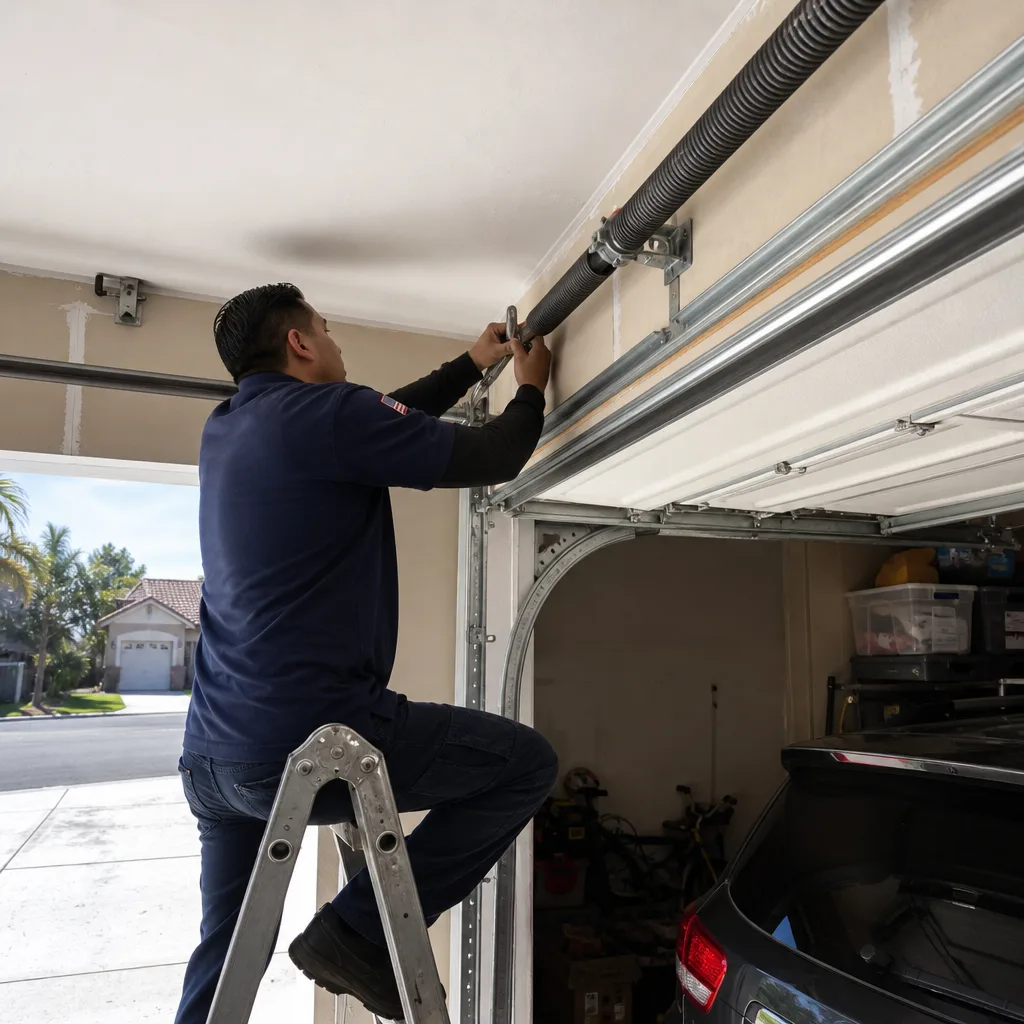 After
When to Call a Professional
Some garage door tasks are genuinely safe to handle yourself: cleaning the photoelectric sensors, lubricating the hinges and rollers with a silicone-based product, clearing debris from the track. Others are not. Torsion spring replacement involves stored kinetic energy that can cause serious injury if not handled with the right tools and training. For maintenance you can safely tackle yourself, check out Seasonal Garage Door Care for Temecula: Year-Round Homeowner’s Guide. Same goes for cable replacement, track realignment under load, and any work involving the opener’s electrical components. If your door is off balance, makes a loud bang when operating, or the opener’s travel needs reprogramming after a power surge, that’s not a weekend project.
High-tension springs and cables carry enough stored force to cause serious injury or death if they release unexpectedly. Never attempt to remove, adjust, or replace a torsion spring yourself. This is one area where the professional call is not about convenience; it’s about basic safety. Seabreeze Garage Door offers free estimates in Temecula. Call (888) 913-4062 and we’ll diagnose the problem honestly, whether it’s a $40 fix or a full system replacement.
Frequently Asked Questions
Visit the CSLB website at cslb.ca.gov, enter the business name or license number into the “Check a License” tool, and confirm the status reads “Active.” Look for the D-28 classification (doors, gates, and activating devices) or a B classification (general building contractor). Check the workers’ compensation status and any disciplinary actions on file. The whole process takes about two minutes.
Garage door repair in Temecula typically ranges from $125 to $350 for common fixes like sensor realignment, roller replacement, hinge repair, and travel limit adjustments. Browse more guides & resources to help plan and budget for your project. Spring replacement runs $275 to $450 depending on the door weight and spring grade. Opener repairs like a circuit board or drive gear replacement usually land between $150 and $400. A full door replacement with opener runs $1,800 to $3,500 depending on brand and insulation level.
For emergency repairs like a broken spring or a door stuck in the open position, many local Temecula shops offer same-day or next-day service. For installations and new builds, expect to schedule a measure and order parts, which typically takes one to two weeks. A spring failure often warrants same-day attention from a local shop, especially if the car is trapped in the garage.
It shouldn’t, provided the estimate was based on a real diagnosis rather than a phone quote. A technician who inspects the door and gives you a written estimate before starting work should honor that number. If additional damage is discovered during the repair that requires more work, the technician should stop and get your approval on the revised scope and price before continuing. You’re entitled to a firm number before any work begins.
A repair-focused company stocks common parts on their vehicles: springs in various wire sizes, rollers, hinges, sensors, logic boards, and drive gears for the major brands. If a company has to order a basic part for a common brand like Chamberlain or Clopay, that’s a sign they don’t do much repair work. Expect a technician to arrive with the parts needed for the most common failure points on LiftMaster, Genie, Chamberlain, Craftsman, and the major door brands.
Loud grinding, popping, or banging sounds usually mean one of three things: worn rollers that need replacement, a lack of lubrication on the hinges and track, or a spring or roller bearing failing under load. This is worth having a professional check before the problem escalates. A worn roller can damage the track over time, and a failing spring bearing could lead to a complete spring failure, which is the most common cause of a door that won’t open at all.
The Bottom Line
Hiring a garage door contractor in Temecula comes down to one core question: does this company repair what’s on your home, or replace it with what’s on their truck? Verify the license, ask the five brand-bias questions, read the estimate line by line, and make sure the quote reflects a real diagnosis. A shop that works across all the major brands including Genie, Clopay, Amarr, and Wayne Dalton, one that treats opener repair as its own discipline rather than an afterthought, will almost always give you a straighter answer and a lower total cost than a company that profits only from installations. In our experience working on doors and openers throughout the Temecula Valley, that’s been the pattern every time.
If you’re looking for a Seabreeze Garage Door home service experience that starts with an honest diagnosis, we’d be glad to help. We repair and install garage doors and openers across the Temecula area, with specialized expertise in opener diagnostics and brand-matched repairs. For a free estimate, call (888) 913-4062. We’ll tell you what’s wrong, what it costs to fix, and whether replacement genuinely makes sense or a $40 part will get you back to a door that works.
Written by the team at Seabreeze Garage Door, serving Temecula since 2014.