
Last updated October 30, 2026
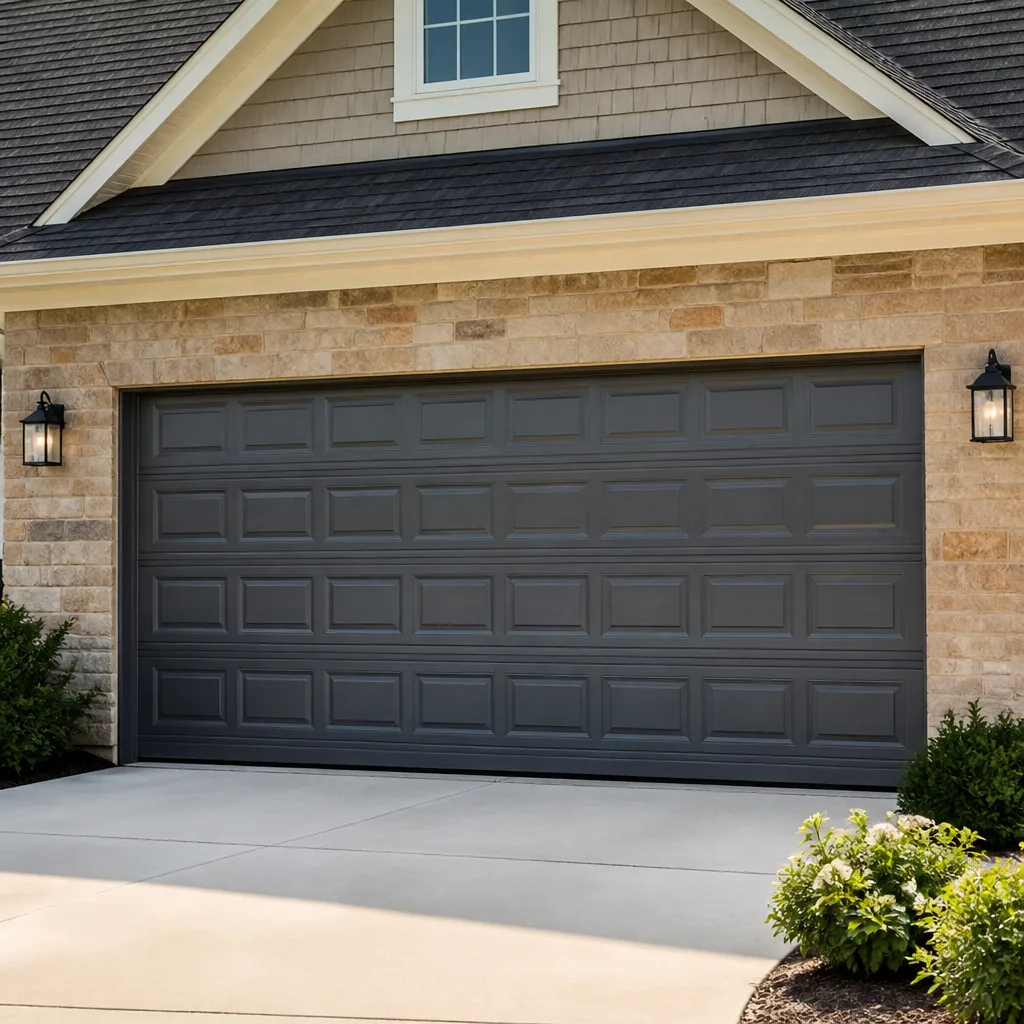 Raised-panel steel
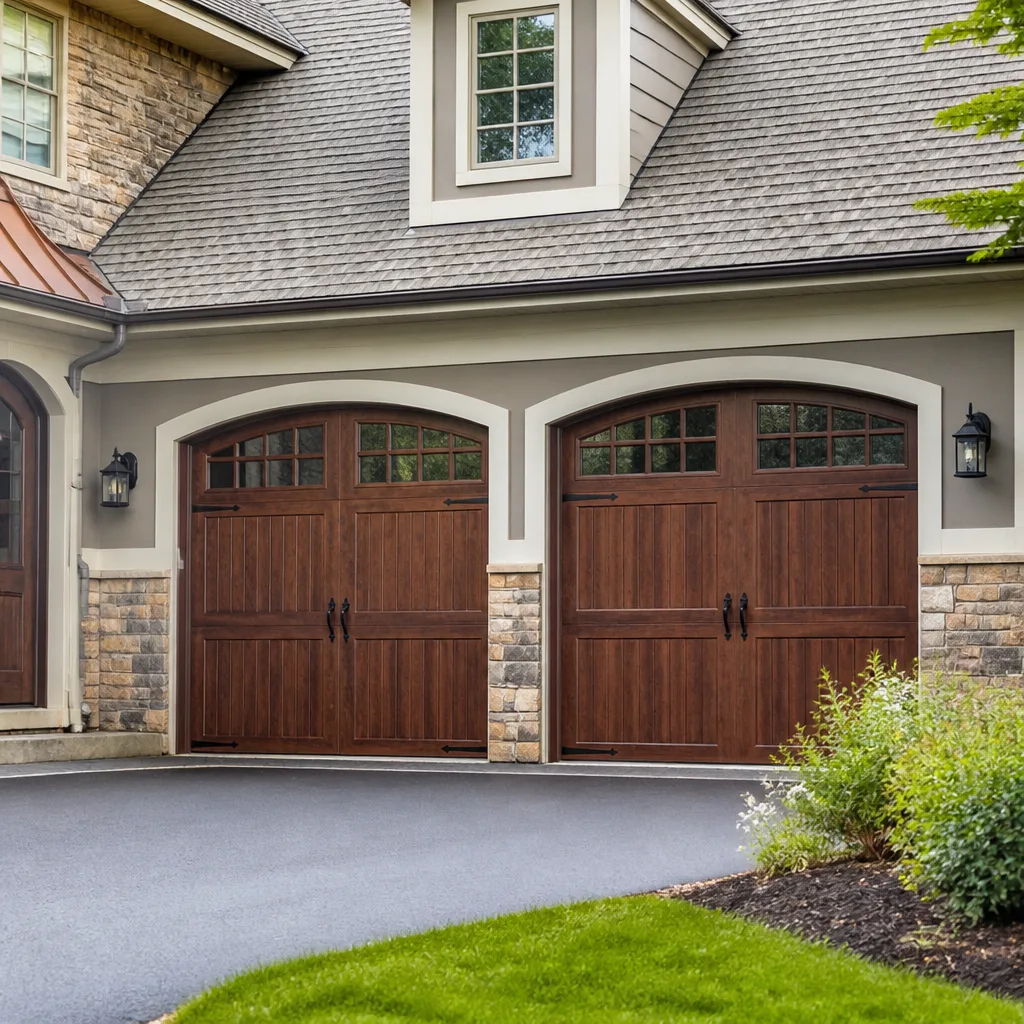 Carriage house
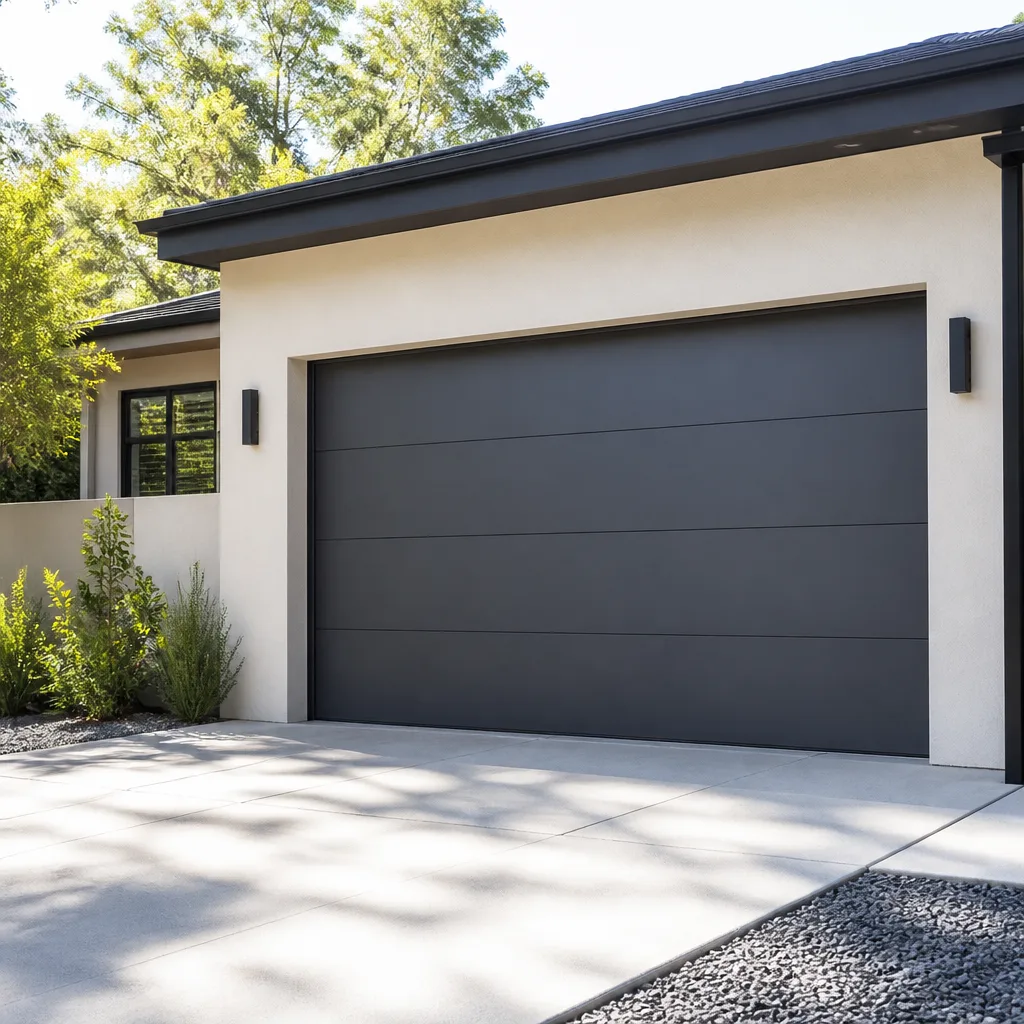 Modern flush
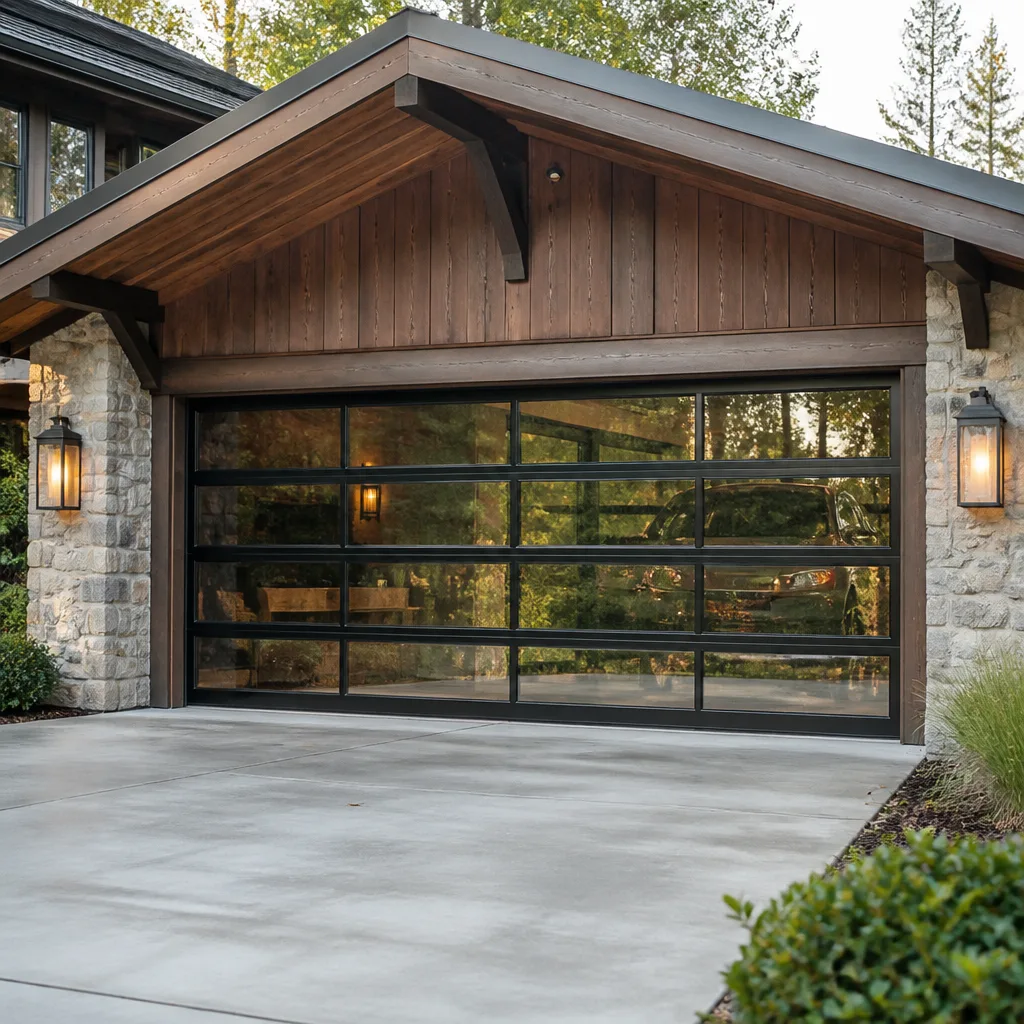 Full-view glass
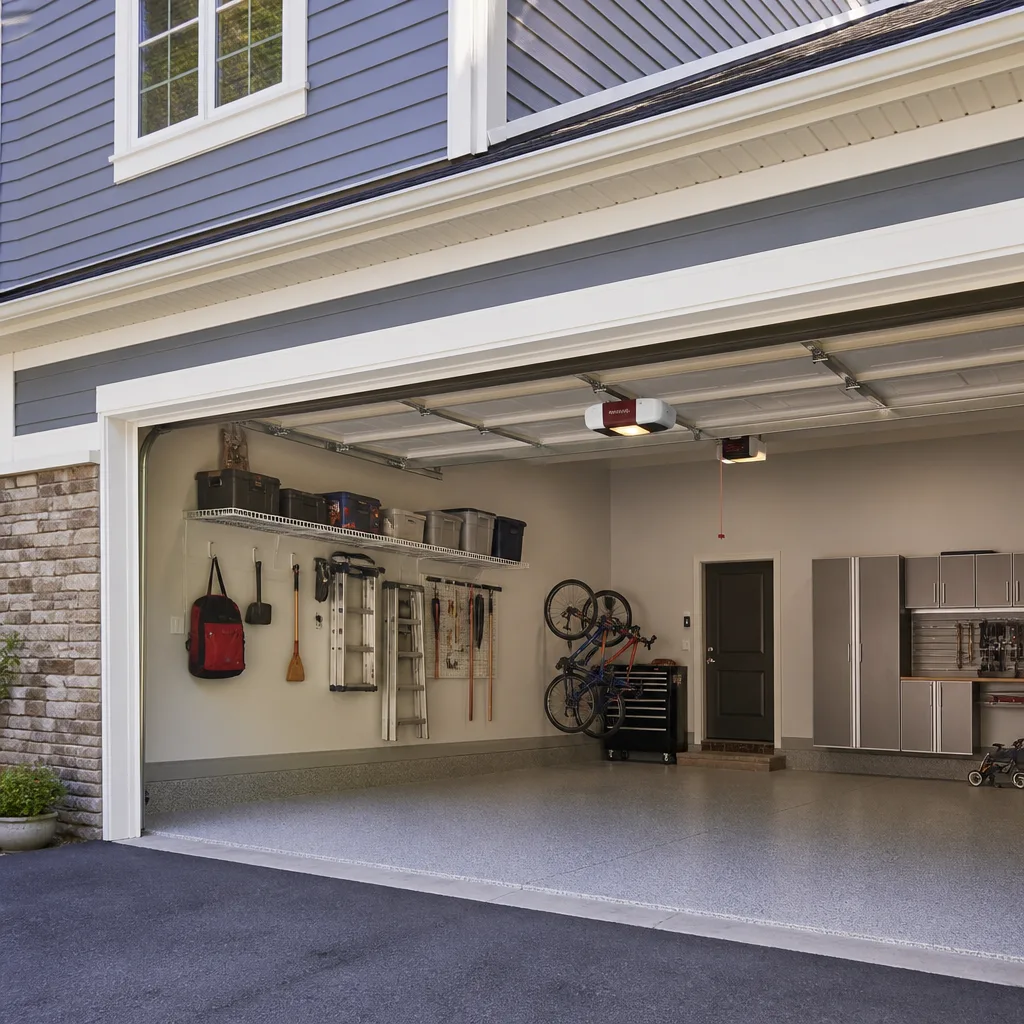 LiftMaster openers
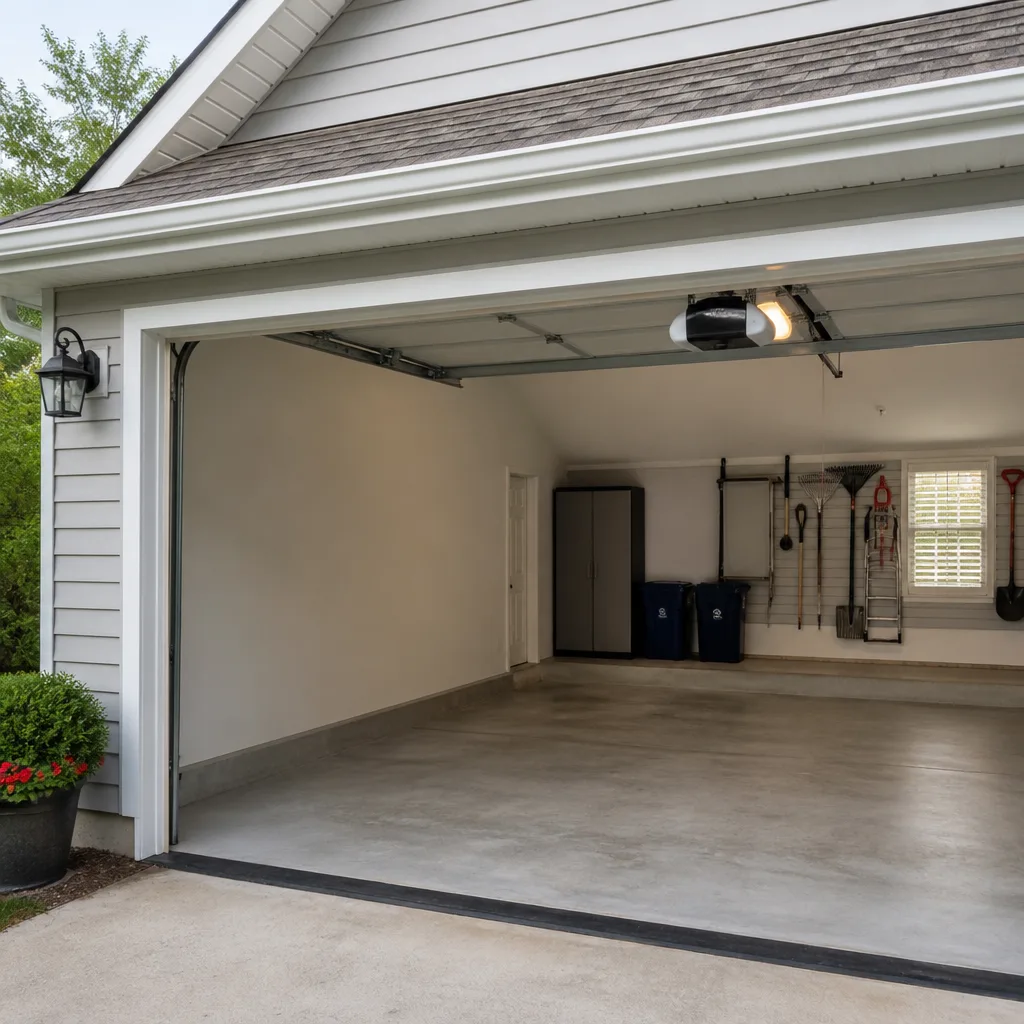 Chamberlain openers
Full 25-point door and opener safety check with every visit - springs, cables, rollers, tracks, and your LiftMaster or Chamberlain opener included
You get a price before we start. It does not change when the truck arrives.
Get your free estimateThe Complete Garage Door Repair Guide for Temecula Homeowners
Garage door springs in the Temecula Valley routinely fail 18 to 24 months earlier than manufacturer cycle ratings suggest. The reason is simple: rated lifespan assumes temperate conditions, not 100°F summers baking metal for six months straight, followed by cool desert nights that expand and contract every component on the door. This guide maps every common repair to the specific conditions Temecula driveways actually face, from the UV load that turns weatherstripping brittle to the fine dust that works its way into opener gears. You’ll learn which repairs are genuinely safe to handle yourself, which ones require a trained hand, and how Temecula’s climate changes the maintenance calendar most national guides ignore.
Quick Answer
Garage Door Repair in Temecula follows a different timeline than coastal California because inland heat, UV exposure, and dust accelerate spring fatigue, cable fraying, and seal breakdown. Most common repairs fall into five categories: torsion spring replacement, cable and roller work, track realignment, opener repair, and weatherstripping replacement. Any repair involving torsion springs, cables under tension, or the opener’s electrical system should be handled by a professional, while homeowners can safely manage lubrication, photo-eye cleaning, and seal inspection.
Styles & brands we work with
Table of Contents
- How Temecula’s Climate Changes the Repair Timeline
- The Most Common Garage Door Repairs in Temecula
- Why Springs Fail Early in the Temecula Valley
- What’s DIY-Safe vs. What’s Dangerous
- How to Cross-Reference Repairs Across Eight Major Brands
- A Seasonal Maintenance Calendar Built for Temecula Weather
- Permits and HOA Disclosure in Temecula’s Planned Communities
- Common Mistakes to Avoid
- When to Call a Professional
- Frequently Asked Questions
How Temecula’s Climate Changes the Repair Timeline
Temecula sits in a semi-arid inland valley where summer temperatures regularly cross 100°F and winter nights can dip into the 30s. That daily and seasonal temperature swing is harder on garage door components than almost anything the California coast throws at a house in Carlsbad or Laguna Beach. Metal expands when hot and contracts when cold. Do that 200 times a year, and fasteners loosen, tracks shift slightly out of alignment, and springs lose a small fraction of their rated tension with every cycle.
The second factor is UV. Temecula averages nearly 276 sunny days annually, and that sun beats directly on west-facing garage doors for hours each afternoon. UV breaks down the polymer structure of vinyl weatherstripping, turning flexible seals into cracked, chalky strips that no longer keep dust or heat out. On wood doors, the same UV load fades finishes and dries out panels, leading to warping and splitting that coastal homeowners rarely see until a door is decades old. In Temecula, a 12-year-old wood door can show the same weathering as a 20-year-old door in San Diego.
Then there’s dust. The Santa Ana winds and the steady inland breeze carry fine silt that settles into opener rails, drive gears, and bearing plates. That dust acts as a mild abrasive, accelerating wear on moving parts that would otherwise glide smoothly for years. National maintenance guides don’t account for this because most of the country doesn’t live in a semi-arid valley with six months of dry heat. In our experience working on doors throughout Temecula, Murrieta, and the surrounding valley, dust-related opener wear is one of the most frequent findings we see on units that are only three or four years old.
The Most Common Garage Door Repairs in Temecula
Every region has its own repair profile. Coastal areas see more rust from salt air. Northern climates see more cold-weather opener strain. Here in Temecula, the repair mix skews heavily toward heat and dust-related failures. Here are the repairs we see most often, ranked roughly by frequency.
1. Torsion Spring Replacement
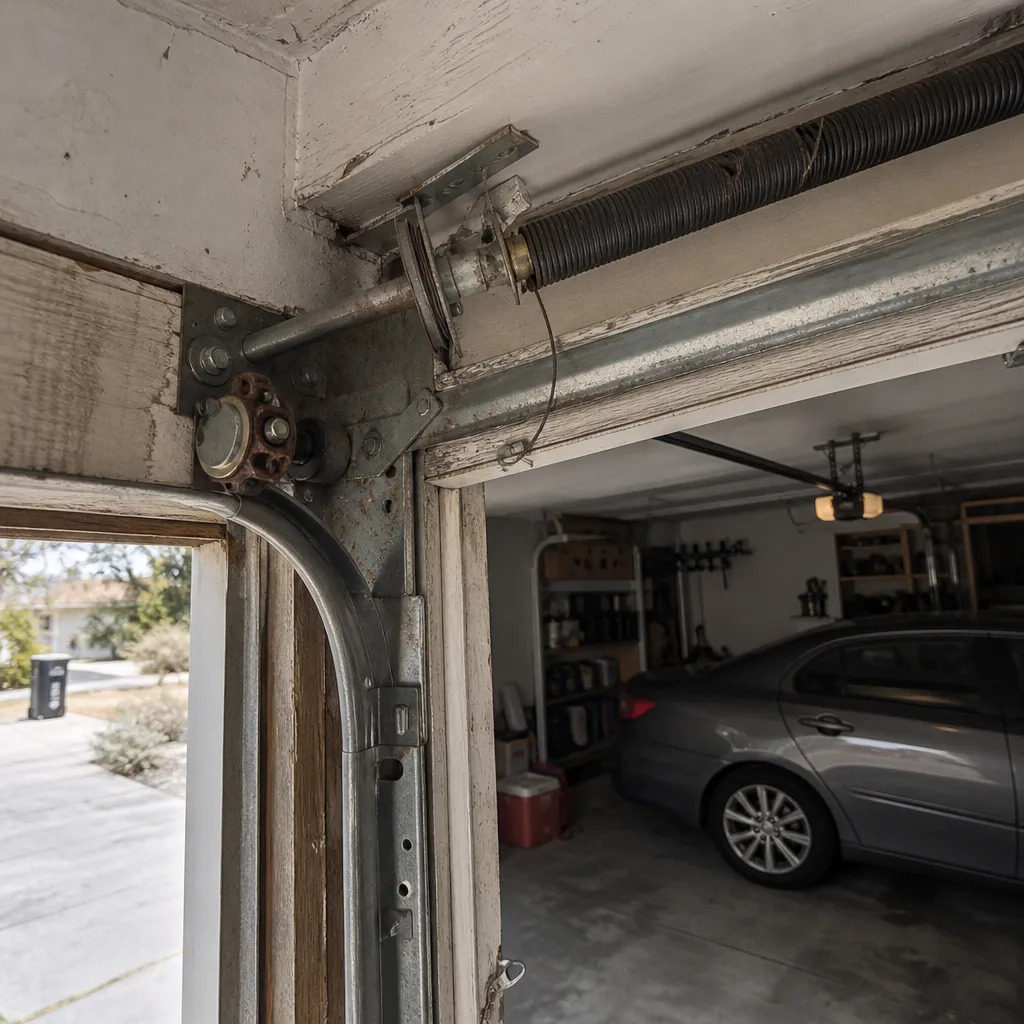
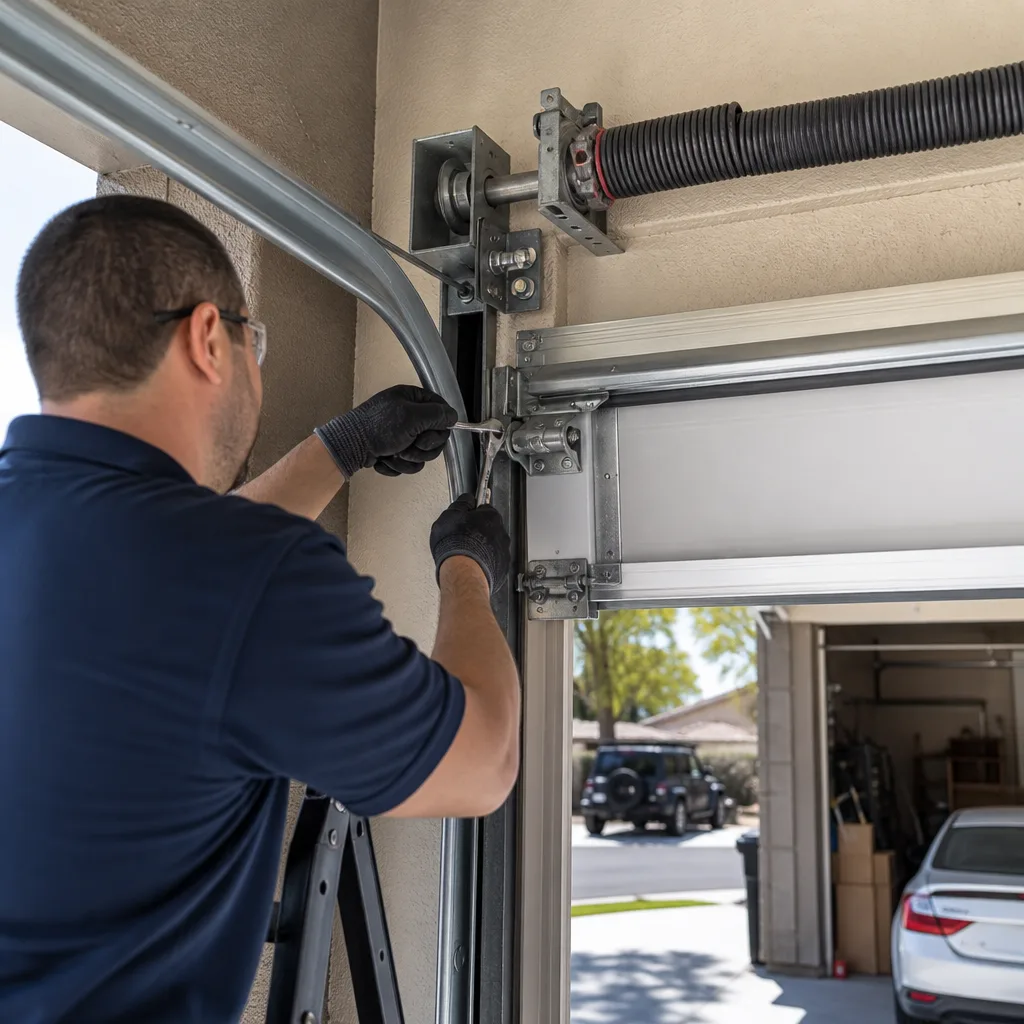
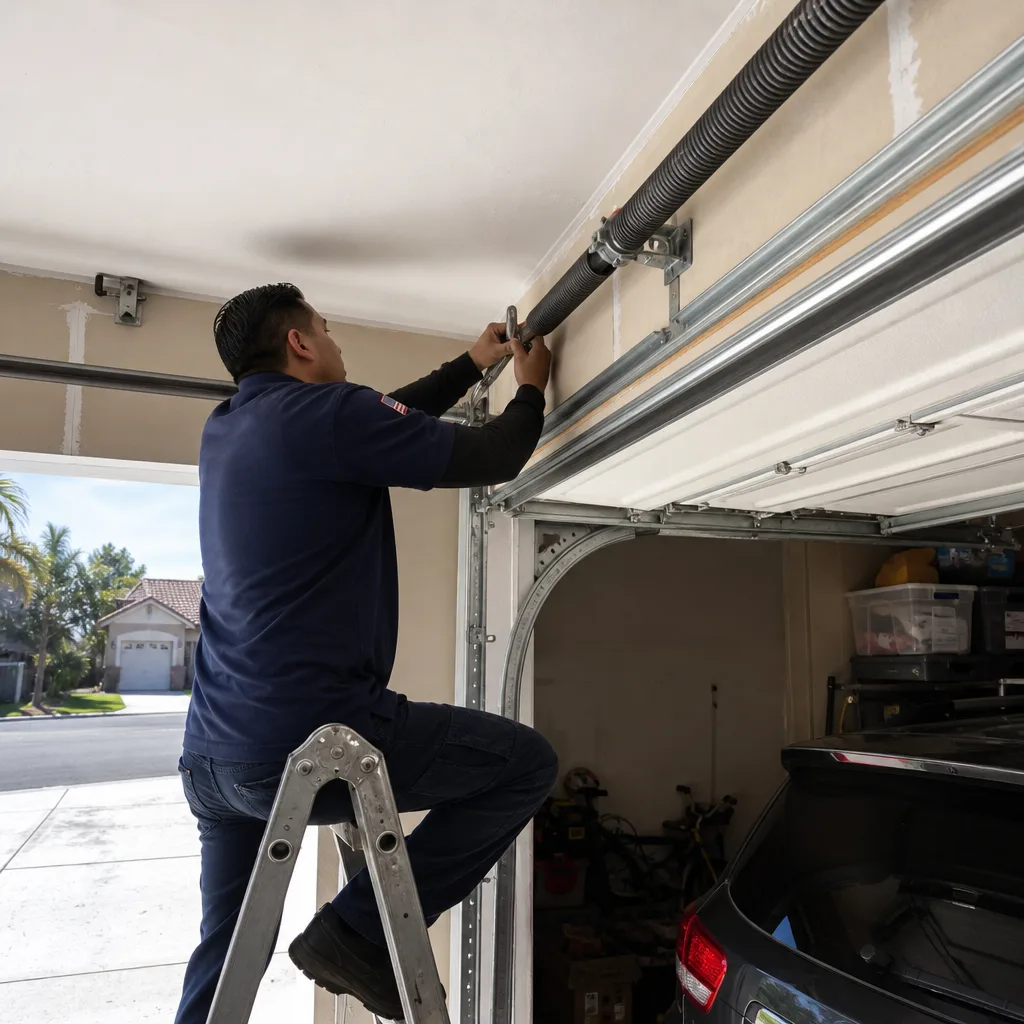
This is the number one repair in the Temecula Valley, and it’s not close. A torsion spring under a standard 16-foot door is rated for roughly 10,000 cycles, which works out to about 7 to 9 years of typical use. In Temecula’s heat, springs routinely hit the end of their functional life in 5 to 7 years. The heat affects the spring’s temper over time, causing micro-fractures that eventually snap the coil. When a spring breaks, the door won’t open, even with an opener. The repair involves unloading the remaining spring (or replacing both, which is standard practice for even wear), installing correctly rated replacements, and rebalancing the door.
2. Cable Fraying and Replacement
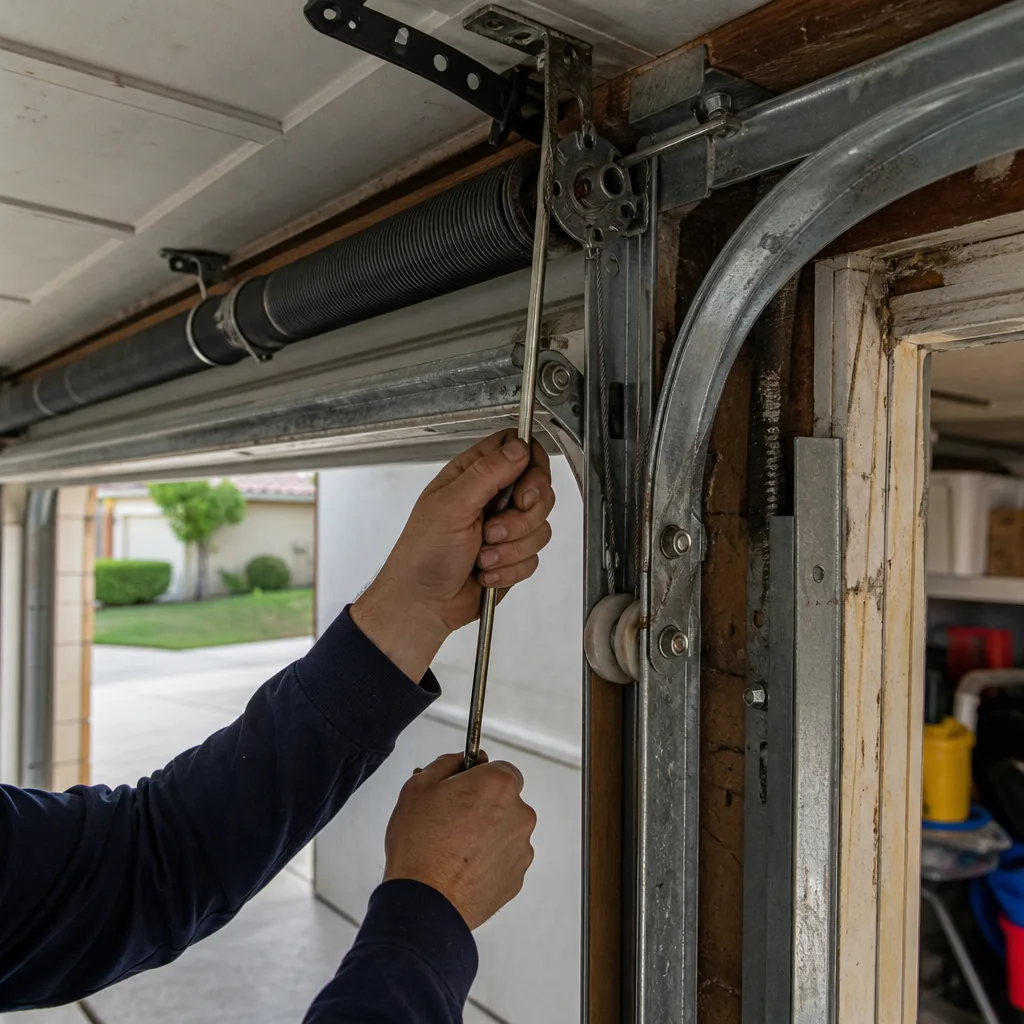
Lift cables work alongside the springs to move the door. Over time, heat makes the cable strands expand and contract, and the constant cycling through dusty pulleys causes visible fraying. A frayed cable is a serious safety issue: if it snaps mid-cycle, the door drops unevenly and can come off the track. In Temecula, we see cable wear concentrated around the pulley contact points, where heat and dust combine to grind the strands down. Replacing cables before they snap is far less expensive than repairing the damage a snapped cable causes.
3. Roller and Track Issues
Rollers are the wheels that guide the door along its track. Nylon rollers last longer than steel in Temecula’s environment because steel rollers generate more heat and attract more dust. When rollers wear flat or the bearings seize, the door grinds and jerks its way up and down, which compounds the stress on every other component. Track realignment is another heat-related issue: the metal in the track expands during the day and contracts at night, and over months that movement can pull the track slightly out of vertical. A door that binds halfway up is often a track issue, not a spring issue.
4. Opener Motor and Gear Failures
The opener is the motorized unit that does the lifting, and in Temecula, it works harder than it would in milder climates. Heat shortens the life of the motor’s internal components, while dust infiltrates the drive gears and causes them to strip. Symptoms include a humming sound with no movement, an opener that runs but struggles, or a door that reverses for no reason. Many Temecula homeowners assume the motor is dead when the real culprit is a stripped drive gear, which is a $100 to $200 repair rather than a $400 to $600 replacement.
5. Weatherstripping and Bottom Seal Replacement
The bottom seal is the rubber strip along the lower edge of the door, and it’s the first line of defense against dust, heat, and critters. Temecula’s UV load turns these seals brittle in two to four years, far faster than the five to seven year lifespan typical in milder climates. A cracked bottom seal lets dust into the garage, lets cooled or heated air escape, and opens a gap large enough for insects and rodents. Replacement is straightforward and inexpensive, but it’s also one of the most overlooked maintenance items we see.
Why Springs Fail Early in the Temecula Valley
Most homeowners don’t think about their torsion springs until the loud bang in the garage signals a failure. But the failure actually starts months or years earlier. Understanding the mechanics helps you plan for the repair before it strands your car in the garage.
A torsion spring stores mechanical energy by twisting. Every time the door opens or closes, the spring winds or unwinds, releasing that stored energy to help lift the door’s weight. The spring’s steel is tempered to maintain its performance across a rated number of cycles. What the rating doesn’t account for is sustained high heat. When outdoor temperatures stay above 95°F for weeks on end, the ambient temperature inside an uninsulated garage can exceed 120°F. Steel exposed to that heat day after day undergoes subtle changes in its crystalline structure, particularly if the spring surface has any microscopic imperfection from the manufacturing process. Those imperfections become fracture points.
The cycle then compounds: each open and close adds mechanical stress, and the heat adds thermal stress. The spring’s rated 10,000 cycles may effectively become 7,000 or 8,000 cycles. That’s the 18 to 24 month early failure window we described at the top of this guide. It’s not a defect in the spring. It’s the environment. This is why we recommend that Temecula homeowners with springs older than five years have them inspected during routine maintenance, even if the door still operates normally. A broken spring rarely gives notice. It just snaps, usually at the worst possible moment.
What’s DIY-Safe vs. What’s Dangerous
Not every garage door problem requires a service call. Some maintenance tasks are safe for a homeowner with basic tools and reasonable caution. Others are genuinely dangerous, and no amount of YouTube confidence changes the physics. See our DIY vs Professional Garage Door: The Temecula Homeowner’s Decision Guide for a full breakdown.
Safe for Homeowners
- Lubrication: A silicone-based lubricant on rollers, hinges, and the torsion spring (not the cable) reduces friction and extends component life. Do this twice a year in Temecula, more often if the door lives in direct sun.
- Photo-eye cleaning: The safety sensors at the bottom of the door track get dusty quickly in Temecula. Wipe them with a dry cloth and make sure nothing blocks the beam.
- Visual inspection: Look at the cables, springs, rollers, and seals once a season. You’re not making repairs; you’re spotting early warning signs like fraying cable strands or a cracked bottom seal.
- Weatherstripping replacement: The bottom seal slides out of its retaining track and a new one slides in. This is a 15-minute job with no safety risk.
Call a Professional
- Torsion spring replacement: The spring holds hundreds of pounds of tension even when the door is closed. A spring that releases unexpectedly can cause serious injury. This is not a DIY repair, full stop.
- Cable replacement: Cables work in tandem with the springs and are under the same tension load. A snapped cable can whip with enough force to cause severe injury.
- Track realignment: Adjusting the track requires the door to be lifted manually and secured while track brackets are loosened and repositioned. If the door slips, it falls.
- Opener electrical work: Opener repair involves wiring, circuit boards, and sometimes mains voltage. A trained professional can diagnose and fix the issue without risking electrical shock or a damaged opener.
If you’re unsure whether a task is safe, call a professional. The cost of an inspection is far less than the cost of an emergency room visit.
How to Cross-Reference Repairs Across Eight Major Brands
One frustration Temecula homeowners often run into is finding a technician who actually knows their specific brand. Single-brand dealers push their own product line, and general handyman services often lack deep training on any particular system. The reality is that garage door brands share many common components, but each has quirks. Understanding those quirks helps you ask the right questions and find the right help.
Chamberlain and LiftMaster are the dominant opener brands in the Temecula Valley, and they share the same parent company, which means many replacement parts are cross-compatible. The most common Chamberlain repair we see is a stripped drive gear in belt and chain drive units. It presents as a humming motor with no door movement. The fix is a gear replacement kit, and it’s a repair a Chamberlain-trained tech handles in about an hour. Genie openers, by contrast, more often develop issues with the carriage and release mechanism, particularly on older screw-drive models that have been running in dusty environments for years.
On the door panel side, Clopay and Amarr are the two brands we see most frequently in Temecula’s newer developments. Clopay doors with Intellicore insulation hold up well in the heat, but the exterior finish can fade after five to seven years of direct sun exposure. Amarr doors generally have more robust hinge systems, but the bottom seal channel is proprietary, which means the weatherstripping replacement needs the correct Amarr seal rather than a universal option. Wayne Dalton doors, common in homes built in the 1990s, have a distinctive TorqueMaster spring system that works differently from a standard torsion setup, and some techs who are unfamiliar with it will misdiagnose the failure.
Cross-referencing across brands means knowing which components are interchangeable and which are not. A universal roller fits most doors, but a bottom seal for a Wayne Dalton door won’t seat correctly in an Amarr channel. Similarly, a Chamberlain remote won’t pair with a Genie opener without a compatibility bridge. When a homeowner calls us about a door issue, the first question we ask is the brand and approximate age of both the door and the opener. That single answer narrows the diagnosis considerably. For more detail on opener-specific repairs, read our guide on Garage Door Opener Repair in Wildomar, which covers the common opener failure patterns we see throughout the valley.
A Seasonal Maintenance Calendar Built for Temecula Weather
Generic maintenance advice says “check your door in spring and fall.” That model works for climates with four distinct seasons. It doesn’t work for Temecula, where the seasons are hot, hotter, windy, and mild. For more guides & resources, see our blog. Here’s a maintenance calendar aligned with what actually happens in the Temecula Valley.
February to March (Post-Winter Assessment)
Winter in Temecula is mild compared to Northern California, but the cooler months still have an effect. The temperature swings between cool nights and warm days cause track brackets and hardware to expand and contract. This is the time to do a full visual inspection: check for loose bolts on the track brackets, look for cracks in the weatherstripping, and test the balance of the door by disconnecting the opener and lifting the door manually. A door that doesn’t stay in place halfway up has a spring issue developing.
- Inspect the bottom seal: Look for cracks, gaps, or areas where the seal has pulled away from the door edge. Replace if damaged.
- Check roller condition: Rollers should roll smoothly, not slide. Worn rollers make a scraping sound and accelerate track wear.
- Test the auto-reverse: Place a 2×4 or a rolled-up towel in the door’s path and close the door. The door should reverse within two seconds of contact. If it doesn’t, the opener needs attention.
- Lubricate moving parts: Apply a silicone-based lubricant to hinges, rollers, and the spring. Avoid the track itself; lubricant in the track attracts dust.
June to July (Pre-Peak Heat Preparation)
This is the most important maintenance window in Temecula. The door is about to face three months of triple-digit temperatures, and the stress on the springs, cables, and opener will be at its annual maximum. Lubrication is critical here because heat accelerates evaporation and degradation of whatever lubricant is on the parts. A dry roller in August is a roller that seizes by September.
Also during this window, inspect the garage door springs closely. Look for gaps in the coil, rust spots, or a spring that appears to be sagging. If the springs are more than five years old and have never been serviced, a professional inspection now is cheaper than an emergency repair later. If you’re reading this in July and haven’t done this check, do it this week.
October to November (Post-Summer and Santa Ana Prep)
October brings the Santa Ana winds, and with them, dust. Fine particulates from the desert get driven through Temecula neighborhoods at speeds that force them into every garage, whether the door is open or not. During this window, clean the tracks with a dry cloth to remove accumulated dust, and check the photo-eye sensors for debris. The dust also settles on the opener’s drive rail, especially on chain-drive units, and that buildup causes the opener to work harder and run louder. A quick wipe-down of the rail and the sprocket area reduces strain on the motor.
Permits and HOA Disclosure in Temecula’s Planned Communities
Temecula’s residential landscape is dominated by planned communities: Harveston, Redhawk, Wolf Creek, Paseo del Sol, and others. Many of these communities have architectural guidelines that extend to garage doors, even though the door itself is part of the homeowner’s property. Before replacing a garage door, it’s worth checking two things: city permitting requirements and HOA architectural review.
The City of Temecula generally does not require a building permit for a garage door replacement when it’s a like-for-like swap with no structural modification to the opening. However, if the project involves widening the opening, changing the header, or converting a single door to a double door (or vice versa), a permit is required because those changes affect the structural framing. That work goes through the city’s building department and requires approved plans.
HOA requirements are separate and often stricter. Many Temecula HOAs require architectural review before a garage door replacement, particularly if the new door changes the color, material, or style from the original. The review process typically takes two to four weeks, and some communities restrict certain styles entirely. If you live in a community with a Spanish or Mediterranean architectural theme, for example, the HOA may only approve doors that match that aesthetic. Replacing a door without approval can trigger a violation notice and, in some cases, a requirement to re-replace the door at the homeowner’s expense. Before scheduling an installation, check your CC&Rs and submit the necessary application. The city permit and HOA review are two separate processes, and neither one covers the other.
Common Mistakes to Avoid
- Ignoring a noisy door: A grinding or squealing door isn’t just annoying; it’s a signal that components are wearing faster than they should. By the time the noise becomes a failure, the repair is always more expensive.
- Replacing one spring instead of both: Both springs on a two-spring door have cycled the same number of times. Replacing only the broken one means the older one will fail soon, and you’ll pay for labor twice.
- Using WD-40 on the rollers and tracks: WD-40 is a solvent, not a lubricant. It attracts dust and actually accelerates wear in Temecula’s dusty environment. Use a silicone or white lithium lubricant instead.
- Attempting torsion spring repair as a DIY project: This is the mistake we see referenced in emergency calls after the fact. The spring’s stored energy is enough to cause fractures and deep lacerations. No savings is worth that injury risk.
- Assuming all bottom seals are universal: The seal for an Amarr door is not the same as the seal for a Wayne Dalton or Clopay door. Installing the wrong profile leaves gaps and defeats the purpose.
- Delaying opener repair when the door reverses: A door that reverses for no reason is often a sign of a failing safety sensor or a misaligned limit switch. The longer it goes unaddressed, the more likely the opener’s logic board or motor sustains damage.
When to Call a Professional
Some situations are unambiguous. If the torsion spring has snapped, call a professional. If a cable has visible fraying, call a professional. If the door has come off the track, call a professional. These are not judgment calls; they’re safety calls. Torsion springs and cables carry tension loads that can cause severe injury if mishandled, and a door off its track can fall with enough force to damage vehicles or hurt anyone standing nearby. If the opener is humming but the door won’t move, that’s a diagnosis call: the issue could be a stripped gear, a broken spring, or a seized roller, and each has a different fix. Seabreeze Garage Door offers free estimates in Temecula, and our technicians work across the eight major brands, so the diagnosis is specific to your door, not a generic guess. Call (888) 913-4062 to schedule an inspection. For readers further north in the valley, we also cover Garage Door Repair in Wildomar with the same brand-matched approach.
Frequently Asked Questions
Garage door repair in Temecula typically ranges from $120 for minor parts like a bottom seal or roller replacement to $350 or more for a torsion spring replacement, depending on the door size and spring type. Specific pricing is always quoted and agreed upon before any work begins, so you know the number before we start. Call (888) 913-4062 for a free estimate on your specific door.
In Temecula’s heat, torsion springs typically last 5 to 7 years, compared to 7 to 9 years in milder climates. The sustained high temperatures in summer months cause premature fatigue in the spring steel, shortening the rated cycle life by 18 to 24 months. If your springs are older than five years, a professional inspection is worth scheduling.
We prioritize emergency repair calls for broken springs and doors that won’t open or close, and we carry the most common Temecula-area spring sizes and parts on our service vehicles. Call (888) 913-4062 as soon as you notice the issue, and we’ll let you know the earliest available appointment.
No. The price we quote before starting is the price you pay, unless you authorize additional work after we show you what’s needed. We quote every repair before any work begins, with no hidden fees or surprise add-ons.
We work on all eight major garage door and opener brands: LiftMaster, Chamberlain, Genie, Clopay, Amarr, Wayne Dalton, Craftsman, and Raynor. Whether the door is a Clopay panel system with a LiftMaster opener or an Amarr door with a Genie, the same team handles the complete system.
Summer heat in Temecula causes the metal in the door and track to expand, which tightens clearances and makes rollers and hinges work harder. Heat also evaporates lubricant faster, leaving moving parts dry and noisy. A mid-summer lubrication and hardware check usually resolves the noise before it leads to component failure.
The Bottom Line
Temecula’s climate means your garage door works harder and wears faster than the national averages. Springs fail early, seals crack under UV, and dust infiltrates openers. But every one of those failures follows a pattern, and knowing the pattern helps you stay ahead of it. Seasonal maintenance in the right months, early attention to noise and wear, and honest cross-brand diagnosis are the difference between a $120 seal replacement and a $500 emergency repair. Eight brands, one call: (888) 913-4062 for a free estimate in Temecula. For installation projects, read our Garage Door Installation in Wildomar guide to understand the full replacement process from measurement to final inspection.
Written by the team at Seabreeze Garage Door, serving Temecula since 2014.
See the difference
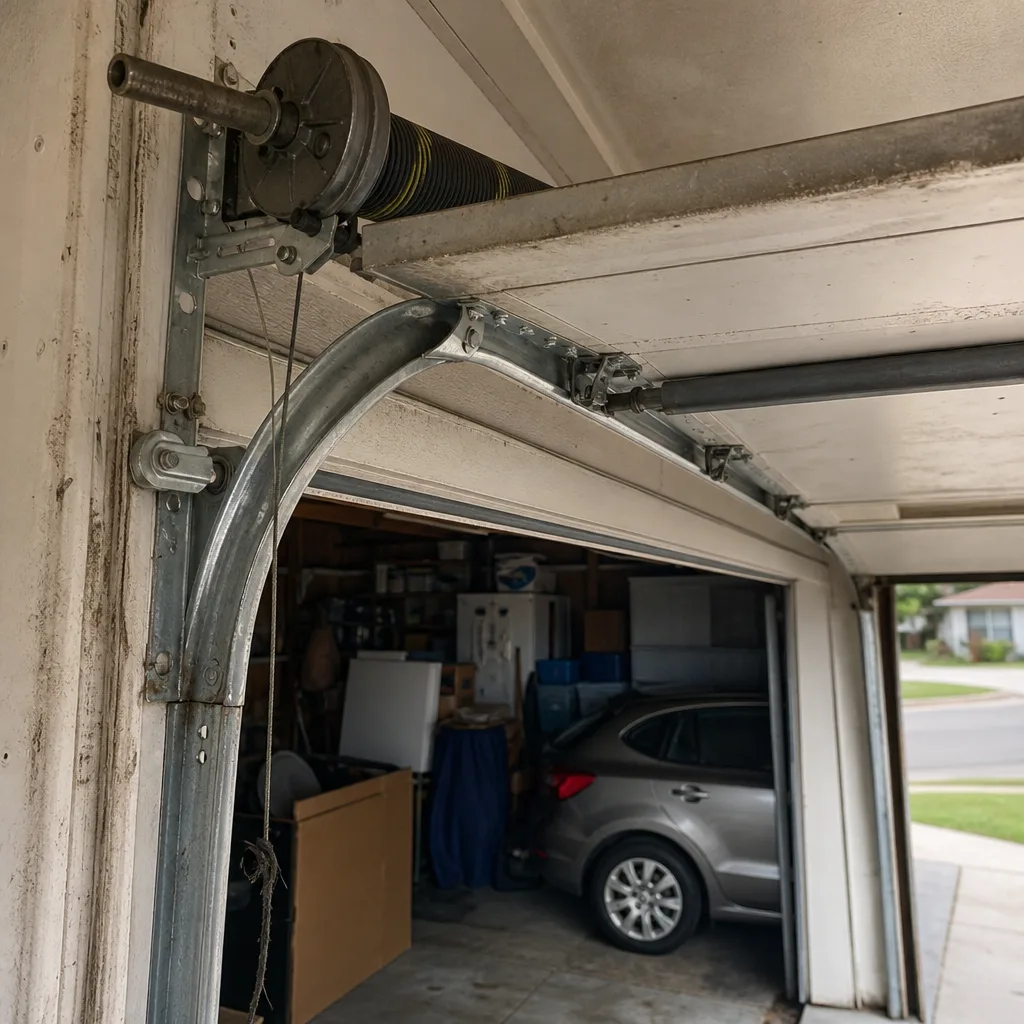 Before
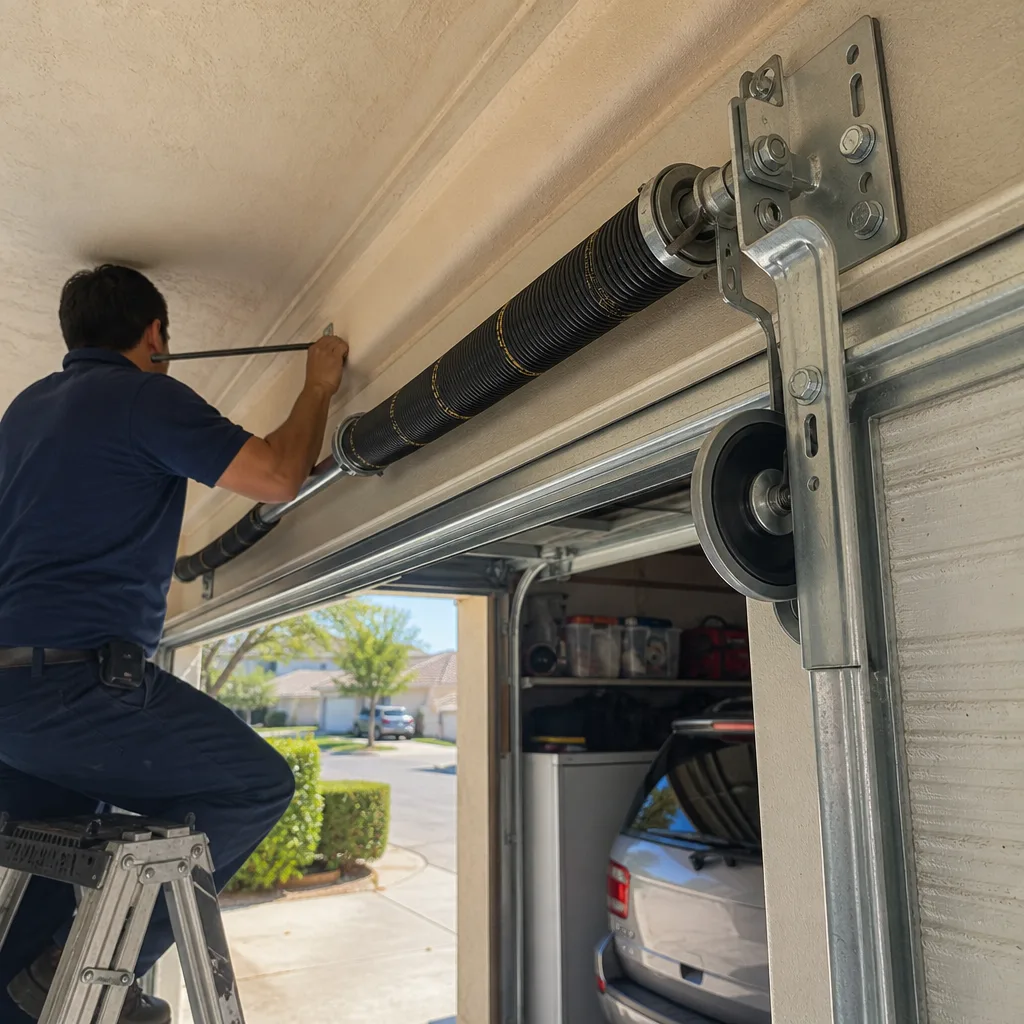 After
 Before
 After
 Before
 After