
Last updated October 30, 2026
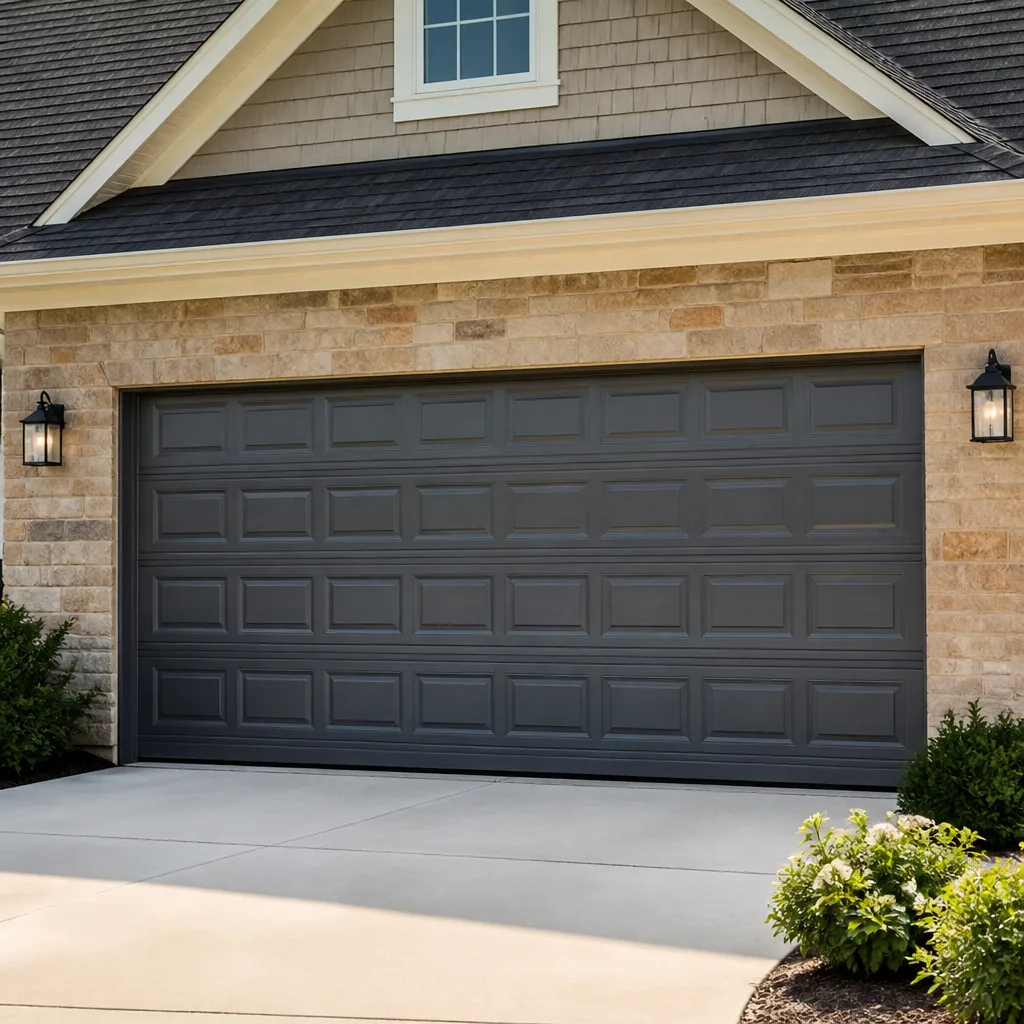 Raised-panel steel
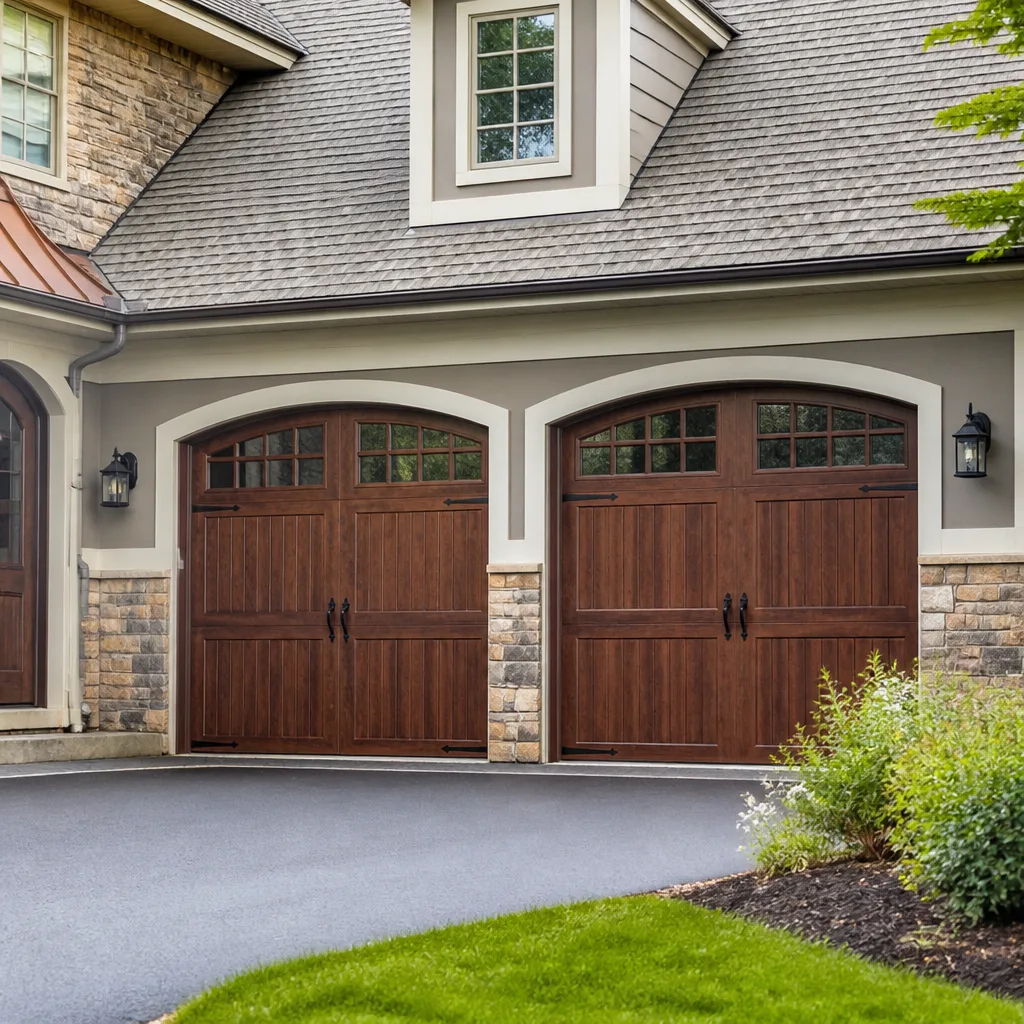 Carriage house
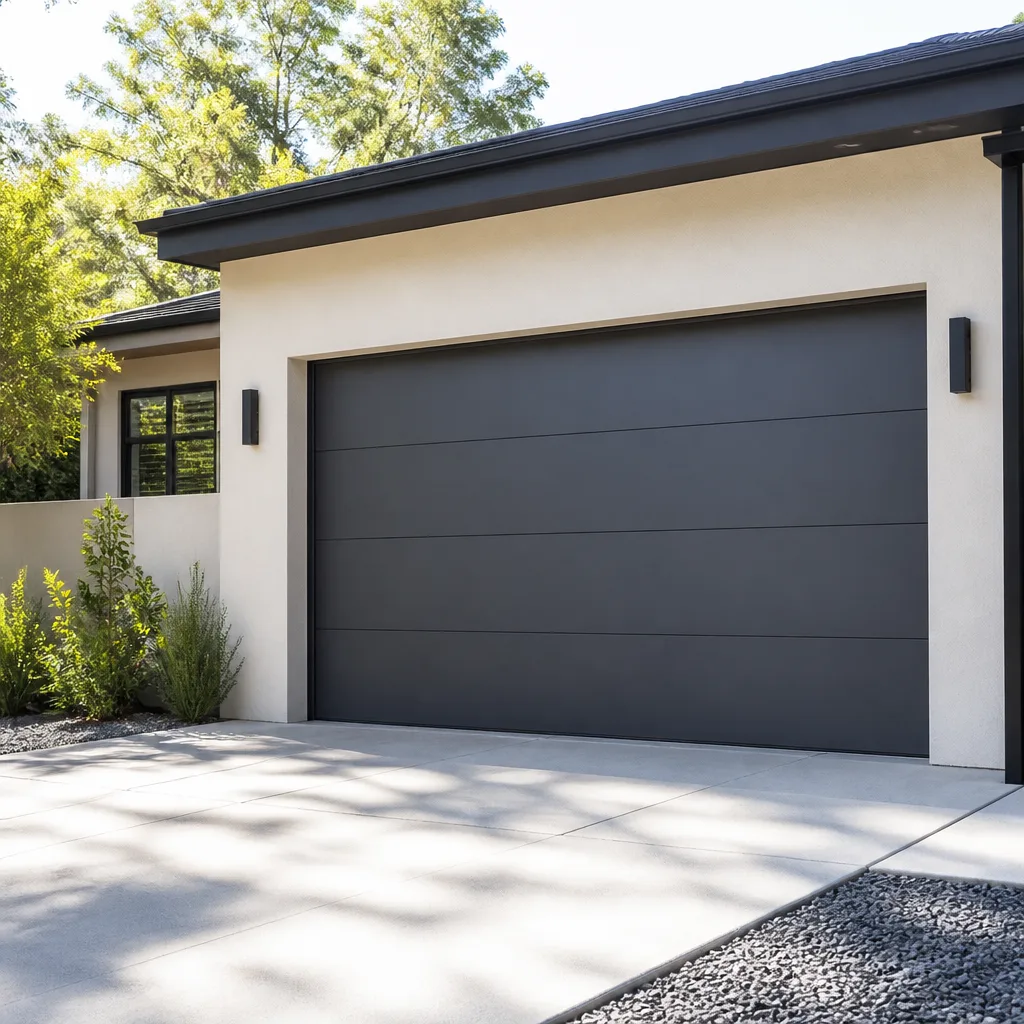 Modern flush
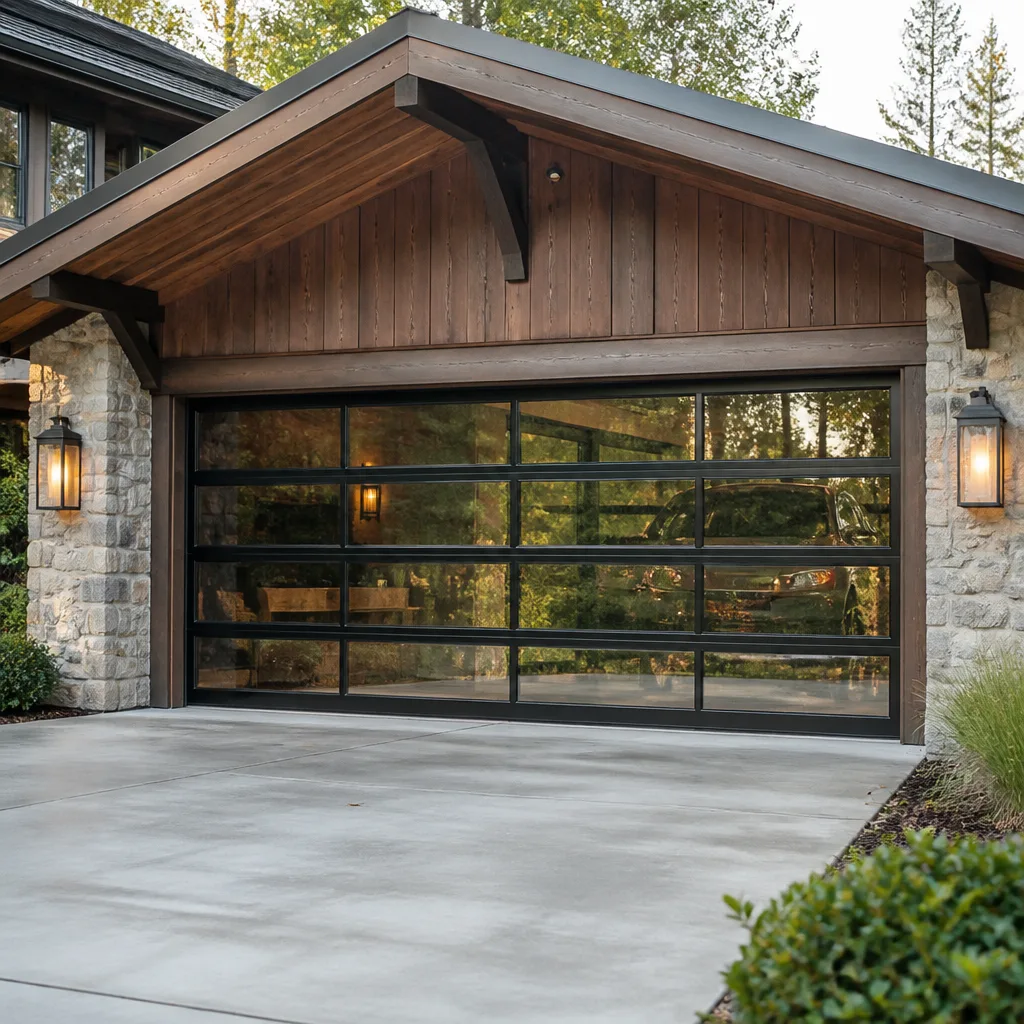 Full-view glass
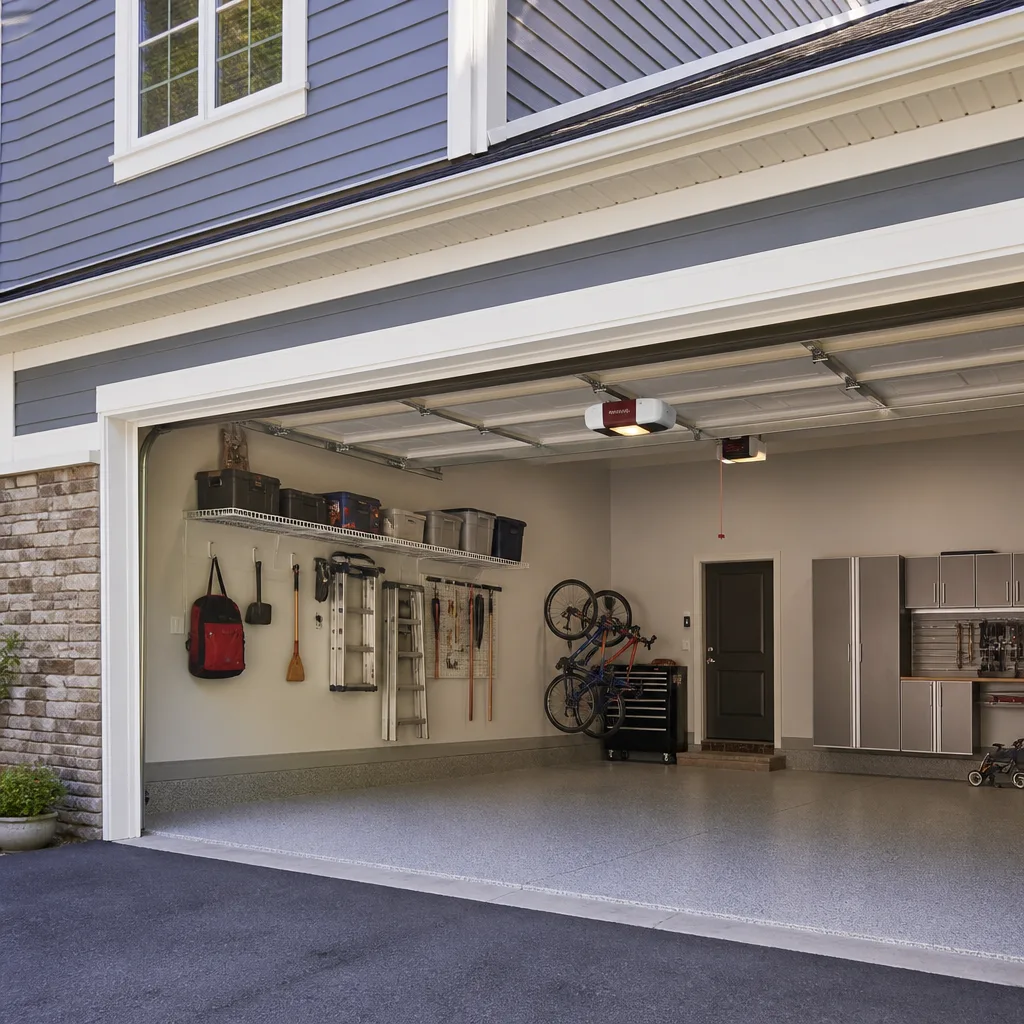 LiftMaster openers
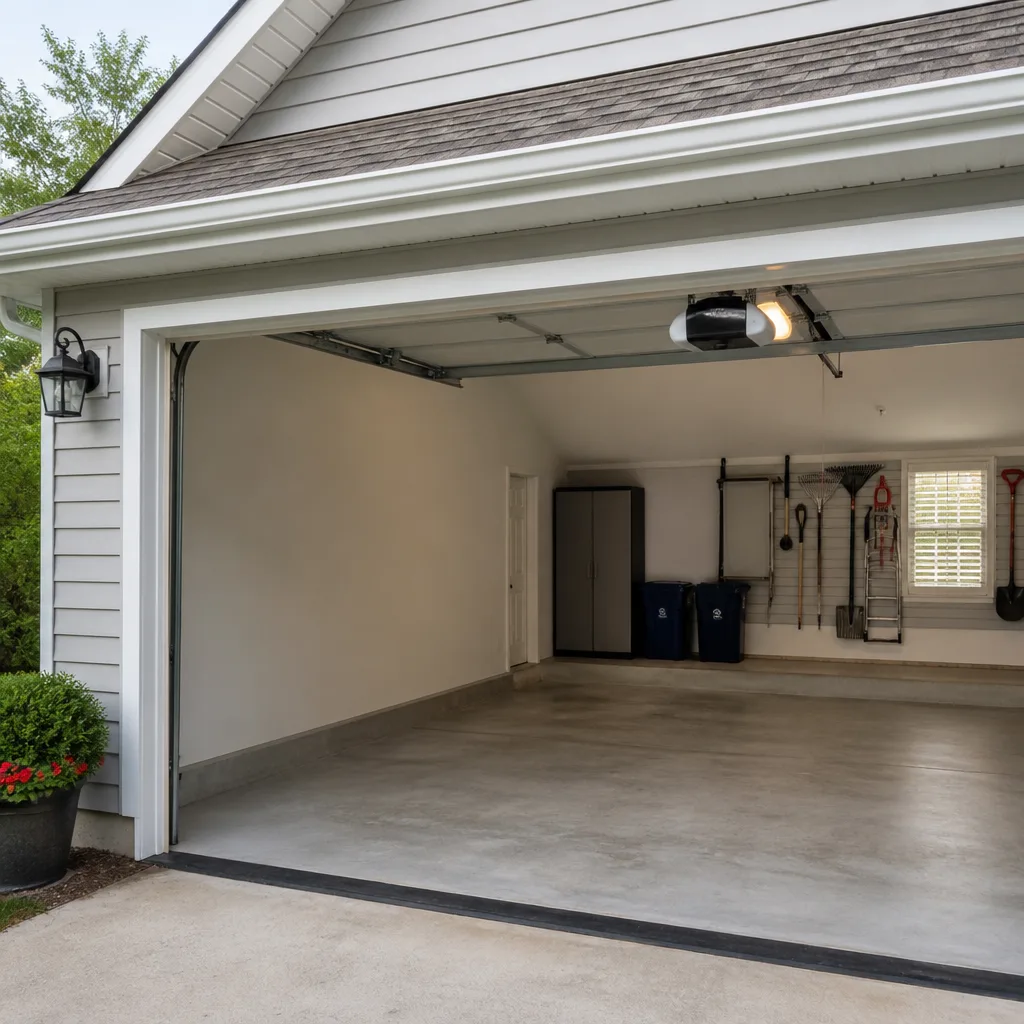 Chamberlain openers
Full 25-point door and opener safety check with every visit - springs, cables, rollers, tracks, and your LiftMaster or Chamberlain opener included
You get a price before we start. It does not change when the truck arrives.
Get your free estimateThe Complete Guide to Garage Door in Temecula
Here’s a number most Temecula homeowners have never thought about: the temperature difference between a July afternoon in Redhawk and a January morning near Wine Country can swing more than 45 degrees in a single 24-hour stretch. That daily expansion and contraction works on every metal component of your garage door system year after year. Most garage door guides & resources are written generically, as if a door in Phoenix behaves the same as one in Seattle. It doesn’t. This guide covers how garage doors actually function in Temecula’s specific climate, what breaks first and why, which of the major brands hold up best in this valley, and when a repair makes more sense than a replacement.
Quick Answer
A garage door in Temecula is a system of four interdependent components: the door panels, the torsion or extension springs, the track and rollers, and the opener. In Temecula’s inland heat corridor, springs typically last 7 to 10 years rather than the 10 to 15 claimed in coastal climates, and most failures are predictable rather than sudden. Working with a specialist who understands both the door side and the opener side means one service call diagnoses the entire system instead of just the symptom.
Styles & brands we work with
Table of Contents
- How a Garage Door System Actually Works
- How Temecula’s Climate Affects Your Garage Door
- The Eight Major Garage Door Brands in Temecula
- Understanding Spring Cycles and Why They Matter Here
- Repair vs. Replace: A Decision Framework
- HOA Guidelines in Temecula Master-Planned Communities
- Why Two-Car Garage Doors Often Have Mismatched Springs
- Garage Door Openers: What to Know Before You Buy or Repair
How a Garage Door System Actually Works
Your garage door in Temecula isn’t one machine. It’s four separate systems that have to work in sync, and when one fails, it usually stresses the others. The door panels ride on tracks through rollers. The springs carry the actual weight of the door – a standard two-car steel door weighs between 150 and 250 pounds, and the springs do the heavy lifting every time the door moves. The opener provides the motorized assist, but it is not designed to lift the door by itself. The sensors and safety mechanisms stop the door if something is in the way.
Here’s what that means in practice: when a spring breaks, you might think the opener failed because the door won’t move. But the opener is simply refusing to strain against a door that’s suddenly too heavy. We see this confusion regularly in Temecula – homeowners replace an opener when the real problem was a $250 spring. Understanding the four systems means you can describe the problem accurately over the phone and avoid paying for work you don’t need.
The Four Systems at a Glance
- Panels and hardware: The visible door sections, hinges, and brackets. These take the cosmetic damage and the daily wear from wind and sun.
- Springs: Torsion springs above the door or extension springs along the tracks. The highest-failure component, especially in high-heat climates like Temecula’s.
- Track and rollers: The steel channels and wheels that guide the door up and down. Alignment problems here cause most grinding noises and jerky movement.
- Opener and safety systems: The motor, drive mechanism (belt, chain, or screw), remote controls, and the photo-eye sensors at the base of the tracks.
How Temecula’s Climate Affects Your Garage Door
Temecula sits in an inland valley where summer daytime temperatures routinely reach the mid-90s, while winter nights can drop into the low 40s. That 45-to-50 degree daily swing is actually more damaging than a consistently hot climate, because it creates repeated thermal stress rather than a steady state. Metal expands when hot and contracts when cool. Over thousands of cycles, that microscopic movement fatigues spring steel and loosens hardware in ways you won’t see in a coastal city like Carlsbad or Dana Point.
Silicone and rubber components also behave differently here. Bottom seals and weather stripping on doors in Temecula neighborhoods like Paloma del Sol and Paseo del Sol dry out faster than the same products would in a marine-layer climate. Sun exposure on south-facing garage doors accelerates UV degradation of paint, panel coating, and plastic opener components. Garage doors that face west get the worst of the afternoon heat; we often see panel warping on west-facing doors that’s simply absent on north-facing doors on the same tract home floor plan.
What This Means for Maintenance
- Inspect your springs visually every six months. Look for gaps in the coil spacing, which indicate the spring is beginning to fail.
- Check the bottom seal each summer. Temecula’s dry heat cracks rubber seals within two to three years on sun-exposed doors.
- Listen for changes in opener pitch. A motor working harder against heat-swollen tracks or fatigued springs will sound strained.
- Lubricate rollers and hinges with a silicone-based spray every six months. Do this in spring and fall, when temperatures are moderate.
The Eight Major Garage Door Brands in Temecula
Most Temecula tract homes built in communities like Harveston, Wolf Creek, and Morgan Hill came with one of eight dominant garage door and opener brands. Knowing which one you have matters more than most homeowners realize, because not every brand’s components are interchangeable. Some brands use proprietary track profiles, spring systems, or opener logic boards that require brand-specific parts. Others follow industry-standard dimensions and can be serviced with universal components.
On the door panel side, Clopay, Amarr, Wayne Dalton, and Raynor account for the majority of residential installations in Southern California. Clopay doors are known for their insulation options and are common in newer Temecula construction. Amarr panels typically use a tongue-and-groove section design that seals well but can be finicky to adjust. Wayne Dalton doors, especially their lightweight models, use a unique TorqueMaster spring system that requires different tools and training than standard torsion setups. Raynor builds a solid mid-market door with good steel gauge thickness for the price.
On the opener side, LiftMaster, Chamberlain, Genie, and Craftsman dominate. LiftMaster and Chamberlain are built by the same parent company and share many components, but LiftMaster models use a different logic board and MyQ integration. Genie openers use a distinctive screw-drive or belt-drive system depending on model year. Craftsman openers were historically made by Chamberlain and many older Craftsman units accept Chamberlain parts, but newer models can be more proprietary. A technician who works across all eight brands can diagnose by system type rather than fumbling through a single-brand parts catalog.
Which Components Are Interchangeable
- Standard torsion springs: Interchangeable across brands if the wire gauge, inner diameter, and length match specifications.
- Rollers: Universal in most residential applications, regardless of door brand.
- Safety sensors: Most brands use the same two-wire photo-eye system, but opener-specific sensors on newer LiftMaster units require matching parts.
- Track radius: Standard 12-inch and 15-inch radius tracks are common across brands, but Wayne Dalton’s low-clearance tracks are proprietary.
- Remotes and keypads: Brand-specific due to frequency and rolling-code technology. A Chamberlain remote won’t operate a Genie opener.
Understanding Spring Cycles and Why They Matter Here
Every torsion spring has a cycle rating: the number of open-and-close operations it’s engineered to survive before the metal fatigues. Standard springs are rated at 10,000 cycles. Premium springs are rated at 20,000, 30,000, or even 50,000 cycles. A typical Temecula household opens and closes the garage door four to six times per day, which translates to roughly 1,500 to 2,200 cycles per year. Do the math: a 10,000-cycle spring lasts about five to seven years in a busy household.
But there’s a catch most guides miss. Temecula’s heat accelerates metal fatigue beyond the manufacturer’s cycle math, because the spring steel is also enduring daily thermal stress on top of mechanical stress. A spring rated for 10,000 cycles in a moderate climate might effectively perform closer to 7,000 cycles in Temecula’s summer heat corridor. That’s why a spring installed in 2018 is often near failure in 2025, even if the family only opens the door three times a day.
How to Check Your Spring’s Age and Condition
- Look at the spring above the closed door. If you see a visible gap between any two coils, the spring has already begun to separate and will fail soon.
- Check for rust. Surface rust on the spring ends is normal in Temecula’s dry climate, but pitting or scaling means weakened steel.
- Listen when the door opens. A popping or creaking sound from the spring itself, not the rollers, indicates internal coil binding.
- Test the balance. Disconnect the opener (pull the red release cord) and lift the door manually to waist height. A balanced door stays put. A door that drops is a sign the spring has lost tension or is near failure.
If your spring shows any of these signs, don’t wait for it to snap. The most common garage door failure in Temecula is a spring breaking while the door is closed, frequently in the early morning when temperatures are lowest and the metal is most brittle. When it happens, the car stays in the garage until a technician arrives.
Repair vs. Replace: A Decision Framework
Every garage door repair decision in Temecula comes down to three factors: the age of the door, the condition of the panels, and the compatibility of the opener. For a deeper look at the financial side, see our Garage Door Cost Breakdown: The Temecula Homeowner’s Reference for 2026. Aesthetics are a consideration, but they shouldn’t drive the decision. Here’s the framework we use when advising homeowners in neighborhoods like Redhawk, Crowne Hill, and Sommers Bend.
Step 1: Determine the Door’s Age
Temecula experienced two major building booms: the early 2000s and the post-2010 expansion. If your home was built between 2002 and 2008, your garage door is likely 17 to 23 years old, which means it’s near or past its expected service life. Steel doors in Temecula’s climate typically last 20 to 25 years before panel rust, hinge wear, or structural fatigue justifies replacement over repeated repairs. If your door is under 12 years old, repair is almost always the better financial decision.
Step 2: Assess the Panel Condition
Walk outside and look at the door in daylight. Is there visible rust at the panel seams? Cracking at the weather seals between sections? Dents from kids’ bikes or errant basketballs that have been there for years? A single damaged panel can be replaced on most Clopay and Amarr doors, but panel replacements become impractical when two or more sections are compromised. Steel doors with significant rust at the bottom panel, which is the panel most exposed to irrigation overspray and morning dew in Temecula, often warrant full replacement.
Step 3: Check Opener Compatibility
If you’re replacing the door, your existing opener doesn’t automatically work with the new door. Different door weights require different opener settings, and some newer insulated doors are actually lighter than older non-insulated steel doors. A door that’s significantly heavier or lighter than the original may require opener adjustment or replacement. The door and opener work as a pair; changing one without evaluating the other is how you end up with a door that moves erratically.
Step 4: The Verdict
- Repair if: Door is under 12 years old, panels are structurally sound, opener is working, and the failure is a spring, roller, cable, or a single panel.
- Replace if: Door is over 20 years old, multiple panels are rusted or dented, the opener is also aging and incompatible with newer door models, or you’re planning to sell within three years and want the curb appeal improvement.
HOA Guidelines in Temecula Master-Planned Communities
If you live in Redhawk, Morgan Hill, Wolf Creek, Harveston, or any of Temecula’s master-planned communities, your garage door replacement is subject to HOA architectural guidelines. This is a step most garage door guides completely skip, and it’s the part that can cost you money if you get it wrong. Installing a door that violates HOA standards can mean a notice to replace it at your own expense.
Most Temecula HOAs restrict the following: door material (steel is standard; wood is sometimes allowed with approval), door color (typically required to match or complement the home’s exterior palette), window selection and placement, and insulation type for doors visible from the street. Some communities require that all garage doors on a single street maintain visual consistency, meaning a unique or contrasting door can be denied even if it’s attractive in isolation.
Before You Order a New Door
- Pull up your HOA’s architectural guidelines. Most Temecula communities publish these on their management company’s resident portal.
- Submit a modification request with the door’s material, color, window configuration, and a photo or manufacturer’s spec sheet.
- Wait for written approval before scheduling installation. Approval timelines in Temecula HOAs typically run two to four weeks.
- Keep the approval letter. If you sell the home, the new owner may need proof the door was properly approved.
Why Two-Car Garage Doors Often Have Mismatched Springs
Here’s something you’ll rarely read about: many two-car garage doors in Temecula tract homes were built with mismatched spring setups from the original installation. The door itself is 16 feet wide and weighs 200-plus pounds, which logically requires two torsion springs – one on each side of the center bearing. But in a surprising number of homes built during the early-2000s boom, we find two springs of different ages, different wire gauges, or different cycle ratings on the same door.
This happens because builders often installed the cheapest available spring pair, which may have been mismatched from the start. Alternatively, a later repair replaced only the broken spring rather than both springs. When one spring fails, some technicians replace just the broken side to save the homeowner money. That’s a short-sighted repair. The remaining old spring is near failure too, and mismatched springs create uneven lifting force that wears rollers, tracks, and opener gears prematurely. The correct repair is to replace both springs as a matched pair, regardless of which one broke.
If your Temecula home was built before 2010 and you’ve never replaced the springs, or if you’ve had one spring replaced without the other, have a professional inspect both springs for matched size, gauge, and condition. This is one of the most common findings on older two-car doors in communities like Vintage Hills and Chardonnay Hills.
Garage Door Openers: What to Know Before You Buy or Repair
The opener is the electronic brain of your garage door system, and it’s also the component most often misdiagnosed. When a homeowner calls about an opener that “doesn’t work,” the actual problem is often the spring, the track, or a dead logic board. Here’s what you should know before spending money on opener work in Temecula.
Drive Types and What They Mean
- Belt drive: Quietest option. Uses a reinforced rubber belt. Best for homes where the garage is under a bedroom or adjacent to a living space, common in Temecula’s two-story floor plans.
- Chain drive: Most affordable, noisier. Fine for detached garages or homes where noise isn’t a concern.
- Screw drive: Mid-range noise, fewer moving parts. Common in older Genie models. Performs well in Temecula’s dry climate but can wear faster with heavy doors.
Common Opener Failures We See in Temecula
- Logic board burnout from heat: South-facing garages in Temecula can exceed 110 degrees in summer, which shortens the lifespan of opener electronics. This is the most common cause of an opener that works intermittently.
- Safety sensor misalignment: The photo-eye sensors at the bottom of the tracks get bumped by bikes, trash cans, or kids. Misaligned sensors make the door refuse to close.
- Gear wear on chain-drive units: The plastic drive gear inside many LiftMaster and Chamberlain units is a sacrificial part that breaks after 5 to 8 years. Replacement is a standard repair, not a sign the opener needs replacement.
- Remote failure versus logic board failure: If the wall button works but the remote doesn’t, the problem is the remote or the receiver. If neither works, it’s the logic board or power supply.
Seabreeze Garage Door offers opener repair as its own dedicated service lane, not as an add-on to general repair work. That means a technician who specializes in LiftMaster, Chamberlain, Genie, and Craftsman electronics diagnoses the drive belt, the logic board, or the safety sensors directly – not someone who spent 20 minutes watching a YouTube video before showing up at your door.
Common Mistakes to Avoid
- Replacing the opener when the spring broke. A broken spring makes the door too heavy for the opener to lift. The opener isn’t the problem. Test the balance manually before assuming the motor failed.
- Replacing only one spring on a two-spring door. The remaining old spring is near failure anyway, and mismatched springs create uneven wear on every other component. Always replace springs as a matched pair.
- Skipping the HOA approval on a new door. Temecula HOAs can require you to remove a non-compliant door at your own expense. Submit the approval request before you order anything.
- Buying a door based on price alone. The cheapest doors use thinner steel gauges that dent more easily and have lower insulation values, which matters in Temecula’s summer heat when your garage becomes a heat sink.
- Lubricating the wrong parts. Never lubricate the track. Lubricate rollers, hinges, and springs only. Grease on the track attracts dust and creates a grinding paste that accelerates roller wear.
- Ignoring a noisy door. Grinding, popping, or squealing sounds are early warning signs. Waiting until the failure means paying for a spring, cable, and potentially a track repair instead of catching the spring alone.
- Attempting DIY spring repair. Torsion springs store enough force to cause serious injury. This is not a weekend project. A trained professional has the winding bars, the calibrated tools, and the experience to do it safely.
See the difference
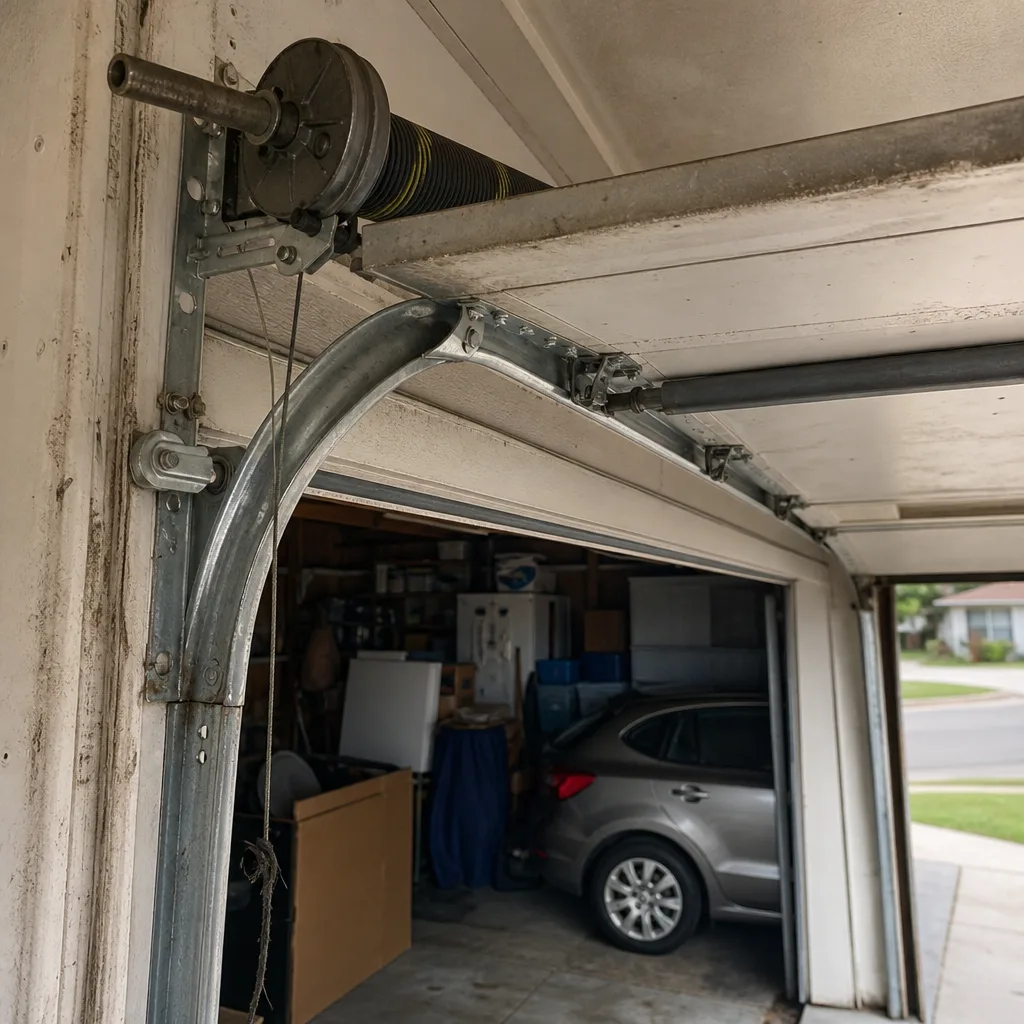 Before
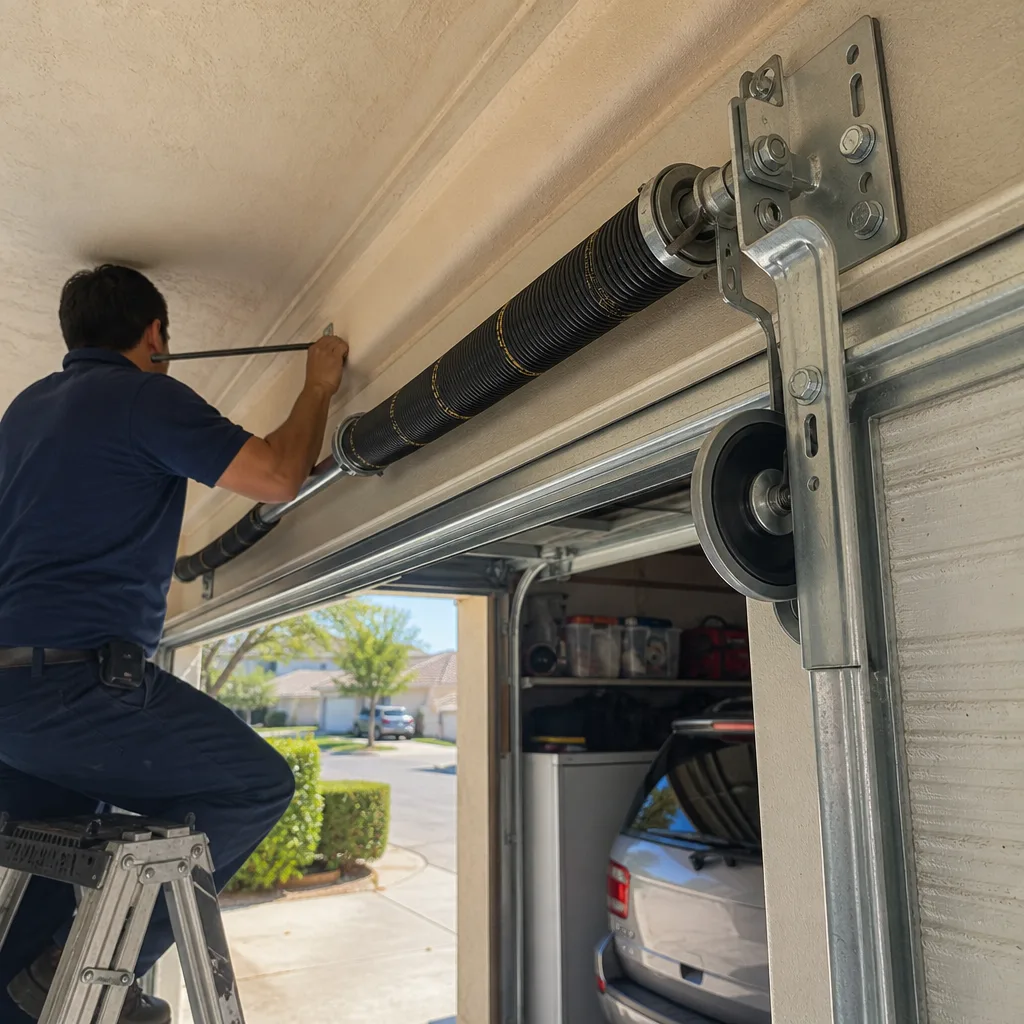 After
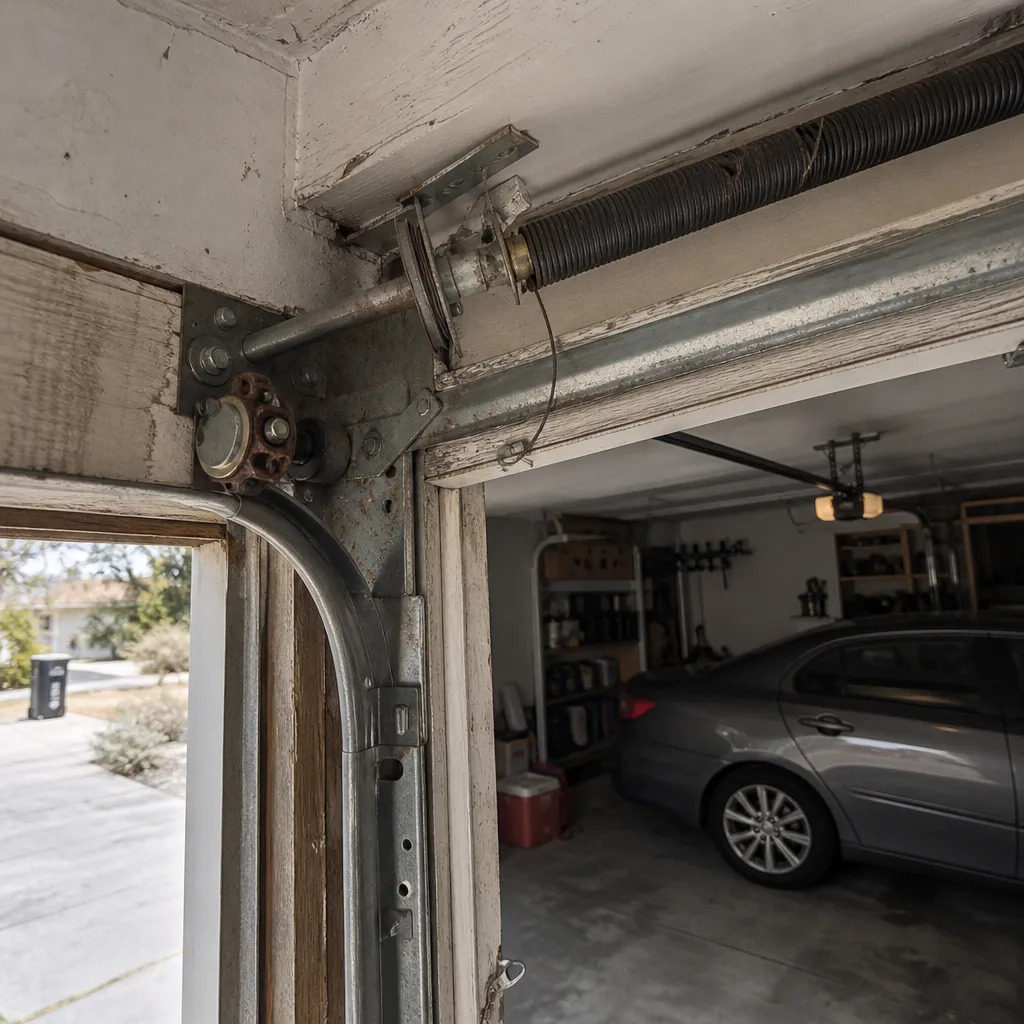 Before
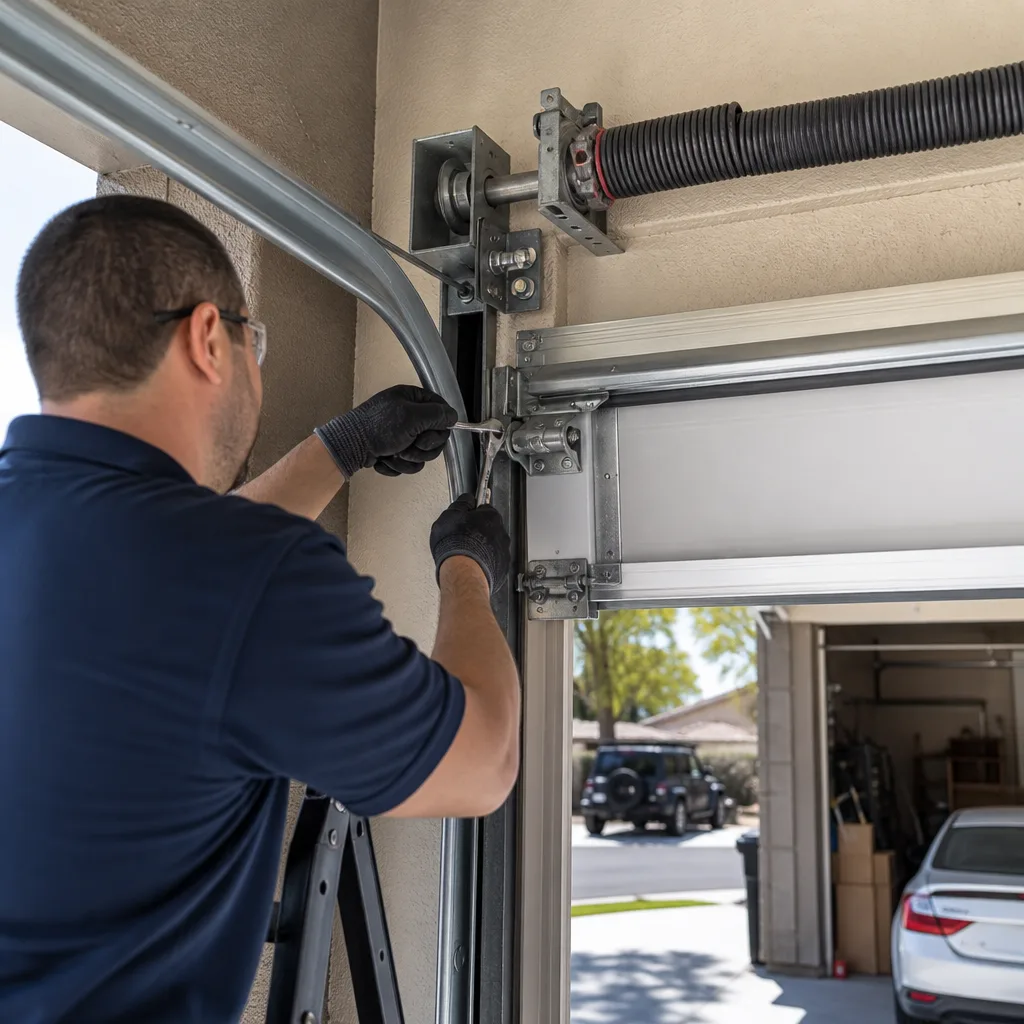 After
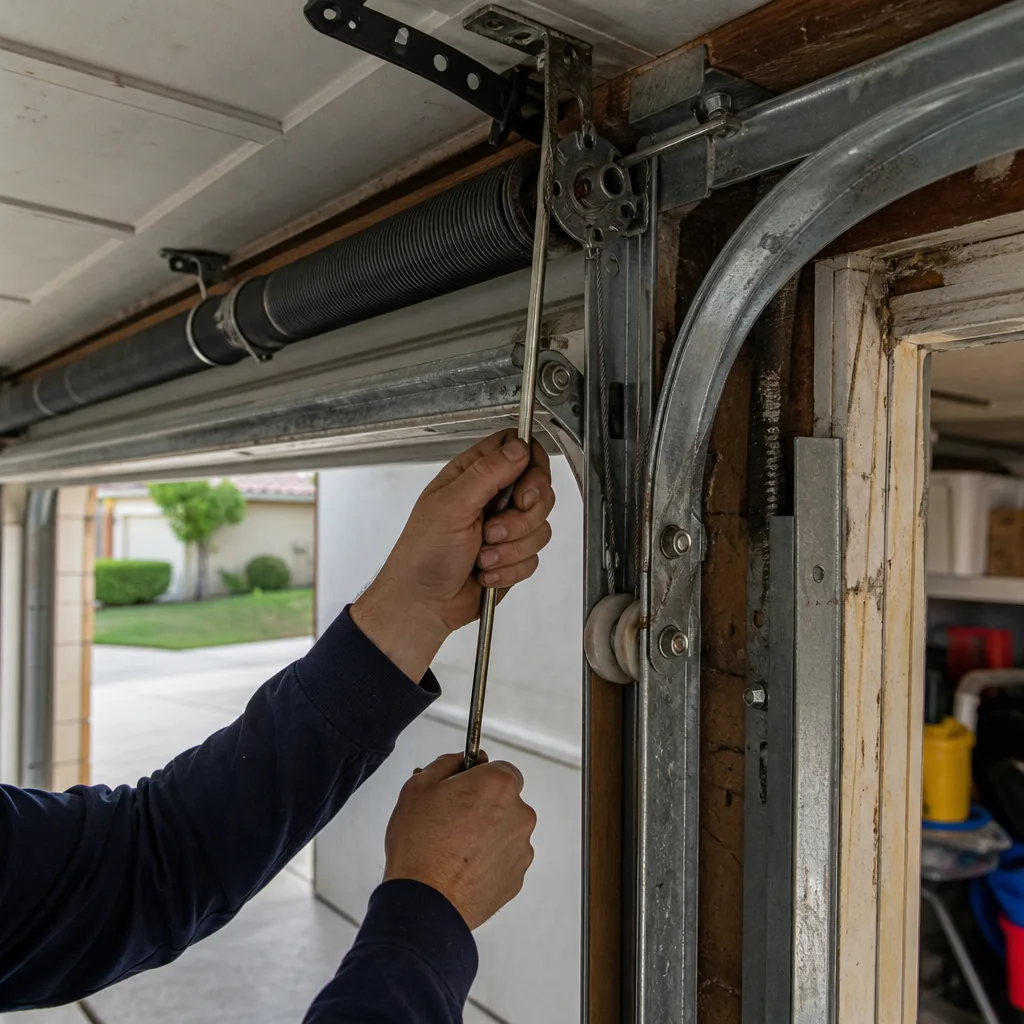 Before
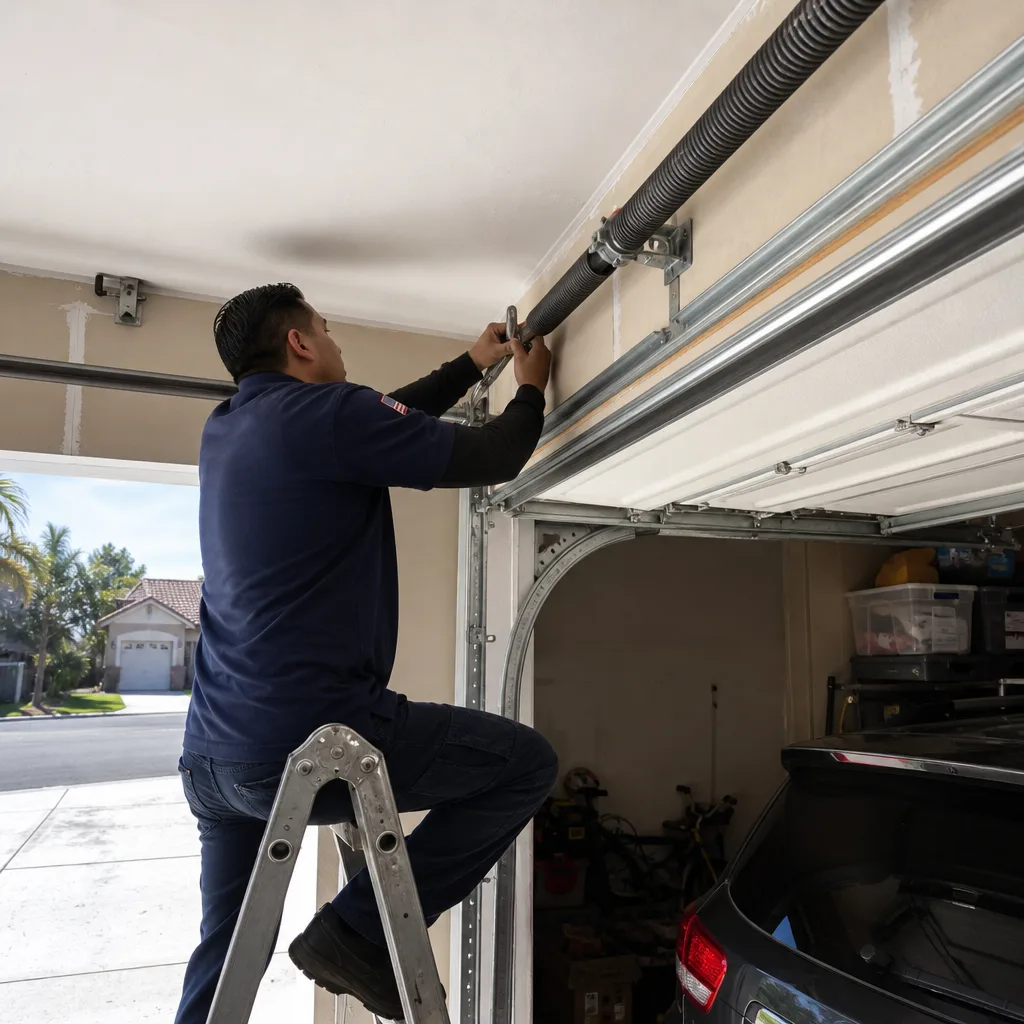 After
When to Call a Professional
Call a professional the moment you notice a broken spring, a door that’s off its tracks, a cable that’s frayed or hanging loose, or a door that won’t respond to the opener or wall button. For guidance on handling urgent situations safely, read our Garage Door Emergency Preparedness Guide for Temecula Homes. These are not diagnostic puzzles to solve yourself. A door that’s partially open with a broken spring is dangerous to move, and the spring itself is under enough tension to seriously injure someone who doesn’t know how to release it safely.
The garage door repair process in Temecula is one we handle every day. If you’re in Redhawk, Harveston, Morgan Hill, or anywhere in the Temecula Valley, Seabreeze Garage Door home offers free estimates and works across all eight major brands. Call (888) 913-4062 and describe what’s happening – we’ll tell you over the phone whether it’s likely a spring, an opener issue, or a track problem, and what it’ll take to fix it.
Frequently Asked Questions
Garage door repair in Temecula typically ranges from $125 for minor adjustments to $400 for a full spring replacement on a two-car door, with most common repairs falling between $150 and $350. The exact price depends on whether you need a single spring or a matched pair, the door’s weight class, and whether additional components like cables or rollers require replacement. Call (888) 913-4062 for a free estimate on your specific door.
Most Temecula garage door repairs can be handled the same day or the next morning, depending on the time of your call and the parts required. Common repairs like spring replacement and roller replacement use parts that a well-equipped technician keeps on the truck. For same-day service in Temecula, call (888) 913-4062 as early as possible.
No. The price you agree to before the work begins is the price you pay. A thorough phone diagnosis usually identifies the problem correctly, and if we find additional issues during the repair, we show you what we found and get your approval before doing anything beyond the original scope. The quote is agreed before any work starts.
Yes. Standard torsion springs in the most common Temecula sizes, rollers, cables, hinges, and safety sensors are typically on the truck. Specialized parts for less common door models, like Wayne Dalton’s proprietary TorqueMaster springs, may require a parts run or a follow-up visit. Ask about your specific brand when you call.
A garage door spring in Temecula typically lasts 7 to 10 years in a household that opens the door four to six times per day. The valley’s heat and daily temperature swings shorten the effective lifespan compared to coastal climates. If your springs are over 8 years old, have them inspected before they fail.
For Temecula’s climate, doors from Clopay, Amarr, and Raynor in their mid-range steel lines perform well, with insulated panels preferred for south-facing garages. The best door for your home depends on panel thickness, insulation rating, and UV-resistant coating rather than brand name alone. A brand-agnostic technician can compare equivalent models across brands to find the best value for your specific exposure.
The Bottom Line
A garage door in Temecula is a system with predictable failure points, and knowing what to watch for saves you money and frustration. Springs fail on a schedule accelerated by the valley’s temperature swings. Openers fail from heat exposure and age. Panels wear from sun and irrigation overspray. The repair-or-replace decision comes down to the door’s age, panel condition, and opener compatibility, not just how it looks from the curb. HOA approval is non-negotiable in most planned communities. And when something breaks, call someone who works on your specific brand. For garage door repair, opener repair, or full installation in Temecula, Seabreeze Garage Door offers free estimates at (888) 913-4062.
If you found this guide useful, you may also want to read about Garage Door Repair in Wildomar, Garage Door Opener Repair in Wildomar, or Garage Door Installation in Wildomar for service just north of Temecula.
Written by the team at Seabreeze Garage Door, serving Temecula since 2014.